Pachamama Offering
Ceremony in Cusco
Pachamama Offering Ceremony Cusco – Ancestral Ceremony
Offering to Pachamama — Mother Earth
Before anyone drinks Ayahuasca in the Andes, there’s a debt to settle first. Not a debt of money — a debt to the ground you’re standing on. That’s the whole premise behind the Pachamama offering, and it’s older than the Incas themselves.
If you’re planning a retreat in Cusco or the Sacred Valley, you’ve probably seen this ceremony listed alongside Ayahuasca nights and Wachuma sessions. It isn’t a warm-up act. For the Andean shamans who guide it, the offering to Pachamama — Mother Earth — is the ceremony that makes everything else possible.
Quick Facts
| Duration | 1.5 – 3 hours, depending on the group and location |
| Location | Sacred Valley (Chinchero, Pisac, or a private retreat site near Cusco) |
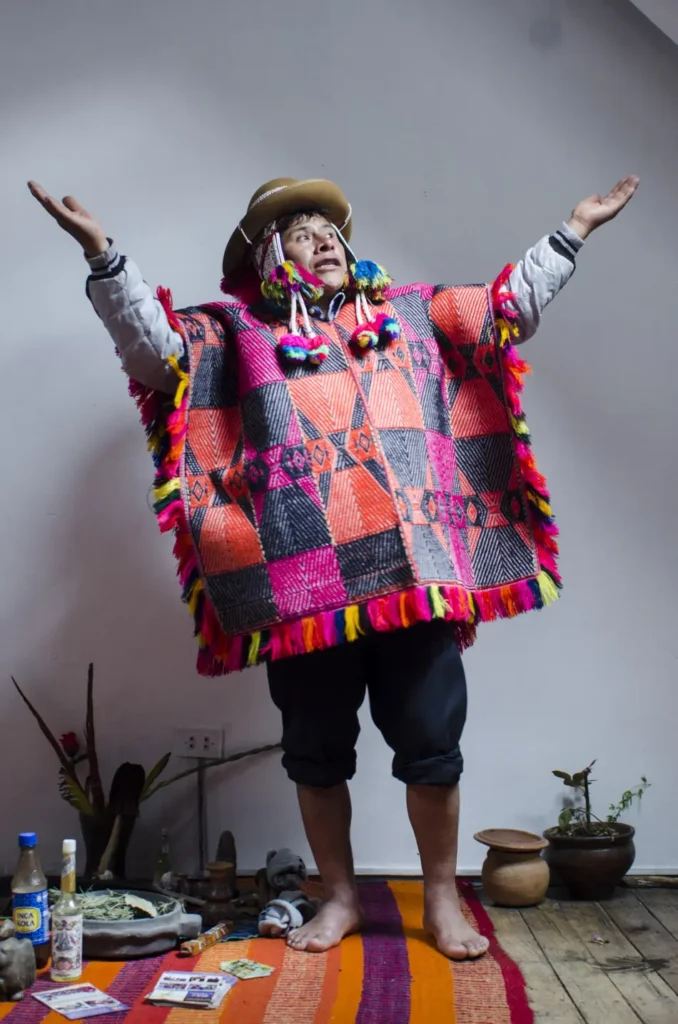
| Guide | Andean paqo or altomisayoq (traditional Quechua priest-healer) |
| Group size | Private or small group (2–12 people) |
| Typical price | From $120 – $180 USD per person, depending on location and group size |
| Best paired with | Ayahuasca retreat, Wachuma ceremony, or as a standalone ritual |
| Physical demand | Low — mostly seated or standing at altitude (3,000–3,800m) |
What's Included
- Transportation to and from your hotel or retreat center in Cusco or the Sacred Valley
- Andean paqo or altomisayoq to lead the ceremony
- All materials for the despacho (coca leaves, seeds, flowers, wool, incense, and other traditional elements)
- Translation into English if needed
- A quiet, private ceremonial site away from tourist traffic
What’s usually not included, unless you request it: lodging, meals outside the ceremony, or transport from outside the Cusco/Sacred Valley area.
What the Ceremony Actually Is
Andean cosmovision doesn’t treat the earth as scenery. Pachamama is regarded as a living being — feminine, generous, and owed something back for everything she gives. Quechua communities call this principle ayni: reciprocity. You take, so you give. Skip that part, and the relationship goes lopsided.
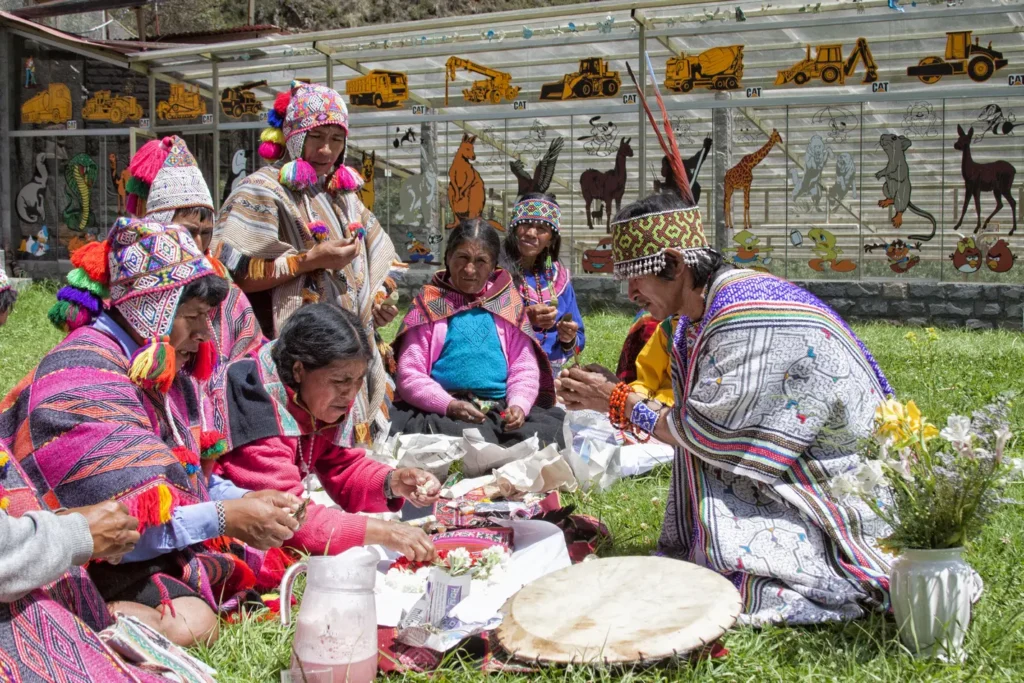
The offering itself is called a despacho — sometimes translated as a “payment to the earth.” It’s less a prayer and more a small, deliberate act of construction. A paqo lays out a cloth, arranges dozens of symbolic elements on it by hand, wraps it, and returns it to the earth or to fire. Every object placed inside carries an intention: gratitude for the harvest, a request for health, a wish for a family member, or closure after a difficult season.
For visitors coming to Cusco specifically for Ayahuasca or Wachuma work, this ceremony does something practical too — it grounds you. Plant medicine tends to open things up fast. The despacho slows the pace back down and reconnects you to solid ground, literally and otherwise.
What to Bring and How to Prepare
- Comfortable, weather-appropriate clothing — ceremonies are often held outdoors at altitude, so mornings and evenings run cold
- An open mind rather than a fixed expectation of what you’ll feel
- A specific intention, if you have one — even a rough one is enough
- Water and coca tea beforehand, especially if you’ve just arrived in Cusco, to help with the altitude
There’s no dietary restriction attached to this ceremony the way there is with Ayahuasca, though most retreat centers will ask you to arrive with a calm stomach and without alcohol in your system.
Pairing It With an Ayahuasca Retreat
Most retreat centers in Cusco schedule the Pachamama offering either at the very start or the very end of an Ayahuasca program. At the start, it sets the tone — you’re asking permission before you do deep inner work. At the close, it’s an act of thanks, a way of returning something after the medicine has given you so much.
If you’re building your own itinerary, this ceremony pairs naturally with our Ayahuasca retreats in the Sacred Valley, and works well alongside a Wachuma (San Pedro) ceremony too, since both draw on the same Andean framework of reciprocity with the land.
Who Leads It
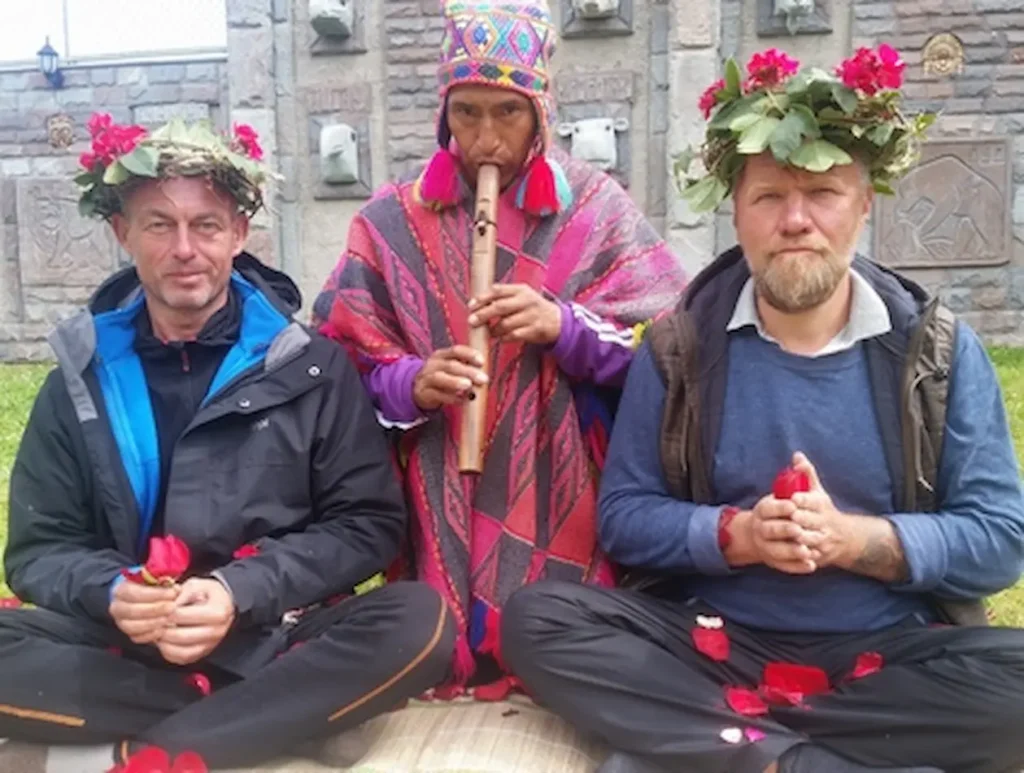
The ceremony is guided by a paqo — sometimes called an altomisayoq at the higher levels of training. This isn’t a role anyone can claim after a weekend course. Traditionally, a paqo apprentices under an elder for years before leading offerings independently, learning which elements go where, which prayers accompany which requests, and how to read the specific needs of the people in front of him. When we say a guide is “experienced,” we mean decades of ceremonial work in the Sacred Valley, not a title picked up for marketing.
How the Ceremony Unfolds
1. Asking permission.
Before anything is placed on the cloth, the paqo addresses Pachamama and the Apus — the mountain spirits watching over the valley — and asks permission to begin. This isn’t ceremonial small talk; in Andean tradition, skipping it is considered disrespectful.
2. Building the despacho.
A woven cloth (the unkuña) is spread on the ground. The paqo, sometimes with participants helping directly, begins placing items one by one: coca leaves, seeds, colored wool threads, sweets, dried flowers, small candies shaped like coins or animals, incense, and occasionally wine or chicha (fermented corn beverage). Each element answers to something specific — coca leaves for communication with the spirit world, sweets for the sweetness you’re asking life to bring you, wool threads for the ties between people and place.
3. Setting your intention.
This is where the ceremony stops being a spectator experience. Participants are invited to hold a few coca leaves, breathe on them, and silently state what they’re asking for or releasing. Some people ask for health, others for direction, others simply say thank you for having made it this far.
4. Closing and offering.
Once the despacho is complete, the paqo wraps it carefully and either buries it in the earth or burns it in a fire, depending on the tradition and the site. Burning is common in the Sacred Valley; burial is more typical in mountain communities. Either way, the moment is treated as final — once given, the offering isn’t touched again.
5. Closing words.
The paqo usually closes with a short blessing, sometimes in Quechua, thanking Pachamama and the Apus for receiving the offering.
Frequently Asked Questions
What does "Pachamama" mean?
Pachamama translates roughly as “Mother Earth” or “World Mother” in Quechua — pacha meaning earth or world, mama meaning mother. In Andean belief, she’s treated as a conscious, living presence rather than a symbol.
Is the Pachamama ceremony the same as a despacho?
The despacho is the offering itself — the bundle of symbolic elements prepared during the ceremony. “Pachamama ceremony” refers to the whole ritual, including the preparation, the blessing, and the final offering of the despacho.
Do I need to combine this with an Ayahuasca ceremony?
No. Many people book the Pachamama offering as a standalone experience, particularly if they want an introduction to Andean spirituality without plant medicine involved.
Is it safe for someone with no ceremonial experience?
Yes. Unlike Ayahuasca, this ceremony has no physical or medical screening requirements. It’s gentle, seated or lightly active, and suitable for most travelers, including those simply curious about Andean tradition.
How long does the whole experience take?
Typically between 90 minutes and 3 hours, depending on group size and whether it’s combined with other rituals like a coca leaf reading or flowering bath.
Can I take photos during the ceremony?
Most guides allow photos before and after the ceremony but ask that phones stay away during the despacho preparation itself, out of respect for the ritual.
Ready to Connect With Pachamama?
Whether you’re pairing it with an Ayahuasca retreat or booking it as its own experience, the Pachamama offering ceremony is one of the simplest ways to start — or close — your time in the Sacred Valley the way Andean tradition intends: with gratitude, given back to the earth it came from.
Reserve your Pachamama ceremony in Cusco today and let a traditional Andean paqo guide you through one of the oldest rituals of reciprocity still practiced in Peru.