Andean ceremony · Baño de florecimiento · Cusco
Flowering Bath Ceremony in Cusco
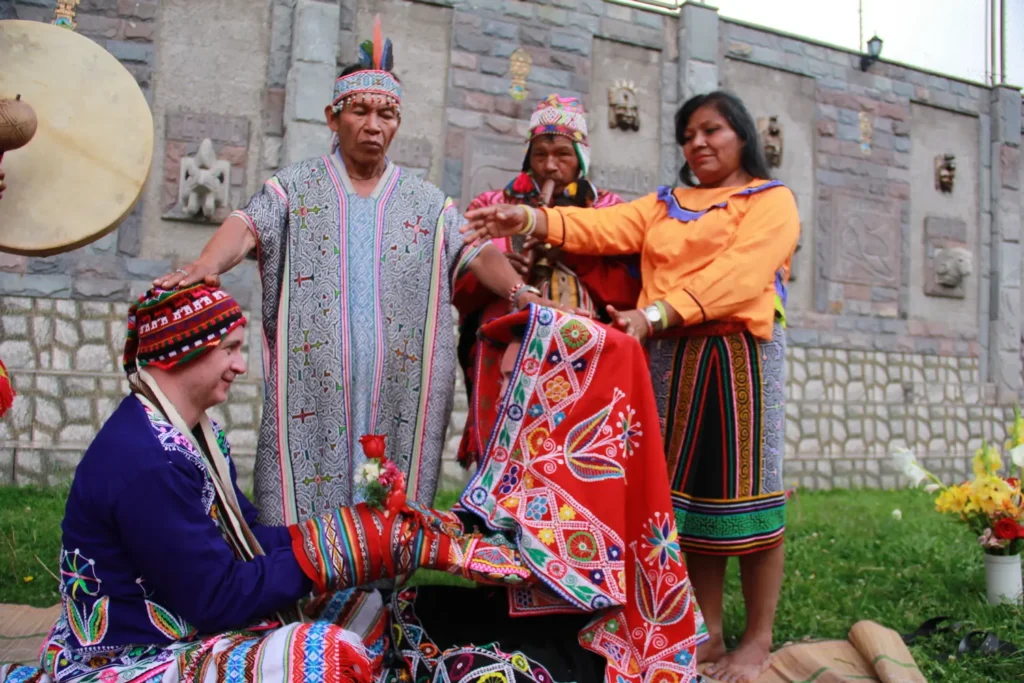
The baño de florecimiento: flowers, herbs and scented water poured over you by an Andean master to close a time of cleansing and invite something new in. 30 to 60 minutes. From USD 100 per person.
From USD 100—per person
From USD 100
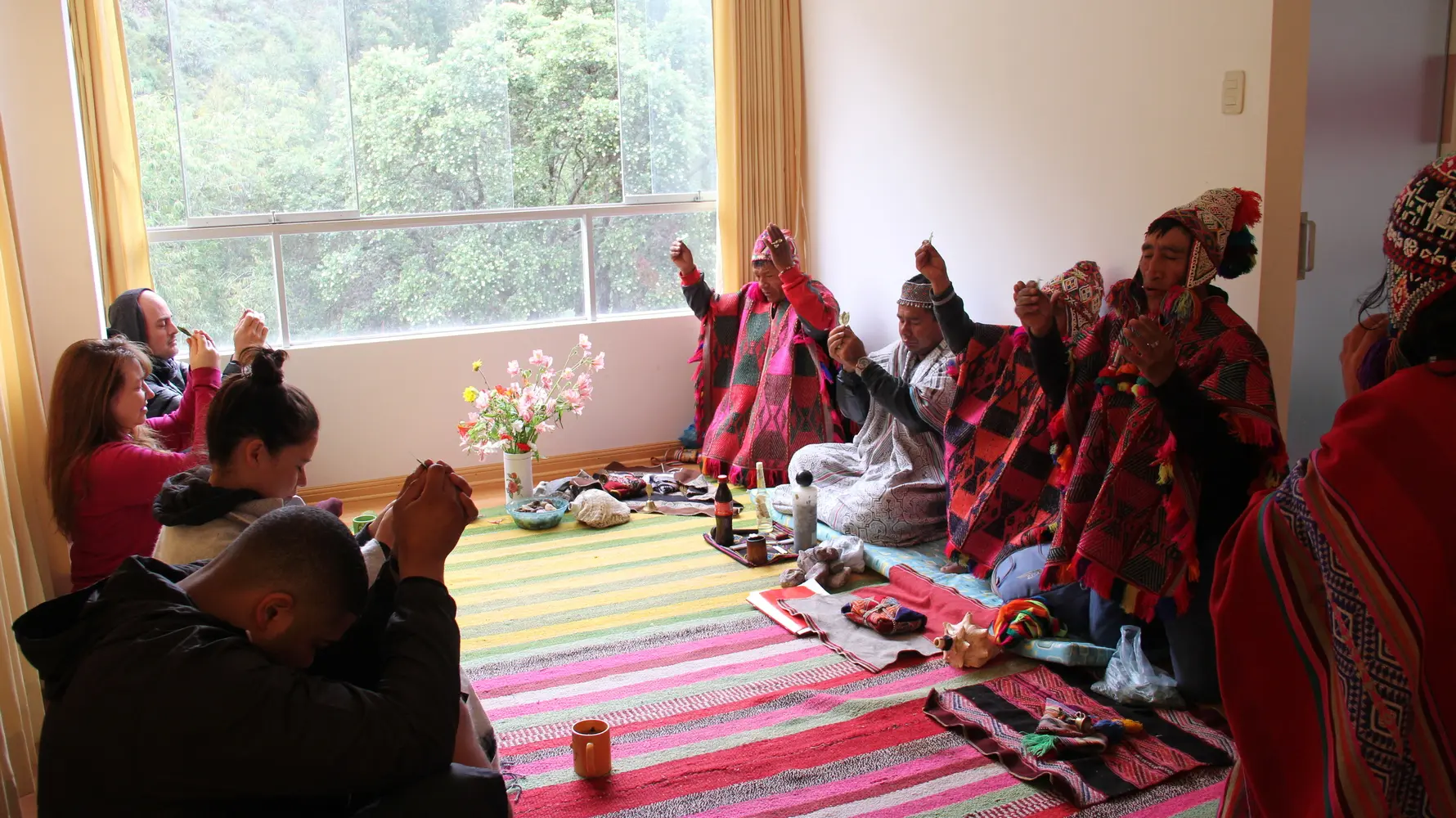
Cusco, Peru
01 Overview
The flowering bath, a ritual of renewal
There is a reason Andean retreats almost never open with this ceremony. A flowering bath is meant for someone who has already been cleared out, which is why it is traditionally the closing ritual, not the first one. You do not plant flowers in ground that has not been turned over first.
If you have spent a few days in Cusco doing deeper work, whether ayahuasca, a negative energy cleansing or simply reflecting on what you came here for, this is usually the ceremony that closes things out. It is gentle and symbolic, and unlike some of the more intense Andean rituals, most people find it truly enjoyable.
Quick facts
- Duration
- 30 to 60 minutes
- Where
- Our retreat temple in the Huayllapampa valley (San Jerónimo), 45 minutes to an hour from Cusco
- Transport
- USD 25 per group, round trip, with pickup at your hotel or our office in Cusco
- Guide
- One of our Andean masters (paqo), with a translator
- Group
- Private (1 person) or small groups
- Price
- USD 100 to 120 per person, depending on group size
- Pairs with
- The end of an ayahuasca retreat, after an energy cleansing, or on its own
- Physical demand
- Low: mostly standing while the flower water is poured
02 Meaning
What the ceremony actually is
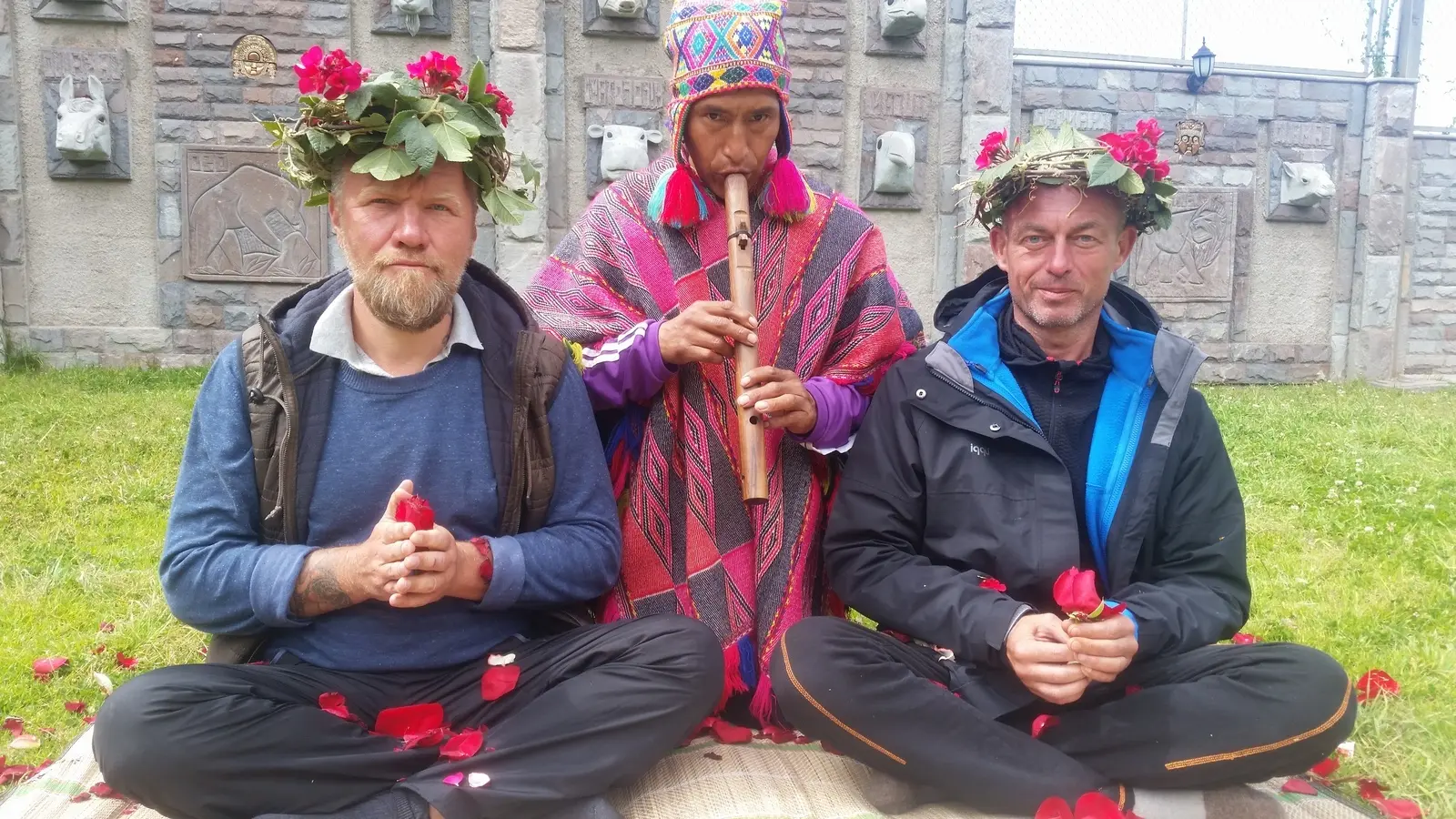
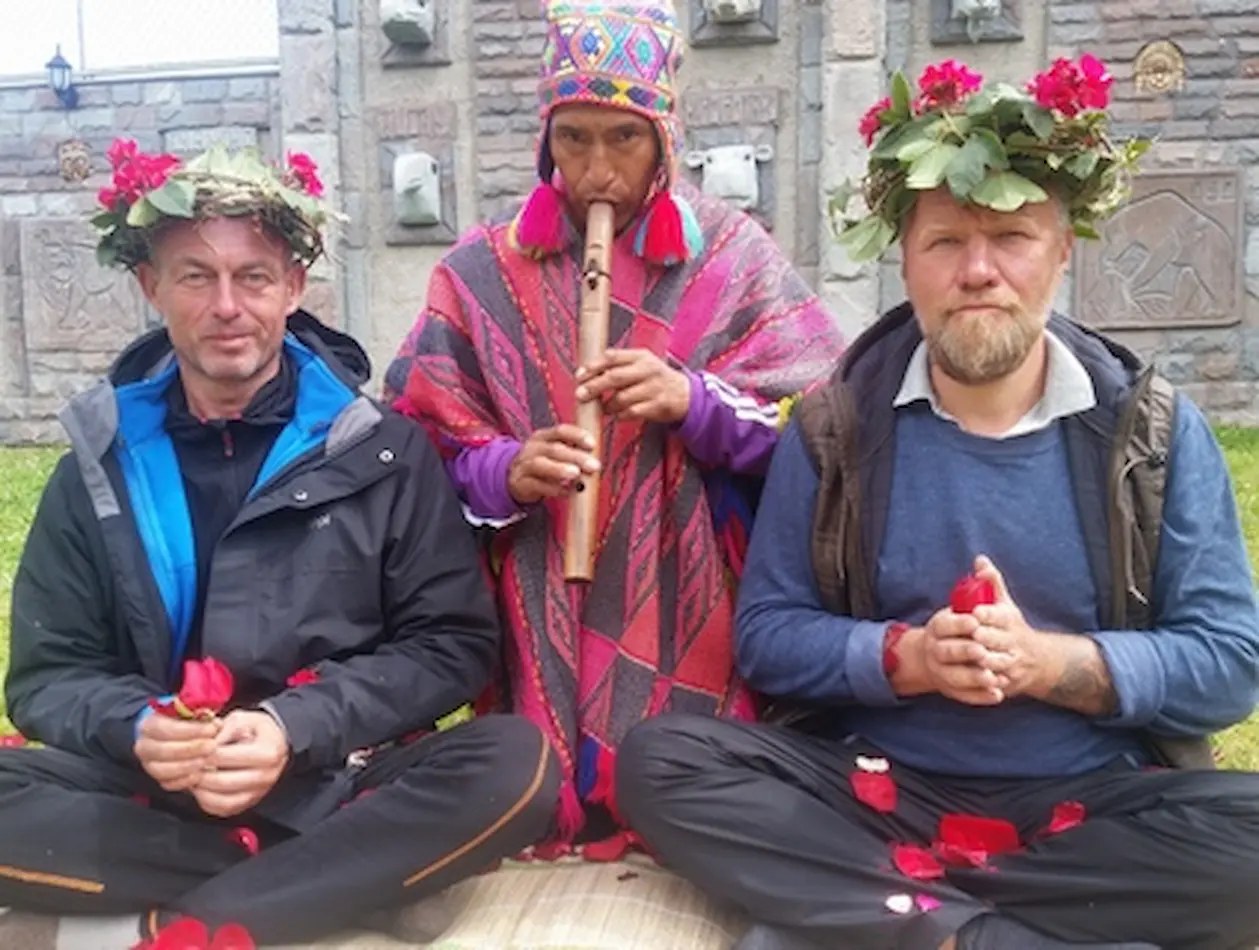
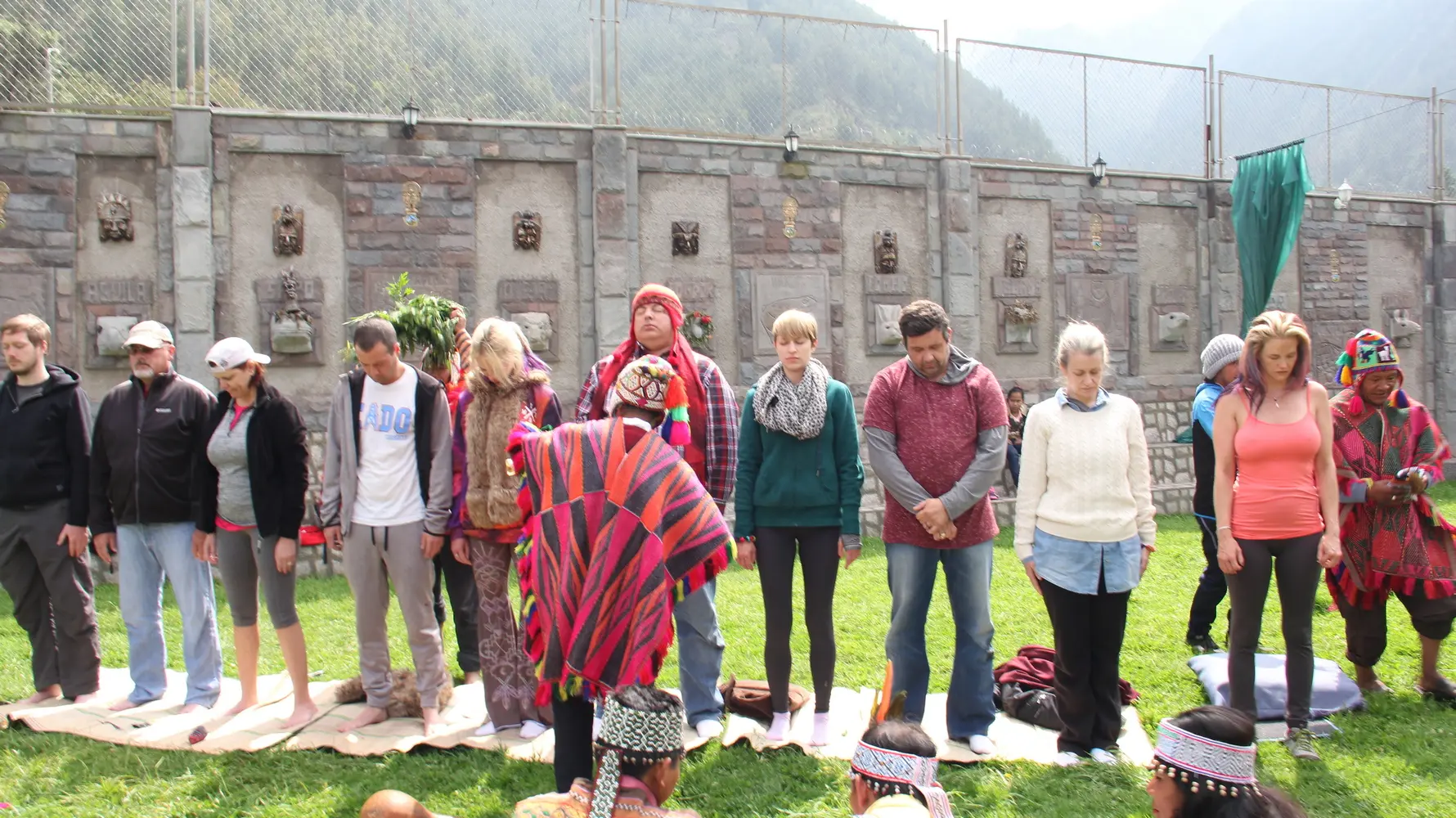
In Spanish it is called baño de florecimiento, the bath of blossoming. The logic is straightforward once you see it: after a cleansing removes what’s stagnant, the Flowering Bath is what’s meant to fill that space back up. Flowers, herbs, and scented water stand in for the qualities a person is hoping to invite in — love, clarity, prosperity, renewed energy — depending on what the ceremony is built around.
Color carries meaning here. White flowers are generally associated with purity, red with love, and yellow with luck and joy, though the exact combination varies by shaman and by what the participant is working toward. Rosemary and rue often reappear from the cleansing ritual, this time symbolizing growth rather than removal.
Most shamans are firm on one point: this ceremony works best as a second step, not a first one. Andean tradition holds that flowering only takes root in a field that’s already been cleared — which is why we schedule a cleansing beforehand, even a brief one.
03 Step by step
How the ceremony unfolds
The bath itself takes only a few minutes. What surrounds it gives it its meaning.
01
Step 1
A short conversation
The shaman may ask what you’re hoping to invite into your life — health, love, work, spiritual clarity — so the flowers and herbs used can be chosen with that in mind.
02
Step 2
Opening the ritual
As with most Andean ceremonies, the shaman opens with a prayer to the Apus and Pachamama, asking for the ceremony to be received well.
03
Step 3
Preparing the bath
Flowers of different colors, aromatic herbs, and scented water are combined, sometimes in a large basin, sometimes poured directly. Incense is often lit alongside this, meant to relax the participant and shift the mood of the space.
04
Step 4
The pouring
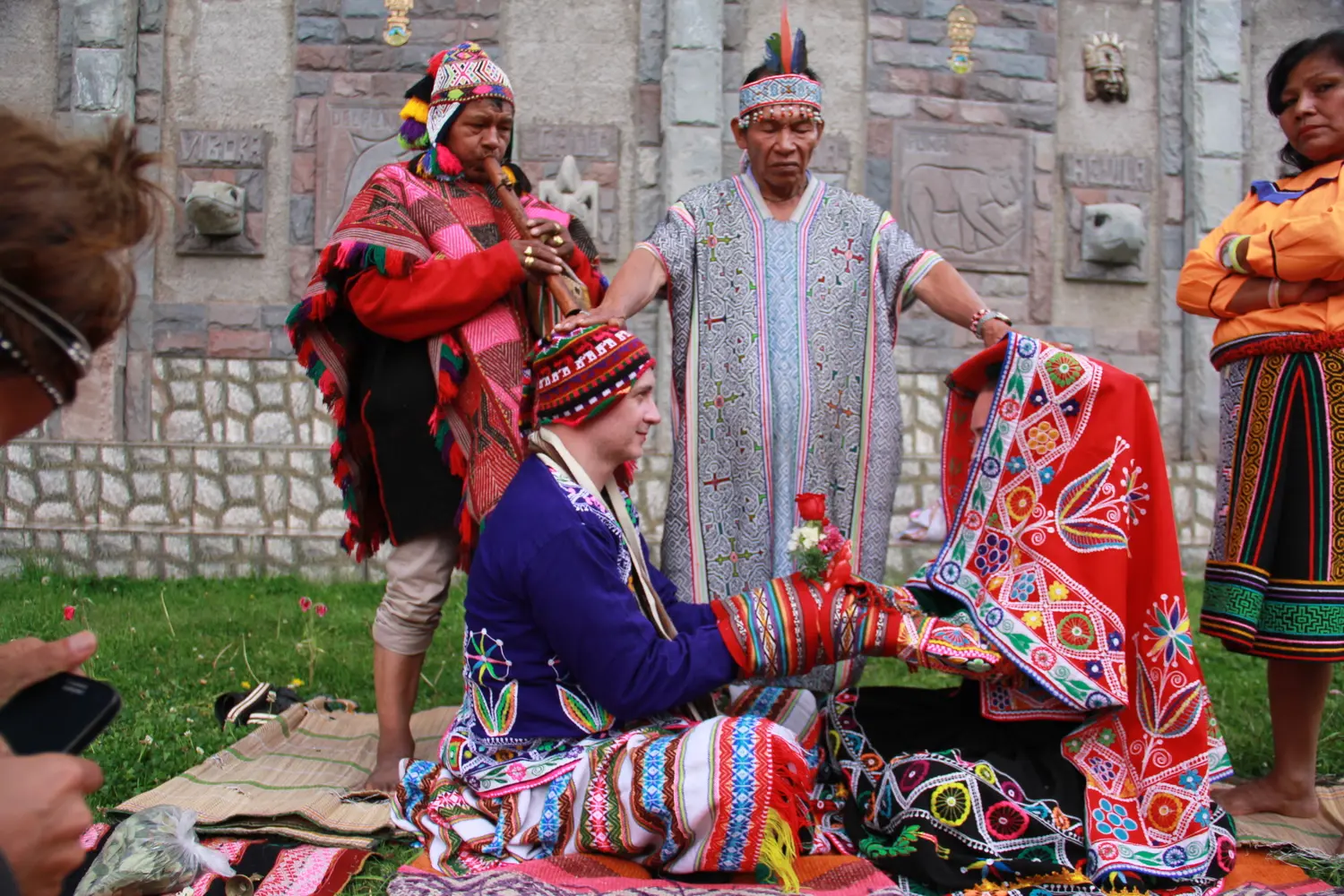
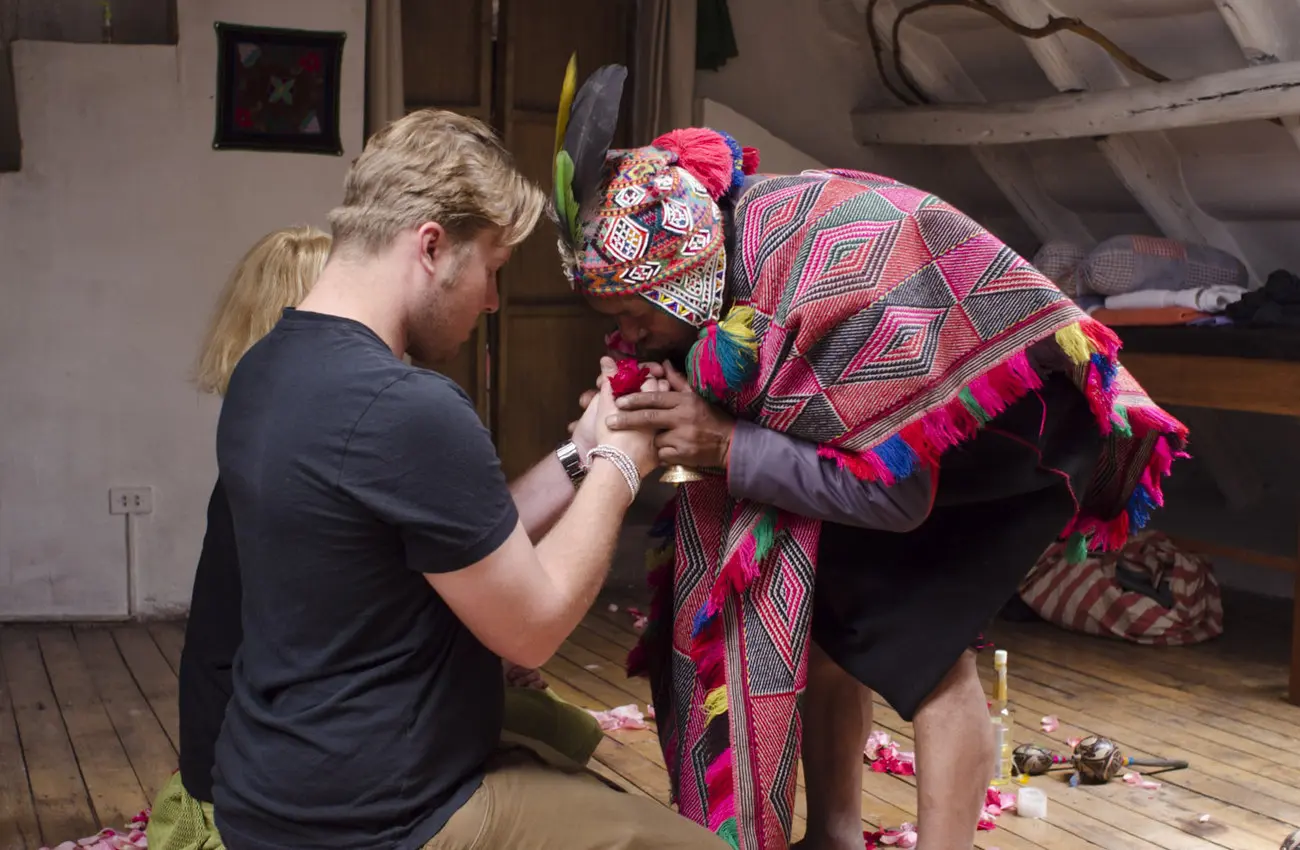
The shaman pours the flower water over your head and shoulders while speaking prayers or intentions aloud, sometimes in Quechua, sometimes in Spanish. Petals are left to fall naturally rather than brushed away — in some traditions, the longer they stay, the better.
05
Step 5
Closing words
The ceremony ends with a short blessing of gratitude to Pachamama and the Apus, and sometimes brief guidance on carrying the ceremony’s intention forward.
Flowers and herbs
The flowers of the bath and their intentions
No two flowering baths are mixed the same way. The master chooses flowers, herbs and scented waters for what you want to invite in, and color is the first language of that choice:
| Ingredient | Intention traditionally linked to it |
|---|---|
| White flowers (carnations, roses) | Peace, purity and a clean start. |
| Red flowers and petals | Love, passion and the heart. |
| Yellow flowers | Joy, good luck and prosperity. |
| Rosemary and rue | Protection; here they mark growth rather than removal. |
| Scented waters (agua florida, rose water) | Freshness and a light, open energy. |
The bath works as the second half of a pair. A limpia takes away what is heavy, what the Andean tradition calls hucha; the flowering bath brings in what is light and fine, sami. That is why it so often comes right after an energy cleansing, and why, in our five Andean Inca techniques, it is the very last ritual before you go back to Cusco.
Afterwards, let the petals fall on their own. Many people choose to keep the scent on their skin for the rest of the day instead of washing it off, as a way of carrying the intention with them a little longer.
04 What’s included
What’s included
- One of our Andean masters, experienced in traditional flowering rituals
- Flowers, herbs and scented water chosen for the ceremony
- A translator into English
- A quiet space for the ritual at our retreat temple
Not included
- Round-trip transport with pickup at your hotel or our office in Cusco: USD 25 per group
- A preceding energy cleansing, booked as a separate session
- Transport from outside the Cusco area
What to bring and how to prepare
- Avoid alcohol from at least the day before the ceremony
- Skip lotions, perfumes, or other scented products on the day of the ritual, since they can interfere with the herbs and flowers used
- Come with a specific intention in mind — the ceremony works with whatever you bring to it
- Comfortable clothing you don’t mind getting slightly damp or scented with flowers afterward
Our masters
05 Who leads it
Who leads the bath
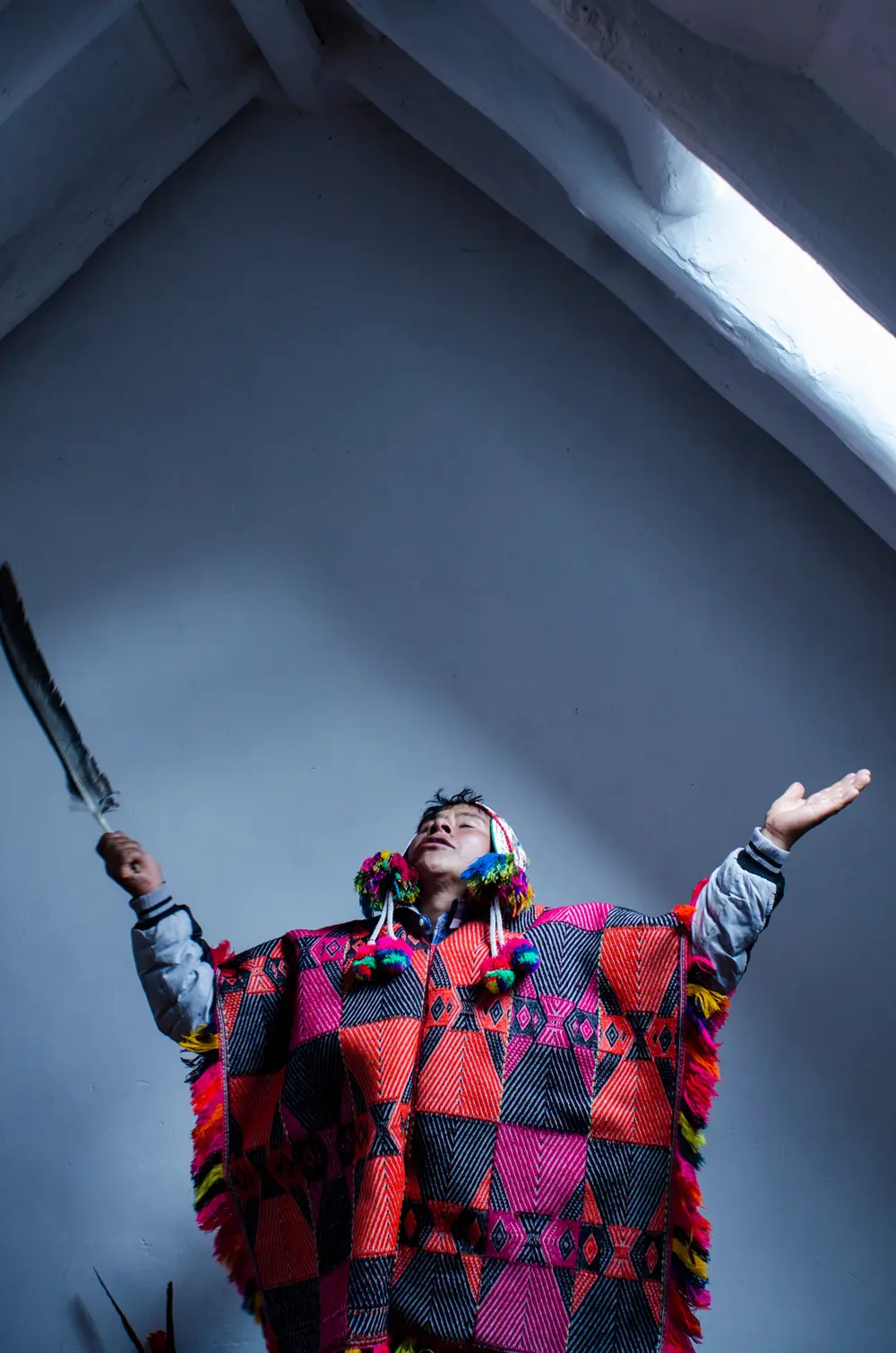
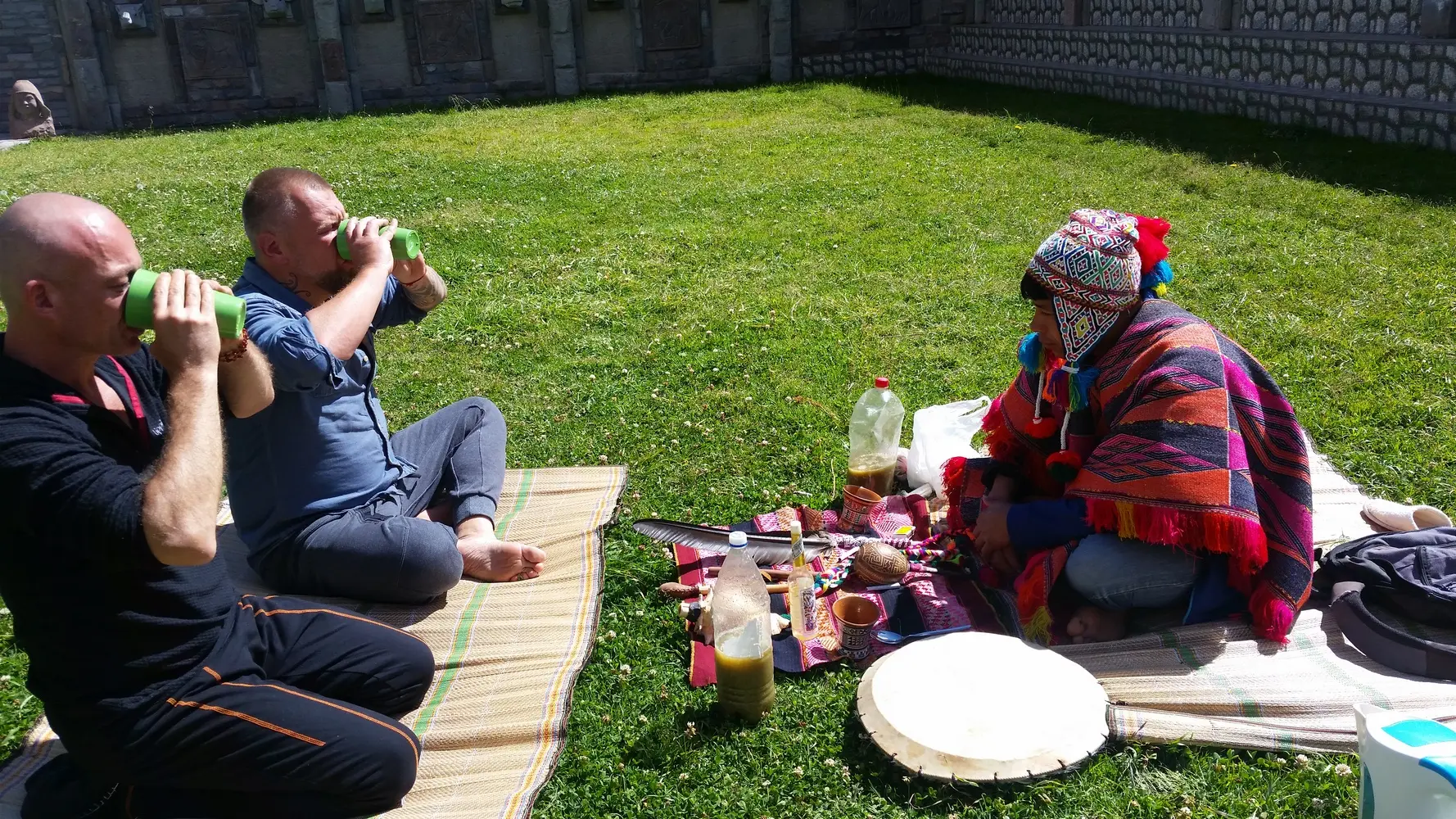
The shamans who perform this ritual are generally the same Andean priests — paqos or altomisayoq — who guide despacho offerings and cleansing ceremonies, since all three draw on the same body of Andean ceremonial knowledge. Selecting the right combination of flowers and herbs for a given intention is considered a skill passed down through years of apprenticeship rather than something standardized across shamans. At our center, the flowering bath is led by our Andean masters: Santiago Salas, Andrés Apaza, Porfirio Apaza or Enrique Jiménez.
Read more about our community of masters on our about us page.
Pairing it with an ayahuasca retreat
The flowering bath usually comes toward the end of a program, often on the final day, so the retreat closes on a note of renewal rather than release. It often follows directly after a negative energy cleansing ceremony, which clears the space this ritual is meant to fill.
In our programs it is the last of the five Andean Inca techniques, right after the Pachamama offering ceremony. You can add it to any of our ayahuasca retreats in Cusco or to the San Pedro ceremony, rounding out a full Andean arc from opening to close.
06 Booking
Book your flowering bath
Prices are per person and go down as the group grows. The ceremony takes place at our retreat temple in the Huayllapampa valley, 45 minutes to an hour from Cusco depending on traffic. We pick you up at your hotel in Cusco or at our office (426-A Retiro Street, 5th Floor); round-trip transport is USD 25 per group.
Choose your option
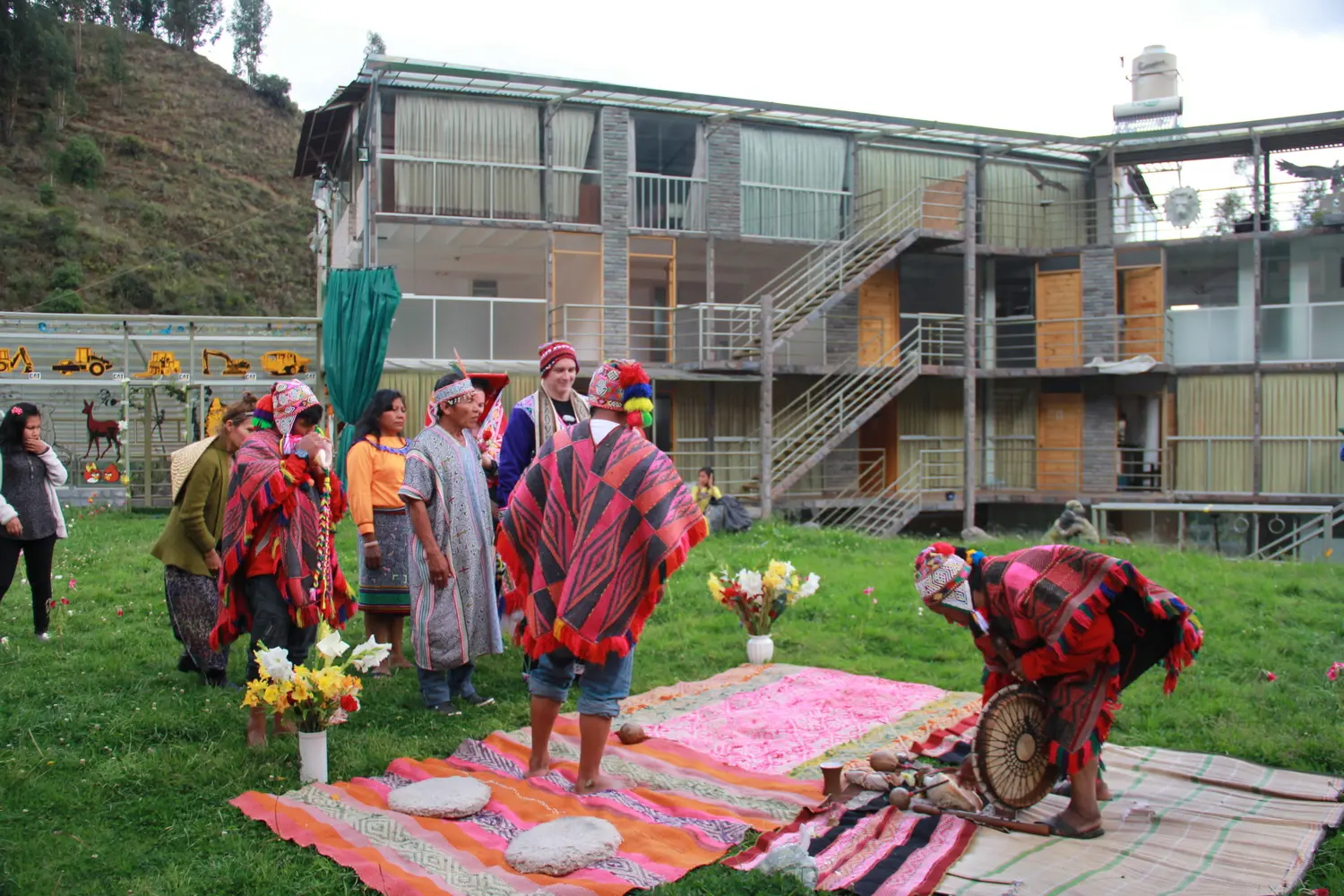
Want this ceremony as part of a retreat? It is included in the five Andean Inca techniques option of every ayahuasca retreat.
07 FAQ
Flowering bath FAQ
What's the difference between a Flowering Bath and a negative energy cleansing?
A cleansing removes what’s stagnant or negative; a Flowering Bath is meant to fill that same space with new intention — love, prosperity, clarity, or renewed energy. Most Andean shamans recommend doing the cleansing first.
Do I need to combine this with an Ayahuasca ceremony?
No, though it is commonly done at the close of an ayahuasca retreat, as a way of ending the experience on a note of renewal.
What do the different flower colors mean?
Broadly, white is associated with purity, red with love, and yellow with luck and joy, though the exact meaning can shift slightly depending on the shaman and tradition.
Is it physically demanding?
No. Most of the ceremony involves standing still while flower water is poured over you.
How should I prepare beforehand?
Avoid alcohol the day before, skip perfumes or lotions on the day of the ceremony, and come with a clear sense of what you’d like to invite into your life.
Can I do this ceremony on its own, without a retreat?
Yes. Many travelers book it as a standalone closing ritual for their time in Cusco, independent of any plant medicine work.
How much does a flowering bath in Cusco cost?
With us, from USD 100 to 120 per person depending on group size: USD 120 for one person, 110 each for two, 105 each for three or four, and 100 each for five or more. Round-trip transport, with pickup at your hotel or our office in Cusco, is USD 25 per group.
Where does the ceremony take place?
At our retreat temple in the Huayllapampa valley, district of San Jerónimo, 45 minutes to an hour from Cusco depending on traffic. We pick you up at your hotel in Cusco, or at our office (426-A Retiro Street, 5th Floor), and travel there together.
08 More ceremonies
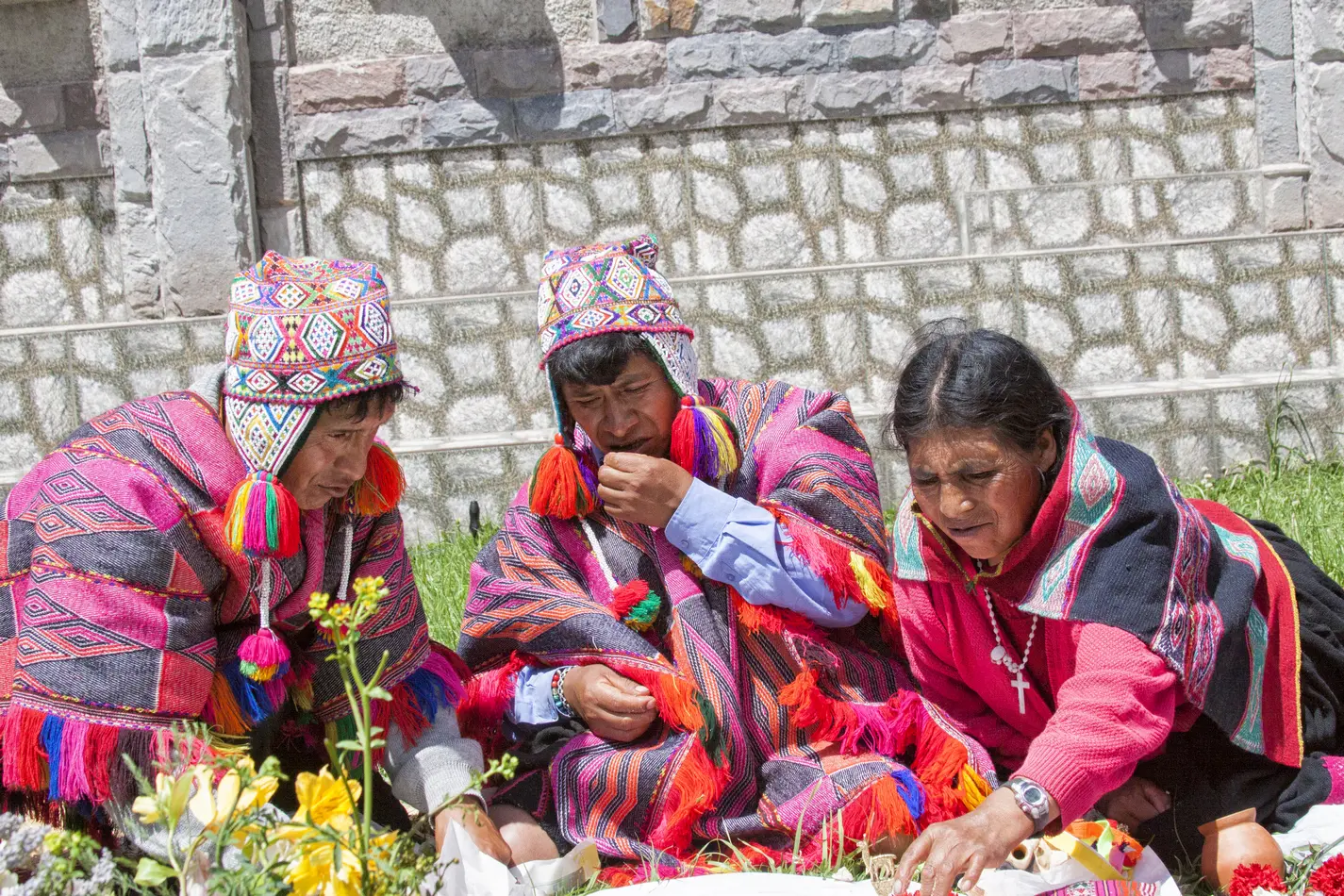
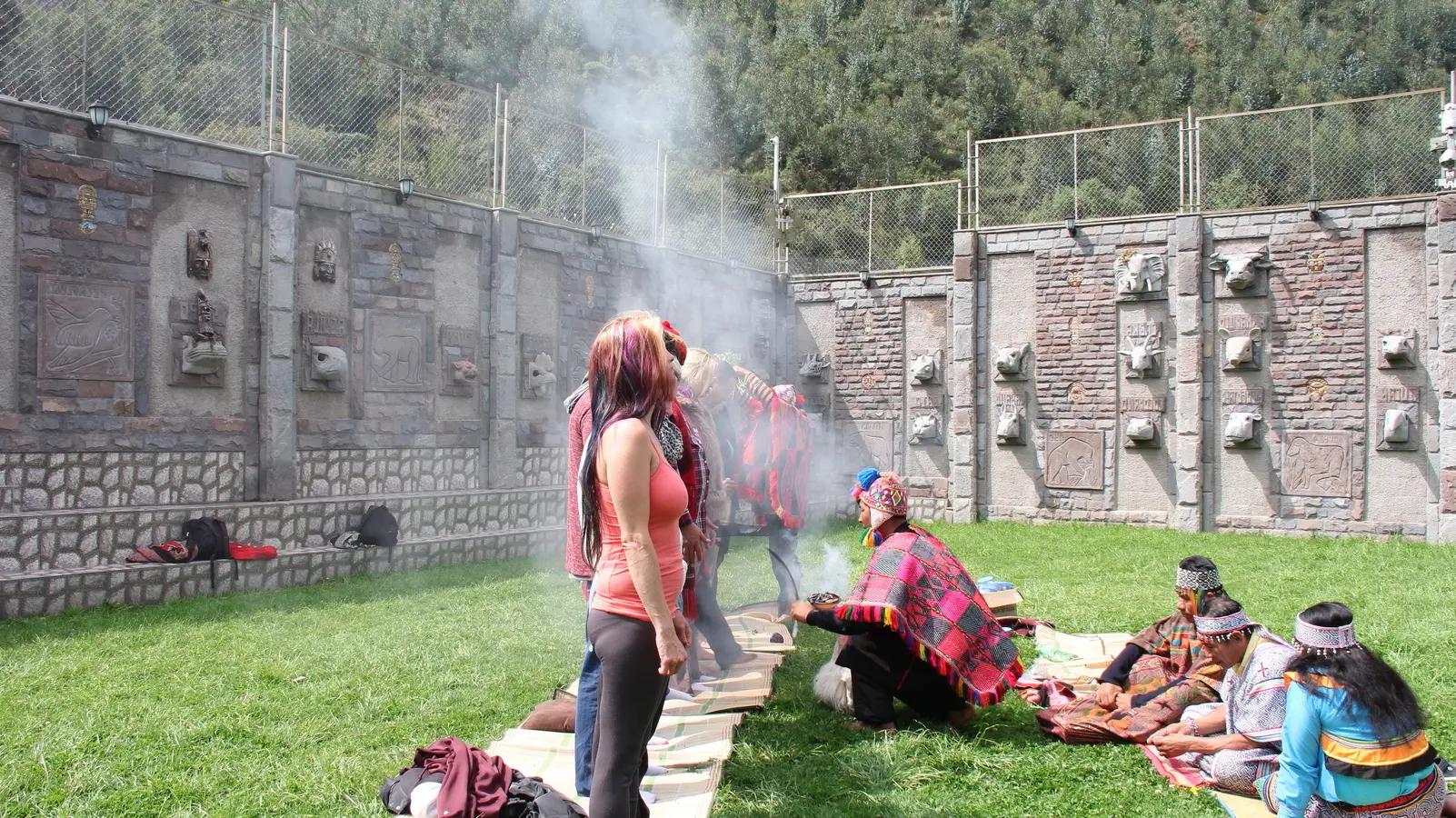
More Andean ceremonies in Cusco
09 Contact
Close it in bloom.
Whether it closes an ayahuasca retreat or marks the end of your time in Cusco, the flowering bath is the ceremony Andean tradition built for turning a clean slate into a fresh start.