The first time most participants hear an icaro in ceremony, something unexpected happens. The sound moves through the body differently than music normally does. It doesn’t stay in the ears — it reaches somewhere deeper and less identifiable. People describe it as a hand reaching into the chest, as water finding its way through a crack in stone, as something that the ordinary mind can’t quite locate or label.
This response is not metaphorical. Icaros are not songs that accompany the ayahuasca ceremony. They are the ceremony, expressed in sound.
What Are Icaros? — where they come from, how they work, what they accomplish within the ceremonial container — changes the experience of receiving them. This guide covers all of it.
Table of Contents
The Meaning of the Word Icaro
The word icaro — also spelled ikaro in some traditions — derives from the Quechua verb ikaray, meaning “to blow smoke in order to heal.” This etymology is revealing: it connects the healing songs directly to the practice of working with mapacho (sacred tobacco) and breath as vehicles of healing intention.
In broader ceremonial usage, icaro refers to any healing song, chant, melody, or whistle used by a curandero during plant medicine work — not only those associated with ayahuasca, but any that have been received through relationship with the plant world and used in healing contexts.
The word is used throughout Peru, Colombia, Ecuador, and Brazil, with variations in spelling and pronunciation across different indigenous and mestizo traditions. In the Shipibo-Conibo language of the Peruvian Amazon, the songs are called nishi bewa (ayahuasca songs) and rao bewa (plant medicine songs). Icaro is the Spanish-influenced term that has become most widely recognized in the contemporary plant medicine context.
What Icaros Are — and What They Are Not
In the Amazonian worldview from which they originate, icaros are not compositions. They are not created by the healer in the way a musician creates a song. They are received — transmitted from the plant spirits, the ancestors, or what the Shipibo-Conibo tradition understands as the living spiritual intelligence of the Amazon itself, to a healer who has prepared themselves through years of disciplined practice to receive and carry them.
This distinction matters because it shapes how icaros function. They are not chosen by the healer based on what sounds appropriate. They arise — sometimes from a fixed repertoire the healer has accumulated over years, sometimes as entirely new songs arising in real time in response to what the ceremony requires. Experienced Shipibo maestros describe receiving new icaros during ceremony, specifically suited to what is needed in that moment for a specific participant or the group as a whole.
The icaro is understood as the vehicle through which the healing intelligence of the plant world enters the ceremonial space and works with each participant. The healer’s voice is the instrument through which this intelligence expresses — which is why the quality and depth of a healer’s icaros is directly related to the depth of their training and their relationship with the plants, not to their technical vocal ability.
“You don’t need to ‘understand’ the song intellectually,” says Nima, a Shipibo-Konibo healer from the Ucayali region. “Your soul understands it perfectly.”
The Shipibo Tradition and the Origin of Icaros
The Shipibo-Conibo people of the Peruvian Amazon are among the most well-documented and widely recognized ayahuasca healing lineages in the world. Their healing tradition is built around the relationship between the healer, the medicine, and the icaros — these three elements form an inseparable triad.
Within the Shipibo worldview, the universe is fundamentally structured by patterns — geometric, vibrational, and energetic patterns that underlie all of physical and spiritual reality. Everything that exists has its song, its energetic signature. Illness is understood as a disruption of these patterns; healing is the restoration of pattern harmony. The icaros are the healer’s tool for perceiving, working with, and restoring these patterns in the bodies and energetic fields of their patients.
The Shipibo healing tradition distinguishes between different levels of healer. A muraya or meraya represents the highest level of shamanic practice — healers who have completed the most extensive training and dietas, who carry the most powerful and comprehensive icaro repertoire, and who can diagnose and treat the most complex conditions. Becoming a muraya requires many years of dedicated work and is increasingly rare.
Other traditions within the broader Peruvian and Amazonian context also work with healing songs — the mestizo curanderismo tradition of the northern Peruvian coast has its own repertoire of icaros adapted through the colonial encounter with Catholicism and other indigenous influences.
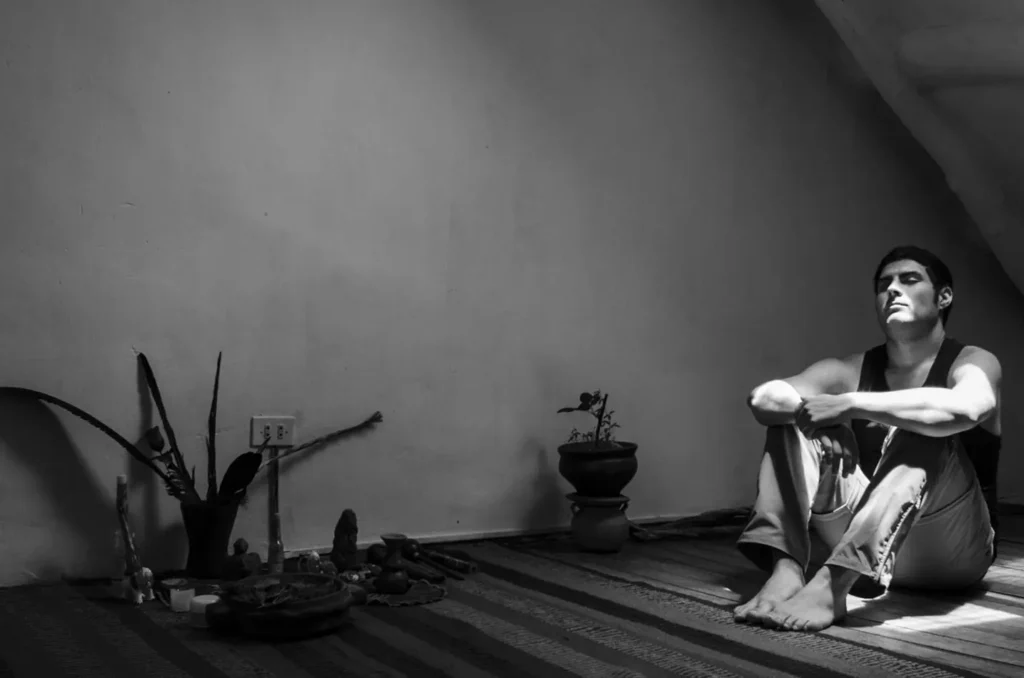
Healing center for Ayahuasca retreat in Cusco – Centro de sanación para retiro ayahuasca Cusco
How Shamans Learn Icaros: The Dieta and the Direct Transmission
The process through which a healer develops their icaro repertoire is one of the most demanding apprenticeship practices in any healing tradition.
The dieta — in its strict traditional sense, not the preparatory diet that retreat participants follow — is a period of extended isolation, dietary restriction, and direct ceremonial work with specific master plants. Healers may spend weeks or months alone, eating only certain foods (typically plantains, rice, and freshwater fish), avoiding social contact and sexual activity, and working deeply with a designated plant teacher.
During the dieta, in this state of extreme sensory and social simplification, the plant spirits communicate with the healer through dreams, visions, and direct experience. The icaros arrive — as melodies, as words in indigenous languages, as sensations that the healer translates into song. The dieta is essentially a long listening practice in which all ordinary distraction is removed so that the language of the plants can be heard.
Formal apprenticeship with a master healer also involves transmission — the elder healer sharing specific icaros directly, sometimes by singing them to the apprentice in ceremony, sometimes by blowing their breath over the student in a gesture of energetic transfer. These transmitted icaros carry the lineage of the healer who passes them — their years of relationship with the plants, their accumulated healing experience, the depth of their own practice.
The result of this process — after years of dietas, apprenticeship, and ceremony — is an icaro repertoire that is genuinely the healer’s own: a living, growing collection of healing songs that reflects the specific relationship between that particular healer and the plant world. This is why two healers from the same tradition can have very different icaro repertoires — not better or worse, but specific to each person’s unique spiritual development.
The Kené Connection: Geometric Design and Healing Song
This dimension of Shipibo healing tradition is less widely known than the icaros themselves, and it illuminates the tradition’s understanding of healing in a remarkable way.
The Shipibo-Conibo are also famous for their intricate geometric textile designs, called kené — patterns of extraordinary complexity that cover clothing, pottery, and ceremonial objects. These designs are not decorative in the Western sense. They are visual representations of the same energetic patterns that the icaros express in sound.
In the Shipibo understanding, each healing song has a corresponding visual pattern — the icaro and its kené are two expressions of the same underlying energetic reality. Some Shipibo healers describe being able to “see” the geometric patterns of their icaros as they sing, and some describe the kené as songs that have been made visible.
This synesthetic dimension of Shipibo healing — the movement between sound, pattern, and vision — offers a profound framework for understanding why participants in ayahuasca ceremonies often report visual phenomena that seem to respond to the healer’s songs. The geometric patterns that appear in the visual field during ceremony may be, in some sense, the kené of the icaros becoming perceptible in the altered state.
Types of Icaros and Their Functions in Ceremony
Experienced healers carry a range of icaros with distinct functions. While the categories vary by tradition and by individual healer, several functional types appear consistently across the literature and practitioner accounts:
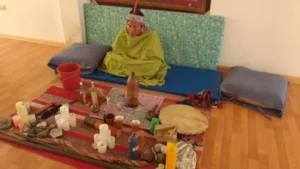
Opening icaros begin the ceremony — calling in protective spirits, establishing the boundaries of the sacred space, invoking the medicine’s spirit, and preparing the energetic container for the night’s work. These are sung before or shortly after the medicine is served.
Cleansing icaros (icaros de limpieza) work to clear energetic blockages, release heavy or stagnant energy, and move what needs to be moved. These may be directed at the group as a whole or at specific participants when the healer perceives something in need of clearing.
Vision icaros (icaros de visión) open the visual dimension of the experience — enhancing the quality and depth of visions, inviting clarity of perception, and helping participants access the symbolic material the medicine has for them.
Healing icaros address specific conditions — emotional, physical, or spiritual — and may be sung for individual participants who are in the middle of processing particular material. When the healer sits with someone and sings directly to them, this is typically a healing icaro.
Grounding icaros bring participants back to the body, restore a sense of physical presence and stability, and provide an anchor when an experience has become difficult to navigate. These are particularly valuable when a participant is in distress or disorientation.
Closing icaros formally end the ceremony — thanking the spirits, releasing the protective space that was held throughout the night, and returning the energetic boundaries of the maloca to their ordinary state. The ceremony cannot be considered properly complete without this formal closure.
How Icaros Work: The Functional Mechanism
In the traditional understanding, icaros work because they carry the consciousness and healing intention of the plant world through the healer’s voice into the ceremonial space and into the participants. This is a cosmological explanation — accurate within its own framework, and consistent with what participants experience.
Contemporary research offers complementary perspectives. Studies on the effects of sound on consciousness and physiology during altered states have found that rhythmic, melodic, and tonal stimulation significantly influences the quality and direction of psychedelic experiences. Researchers have proposed that the icaros function as a kind of steering mechanism — using sound to direct the neural plasticity and default mode network suppression created by the medicine toward specific emotional or psychological territories.
The specific qualities of icaros — their tonal patterns, their rhythmic structure, their use of repetition — produce effects on the nervous system that are measurable and predictable. Tonal patterns that resolve tension create a sense of emotional release and completion. Patterns that build intensity can support the emotional work of confronting difficult material. The healer, drawing on years of experience with how specific songs affect participants in altered states, selects and adjusts their songs in real time in response to what they observe in the ceremonial space.
What makes this functional understanding compatible with the traditional one is the recognition that the healer is not making these selections through rational calculation. The selection of icaros during a ceremony is itself an intuitive, visionary process — the healer perceiving what is needed and responding with what the plants and the training have equipped them to offer.
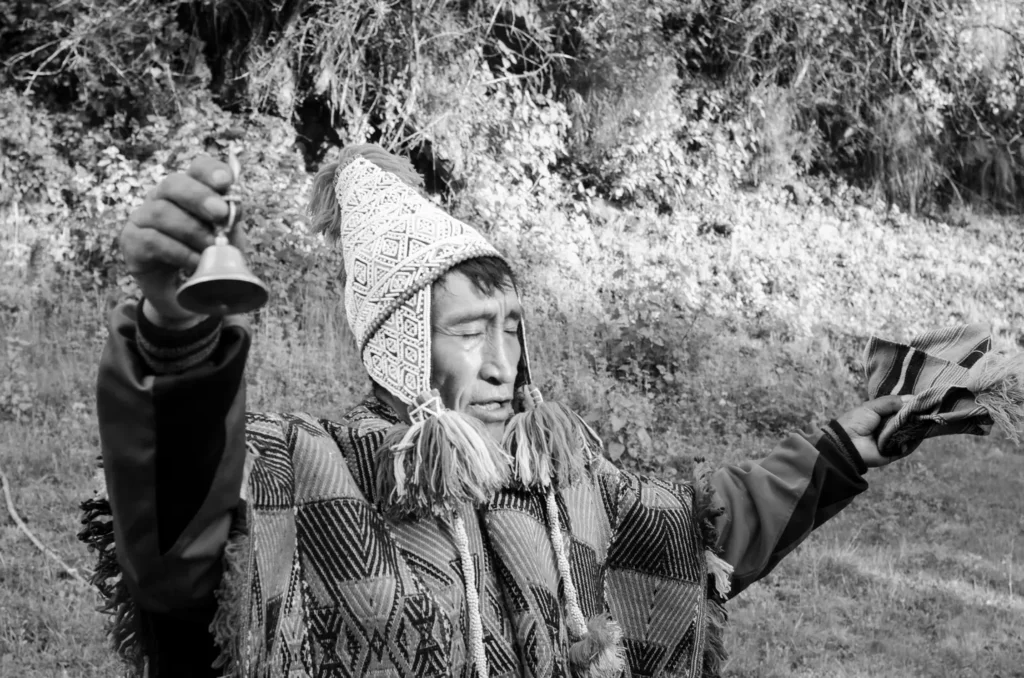
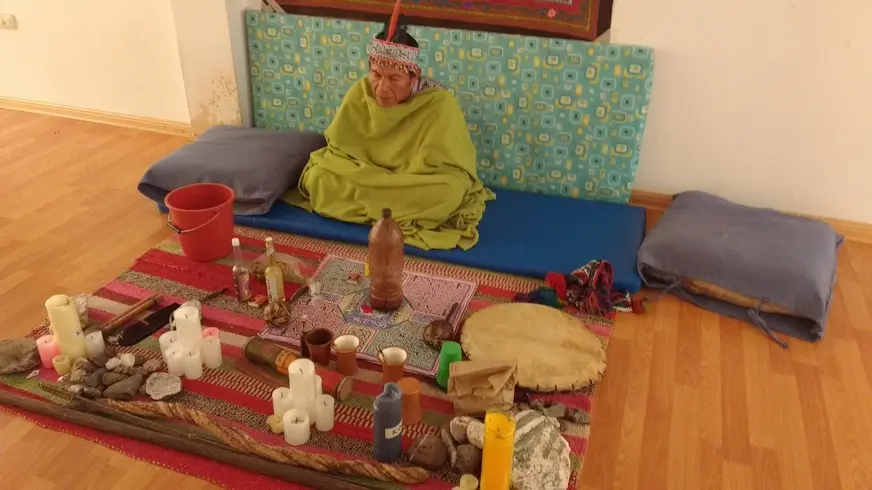
Shipibo shaman guiding ayahuasca retreat in Peru – Chamán shipibo ceremonia ayahuasca Perú
The Sound of Icaros: Whistling, Singing, and Instruments
Icaros take many forms. Not all are sung in the conventional sense.
Whistling is one of the most characteristic sounds of an ayahuasca ceremony — a specific, melodic whistling that healers use as a form of icaro. The whistle can be extraordinarily precise and expressive, capable of conveying complex melodic content without words. Many participants describe the healer’s whistle as having an almost physical quality of penetration — reaching places that the voice alone cannot.
Sung icaros may be in the healer’s indigenous language, in Spanish, in a mixture of both, or in what participants describe as a language that seems to come from elsewhere entirely — a phoneme sequence that doesn’t correspond to any known human language. This last category is understood in the tradition as the language of the plants themselves.
Rattle work (chakapa) — the use of a bundle of dried leaves shaken rhythmically — accompanies many icaros and adds a percussive, sweeping quality to the healing work. The chakapa is used to cleanse the energy around participants and to add texture and direction to the healer’s songs.
Mapacho (sacred tobacco) is blown through the icaros — the healer singing over the smoke, or blowing the breath of the icaro directly toward a participant, using the tobacco as a vehicle for the song’s healing intention.
Individual Icaros: When the Shaman Sings to You Specifically
One of the most profound moments in an ayahuasca ceremony is when the healer sits beside you and sings directly to you — not to the group, but to you specifically.
This is a personal healing session conducted through sound. The healer has perceived something in your energy, your process, or your trajectory through the night that calls for direct attention. The icaro they sing at this moment is selected — consciously or intuitively — for what you specifically need.
Participants consistently describe these moments as among the most significant of the entire ceremony: a sense of being truly seen, of something in them being directly addressed, of the song reaching a place that nothing else has ever reached.
What is the appropriate response? Stay still. Keep your eyes closed. Allow the song to do what it is there to do without trying to interpret or direct it in real time. The icaro is not a message to be decoded during the ceremony — it is a treatment to be received. The understanding of what happened often arrives in the days after, not in the moment.
Icaros in Cusco: The Andean Dimension
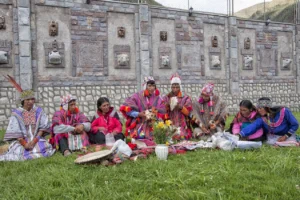
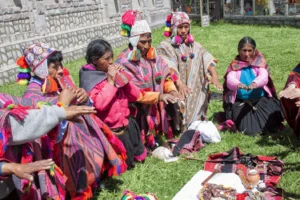
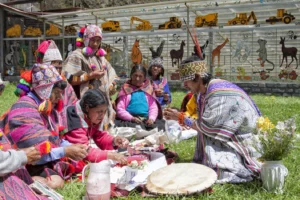
Ceremonies in Cusco and the Sacred Valley carry a specific dimension that distinguishes them from purely Amazonian ceremonial contexts: the presence of Andean ceremonial songs alongside Amazonian icaros.
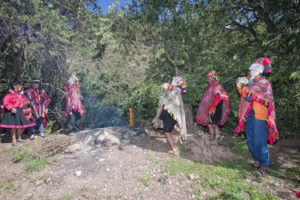
In the Andean healing tradition, the relationship with the mountain spirits (Apus) and with Pachamama (Mother Earth) is maintained through specific prayers, invocations, and ceremonial songs that are distinct from the Amazonian icaro tradition. A ceremony in the Sacred Valley led by a healer trained in both traditions will weave these two sonic streams together — Amazonian icaros navigating the interior journey and Andean invocations anchoring the ceremony in the specific landscape of the mountains and the valley.
This dual sonic tradition is specific to Cusco and the Sacred Valley. It is not available in an Amazonian jungle retreat, where the Andean cosmological dimension is absent. And it is not fully present in purely Andean ceremonies that work without plant medicine. It is the product of the meeting of these two healing worlds in a single geography — something that has been developing in Cusco for decades and that creates a ceremonial sound environment that is genuinely distinct from either tradition alone.
The Apus invoked by name at the opening of a Sacred Valley ceremony — Verónica, Pitusiray, the great ranges visible from the valley — are not just names. They are presences being addressed, and the songs that address them carry the accumulated relationship between the healers of this region and the mountain world that surrounds them.
How to Receive Icaros During Ceremony
Knowing what icaros are changes how you can relate to them during the ceremony. A few practical orientations:
Receive rather than analyze. The impulse to identify what language an icaro is in, what the words mean, or what tradition it comes from is natural but counterproductive during the ceremony itself. The rational mind’s attempt to categorize what it’s receiving is itself a form of resistance. Let the song move through you without trying to contain it.
Follow the sound with your breath. When an icaro begins, breathing slowly and following the rhythm of the song helps your body receive what is being offered. The sound is not separate from you — it is working with you. Your breath can be the bridge.
Allow whatever arises. Icaros frequently release things that have been held. Tears, trembling, emotional surges — these are not problems with the song or with you. They are the song working. Allow rather than suppress.
Notice what happens when the song changes. Experienced observers of ayahuasca ceremonies describe how the quality of the ceremonial space visibly shifts when a new icaro begins. You may notice this yourself — a change in the emotional tone, the visual quality, or your physical state that corresponds to the transition from one song to another.
After the ceremony, the memory or vibration of a specific icaro can serve as an integration tool. Humming a melody you remember, sitting with the feeling it produced, or simply noticing when you find yourself remembering it — all of these are ways the icaro continues working in the days after the ceremony.
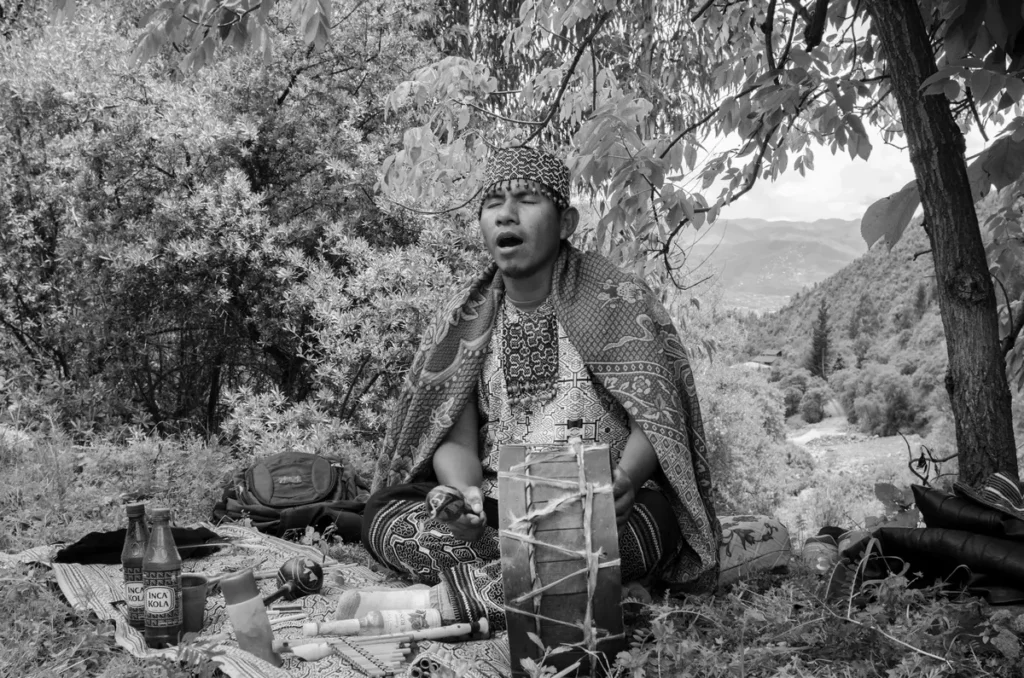
Ayahuasca Cusco Peru
Frequently Asked Questions
What does icaro mean in English?
There is no direct English equivalent. The closest approximation is “healing song” — but icaro carries a specific meaning that “healing song” doesn’t fully capture. An icaro is a song received through relationship with the plant world and transmitted by a trained healer during ceremony as a vehicle for healing intention. The word derives from the Quechua verb ikaray, meaning “to blow smoke in order to heal.”
Do shamans compose their icaros?
In the traditional understanding, icaros are not composed — they are received. They arrive through the dieta, through apprenticeship, through direct transmission from plant spirits, and through real-time inspiration during ceremony. An experienced healer may develop hundreds of icaros over a lifetime of practice. Each one reflects a specific relationship between the healer and the plant or spirit world that provided it.
Do I need to understand the words of an icaro to benefit from it?
No. Most icaros are sung in Shipibo, Quechua, Spanish, or mixtures of indigenous languages that participants don’t speak — and the healing effects are consistently documented regardless. The mechanism is not linguistic. It is sonic, energetic, and relational. The icaro works through its vibrational quality and the consciousness it carries, not through semantic content.
What is the difference between an icaro and regular music?
Regular music, however beautiful, is a human creation designed to affect listeners aesthetically or emotionally. An icaro, in the traditional understanding, is a transmission — a vehicle for the healing intelligence of the plant world, received by a trained healer and directed toward a specific healing purpose within a specific ceremonial context. The difference is not acoustic but intentional and cosmological. Participants consistently report experiencing icaros differently from ordinary music, even before they understand what they are.
Why do different shamans have different icaros?
Each healer’s icaro repertoire reflects their unique spiritual development, their specific dietas and apprenticeship relationships, and the particular plant teachers with whom they have worked. Like a fingerprint, each healer’s icaro vocabulary is individual. This is why the quality of the healer matters — their icaros are a direct expression of the depth and authenticity of their relationship with the plant world.
If you want to experience icaros in the Sacred Valley — within a ceremony that weaves both Amazonian healing songs and Andean ceremonial invocations — our ayahuasca retreats include ceremonies led by healers who carry both lineages. Contact us to learn more.
Related reading: What Is Ayahuasca? · What to Expect at an Ayahuasca Ceremony · Ayahuasca Retreat Sacred Valley Peru · Ayahuasca Ceremony Etiquette · How to Choose an Ayahuasca Retreat