The question of ayahuasca vs psilocybin has become one of the most searched in the plant medicine space — and for understandable reasons. Both substances produce profound alterations in consciousness. Both have genuine therapeutic potential backed by clinical research. Both are sought by people looking for something that conventional approaches haven’t provided. And as psilocybin retreats have become legally accessible in Oregon, Colorado, the Netherlands, and Jamaica, the comparison has gone from theoretical to practically relevant for millions of people.
The honest answer to “which is better?” is that they are not competing versions of the same thing. Ayahuasca and psilocybin are pharmacologically distinct, experientially different, culturally embedded in different ways, and more or less suited to different intentions and situations. Understanding those differences clearly is what makes the choice meaningful rather than arbitrary.
This guide covers the pharmacology, the experiential qualities, the research evidence, the safety considerations, and the practical decision of how to choose — with the specific context of Peru and the Sacred Valley where relevant.
Table of Contents
The Pharmacological Difference: Why They Work Differently
Both substances are classified as classical psychedelics. Both produce their primary effects through agonism of serotonin 5-HT2A receptors in the brain. Both suppress the default mode network — the brain’s self-referential system, associated with rumination, ego maintenance, and habitual thought patterns. In these foundational ways, they share a mechanism.
The differences begin at the molecular level and extend outward from there.
Psilocybin is a prodrug — it is metabolized in the body into psilocin, which is the active compound that crosses the blood-brain barrier and acts on serotonin receptors. The conversion happens quickly, which partly explains psilocybin’s relatively rapid onset. Pharmacologically, psilocybin is a relatively clean serotonergic compound — its primary action is through the serotonin system, with limited engagement of other neurotransmitter systems.
Ayahuasca is a two-component system. DMT from the Psychotria viridis chacruna leaf provides the primary psychoactive molecule — a tryptamine that, like psilocin, acts primarily on 5-HT2A receptors. But DMT taken orally is normally broken down by MAO enzymes in the gut before it can reach the brain. The beta-carboline alkaloids from Banisteriopsis caapi — harmine, harmaline, and tetrahydroharmine — inhibit these enzymes (reversible MAO-A inhibition), allowing the DMT to become orally active. This dual mechanism is what makes ayahuasca pharmacologically complex in ways that psilocybin is not.
The beta-carbolines themselves are not pharmacologically inert. Harmine is a serotonin reuptake inhibitor, harmaline has sedating and anxiolytic properties, and tetrahydroharmine increases serotonin availability in the synaptic cleft. These compounds add layers to the ayahuasca experience that don’t exist in the psilocybin profile — contributing to the emotional depth, the longer duration, and the specific contraindication profile that involves SSRI interactions.
A 2023 systematic review by Kowalczuk et al. synthesizing 28 fMRI studies found that both psilocybin and ayahuasca produce acute decreases in connectivity within the default mode network — confirming the shared mechanism. What the review also highlighted is that the specific patterns of network disruption differ between the two substances, which may underlie some of the experiential differences participants consistently describe.
The Experience Compared: Depth, Duration, and Quality
Despite sharing a broad mechanistic class, the phenomenology — what the experience actually feels like — differs in ways that matter for choosing between them.
Duration is the most concrete difference. Psilocybin effects typically begin within 30-60 minutes and peak between 2-4 hours, with the full experience lasting 4-6 hours. Ayahuasca’s onset is 20-45 minutes, with a longer peak and a total experience of 4-8 hours. In ceremonial settings, ayahuasca ceremonies often run 4-6 hours from ingestion to close, but the altered state can persist into the early morning hours.
The quality of the visionary experience differs characteristically, though with significant individual variation. Psilocybin tends to produce what participants describe as an intimate quality of altered consciousness — inward, reflective, often with a sense of playfulness or lightness alongside depth. Visual phenomena are common but tend to be more abstract and pattern-based at moderate doses, becoming more complex and immersive at higher doses.
Ayahuasca’s visionary dimension is characteristically more complex and symbolic — participants frequently describe encountering what they interpret as entities, guides, or aspects of a larger intelligence. The cosmological quality of the experience is more pronounced. The beta-carbolines’ sedating quality contributes to the dreamlike character of the closed-eye visual space. Participants more consistently describe a sense of being in another space rather than observing altered versions of ordinary reality.
The emotional quality also differs reliably. Psilocybin tends toward a quality participants describe as expansive warmth — openness, connection, a dissolution of habitual defensive postures. It can produce profound emotional material but often does so with a gentler quality than ayahuasca.
Ayahuasca tends toward what participants describe as a more direct confrontation with the interior — shadow material, suppressed emotions, difficult memories. The medicine’s traditional characterization as Madre Ayahuasca — a maternal force that shows you what you need to see rather than what you want to see — reflects something real about how the experience tends to operate. It is deeper and more demanding, particularly for people working with trauma.
MahaDevi’s formulation captures something genuine: “Ayahuasca cleanses and expands. Mushrooms expand. The difference between those two words is the difference between the experiences.” This is an oversimplification, but it points at a real experiential distinction.
The Physical Dimension: Body Load and Purging
This is where the difference between the two substances is most practically significant.
Psilocybin produces relatively modest physical effects. Some people experience nausea during the onset, but significant physical intensity is not a defining feature of the psilocybin experience. The “body load” — the physical sensation of being under the influence — is present but generally not demanding. The physical experience is not a primary dimension of psilocybin therapy; it is background to the psychological work.
Ayahuasca produces significant physical effects. Nausea affects roughly 70% of participants, and purging (vomiting) is sufficiently common that it is given a specific ceremonial name — la purga — and understood as integral to the healing process rather than as a side effect. Sweating, trembling, crying, and other somatic releases are also common. The body is a primary participant in an ayahuasca ceremony in a way that is not true of a psilocybin session.
For participants with gastrointestinal sensitivities, physical health concerns that make intense purging inadvisable, or strong aversion to nausea, this difference is practically important. Psilocybin’s physical profile is genuinely more tolerable for a wider range of people in terms of body impact.
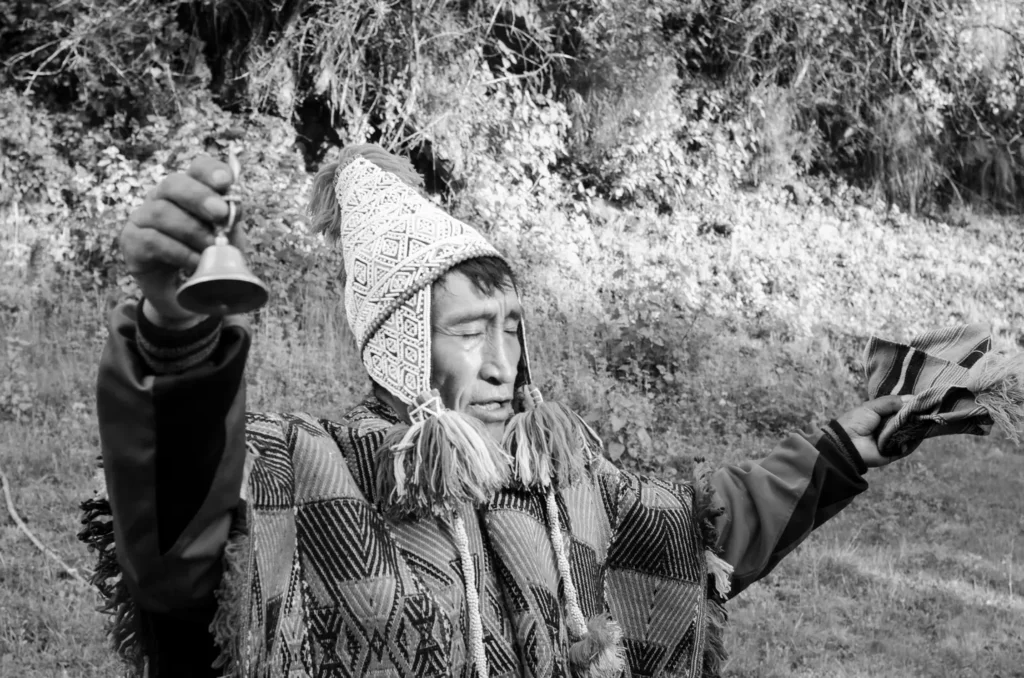
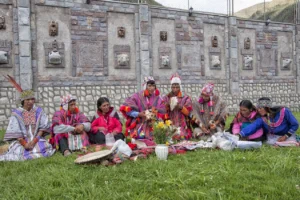
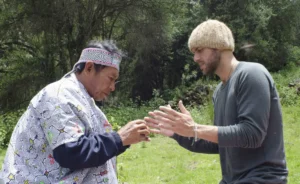
Shipibo shaman guiding ayahuasca retreat in Peru – Chamán shipibo ceremonia ayahuasca Perú
Therapeutic Research: What the Evidence Actually Shows
Both substances have meaningful clinical evidence — and being specific about what that evidence actually shows prevents the overclaiming that affects most comparisons in this space.
Psilocybin has, as of 2026, the largest and most rigorously designed body of clinical trial evidence of any psychedelic substance. Major studies include:
Imperial College London’s psilocybin vs. escitalopram trial (2021), which found comparable antidepressant effects with psilocybin producing better outcomes on several wellbeing measures. Johns Hopkins has published multiple studies showing significant reductions in major depression, smoking cessation, and alcohol use disorder. NYU has conducted trials for psilocybin in cancer-related anxiety with enduring positive effects. Two US states (Oregon and Colorado) have now established regulated therapeutic frameworks specifically for psilocybin, which reflects the maturity of its evidence base.
A 2024 synthesis in Carhart-Harris et al., Psychological Medicine estimated that 60-80% of participants in clinical psilocybin studies for depression experience significant symptom improvements.
Ayahuasca has a smaller but growing body of clinical evidence, with significant observational research supporting its therapeutic potential:
The 2026 Frontiers in Psychiatry study following 280 adults with depression, anxiety, and substance use conditions found significant reductions in depressive symptoms maintained at 180-day follow-up. Studies from the University of São Paulo and published in Scientific Reports documented over 80% clinical improvement rates in participants with psychiatric diagnoses at six-month follow-up. Research from the University of Barcelona documented significant antidepressant effects. MAPS has published observational data on ayahuasca and PTSD.
The honest comparison on evidence: psilocybin currently has more rigorous (randomized, controlled) trial data than ayahuasca, partly because it has been more legally accessible for research in Western institutions. Ayahuasca’s evidence is primarily observational and from ceremony settings rather than clinical trials. Both substances show meaningful therapeutic signal; psilocybin’s evidence base is currently more robust for regulatory purposes.
This does not mean psilocybin is more effective — it means it has been studied under more controlled conditions. The ayahuasca evidence is consistent and the effect sizes are comparable; the methodology is simply less standardized.
Safety and Contraindications: Where They Diverge
This is the dimension of the comparison most relevant to people making a practical decision.
Psilocybin’s primary safety concerns are psychological rather than physiological. It does not carry the pharmacological drug interaction risks of ayahuasca’s MAOI component. People on SSRIs can use psilocybin without the serotonin syndrome risk that makes SSRIs and ayahuasca a dangerous combination — though SSRIs do reduce the effects of psilocybin (both substances work on serotonin receptors, and SSRIs’ receptor occupancy competes with psilocybin’s action). The psychiatric contraindications are similar: history of schizophrenia, schizoaffective disorder, and bipolar with psychotic features are contraindications for both.
Ayahuasca’s primary safety concerns are both physiological and psychological. The MAOI component creates specific drug interaction risks with a wide range of common medications — SSRIs, SNRIs, MAOIs, tramadol, certain decongestants, St. John’s Wort, and others. These interactions can be dangerous and in some cases life-threatening (serotonin syndrome). The dietary restrictions required before ceremony exist primarily because of this MAOI component. The cardiovascular activation ayahuasca produces is also more pronounced than with psilocybin.
The practical implication: for people currently on antidepressants, psilocybin (after appropriate consultation) is significantly more accessible than ayahuasca, which typically requires a supervised tapering process lasting weeks.
For details on ayahuasca’s specific contraindications, see our complete guide on ayahuasca contraindications.
Legal Status in 2026: A Rapidly Changing Landscape
The legal dimension of this comparison has changed substantially since 2022 and continues to evolve.
Psilocybin has outpaced every other psychedelic substance in legal reform. In the United States, Oregon established a regulated psilocybin services framework in 2023 (the first in the world), and Colorado followed in 2024 with a similar model. The Netherlands has long permitted psilocybin truffle retreats under a legal gray area. Jamaica has no law specifically prohibiting psilocybin mushrooms. Australia approved psilocybin for prescription use for treatment-resistant depression in 2023.
This means legal psilocybin access, with professional facilitation, is now possible in multiple jurisdictions without traveling to South America.
Ayahuasca remains a Schedule I substance in the United States due to its DMT content, with legal ceremonial use permitted only through specific religious exemptions (União do Vegetal and Santo Daime). In the UK, Germany, Australia, and most Western countries, it remains controlled.
Peru is the jurisdiction where ayahuasca is fully legal, culturally protected as National Heritage (since 2008), and most authentically practiced within its traditional ceremonial context.
The practical result of this divergence: for someone based in the United States or Europe who wants a legal, professionally facilitated experience without international travel, psilocybin is increasingly the accessible option. For someone specifically seeking the ayahuasca ceremony — the vine, the icaros, the Amazonian healing tradition, the specific quality of DMT combined with MAOI beta-carbolines — Peru remains the primary destination.
The Ceremonial Context: Why Setting Matters for Both
Both substances are significantly affected by set and setting — the mindset of the participant and the environment in which the experience occurs. But the ceremonial context differs structurally between them.
Psilocybin retreats range from clinical therapeutic settings (therapist-guided sessions with eye masks and curated music playlists) to more ceremonially framed experiences (small groups with a facilitator, sometimes in nature settings). The clinical model, developed primarily by researchers at Johns Hopkins and Imperial College, emphasizes psychological preparation, specific music tracks, and structured integration. The ceremonial model varies widely depending on the center.
Ayahuasca has a more established ceremonial framework with clear traditional roots — the maloca, the healer’s icaros, the nighttime darkness, the group ceremonial container held by an experienced curandero. This framework has been refined over centuries and carries specific wisdom about how to navigate the experience safely. The shaman’s role is more active and more central in an ayahuasca ceremony than a facilitator’s role in most psilocybin sessions.
For participants who find comfort in a structured, traditional ceremonial container with an experienced healer actively working throughout the night, ayahuasca’s ceremonial framework offers something that most psilocybin sessions don’t replicate. For participants who prefer a more psychologically framed, less ritually embedded experience, psilocybin’s therapeutic model may be more accessible.
Cost and Accessibility Compared
| Factor | Psilocybin | Ayahuasca (Peru) |
| Legal jurisdictions | Oregon, Colorado, Netherlands, Jamaica, Australia (Rx) | Peru (ceremonial), some religious exemptions in US |
| Travel required | Not always — US residents can access legally | Peru required for traditional ceremony |
| Session cost (facilitated) | $1,000–$3,500 per session (Oregon/CO) | $180–$2,500 (1–7 day retreat) |
| Duration | 4–6 hours | 4–8 hours per ceremony |
| Drug interactions (SSRI risk) | Lower risk | High risk — requires washout |
| Dietary preparation | Minimal | Significant (3–7 days minimum) |
| Physical intensity | Lower | Higher |
For US-based participants, the total cost of a legal psilocybin session in Oregon plus facilitation is often comparable to or higher than the total cost of traveling to Peru for an ayahuasca retreat when multiple sessions are considered. The advantage of psilocybin in Oregon is proximity and legality without international travel. The advantage of Peru is the authentic ceremonial context, the specific ayahuasca pharmacology, and the combination with the Sacred Valley experience.
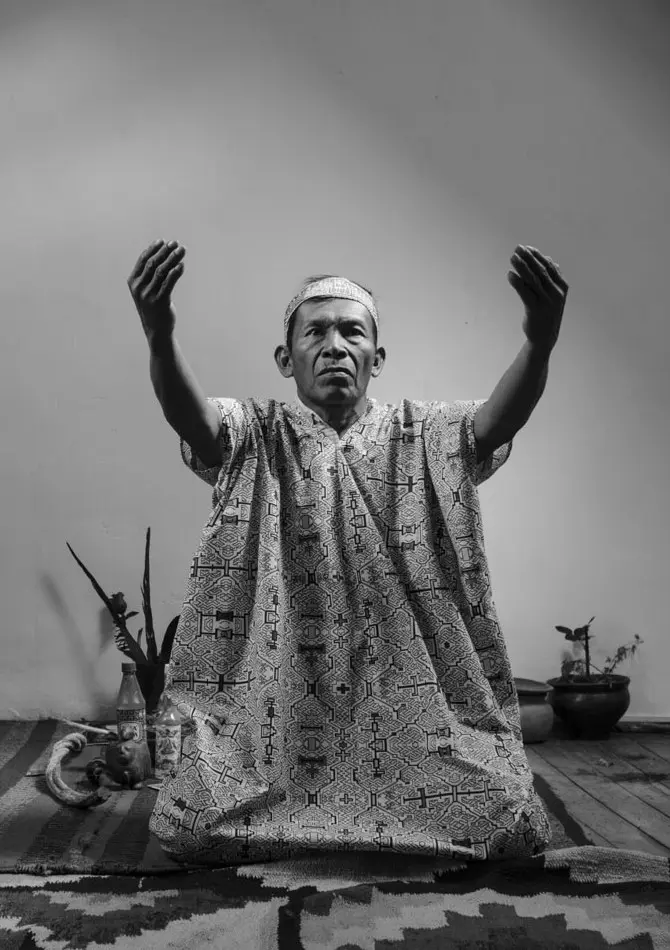
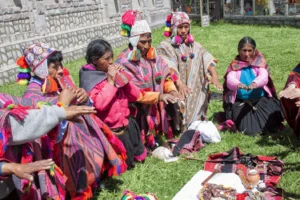
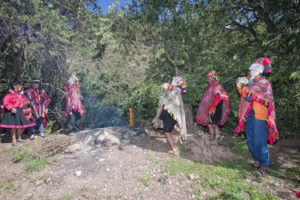
Ayahuasca retreat in Peru Sacred Valley – Retiro de ayahuasca en Cusco
How to Choose: A Framework by Intention and Profile
Ayahuasca tends to be the stronger choice when:
You are specifically drawn to the traditional Amazonian ceremonial context — the healer’s icaros, the nighttime container, the specific plant combination. This is not available in psilocybin sessions.
Your intention involves deep psychological work with trauma, longstanding depression, or addiction — and you are prepared for and willing to engage with intensity. The ayahuasca experience tends to surface difficult material more directly and more urgently.
You do not have contraindicated medications and do not mind the physical dimensions of the experience, including the possibility of significant purging.
You are traveling to Peru for Machu Picchu or other reasons, making the ceremonial context accessible without additional travel.
You want the combination of ayahuasca with San Pedro (Wachuma) available in the Sacred Valley — a dimension not accessible in psilocybin retreats.
Psilocybin tends to be the stronger choice when:
You are on SSRIs or other medications that would require a significant tapering process before an ayahuasca ceremony. The absence of MAOI interactions makes psilocybin significantly more accessible for this population.
You prefer a shorter, more psychologically contained experience with professional clinical support in a familiar legal environment.
You are earlier in your plant medicine journey and want to work with a gentler physical profile before engaging with something more demanding.
Legal and logistical accessibility is a primary consideration — Oregon, Colorado, or the Netherlands are more accessible than Peru for many participants.
You are specifically interested in the growing clinical research framework around psilocybin and want access to a therapist-guided protocol.
Either can serve well when:
Your primary goal is emotional healing and psychological insight — both substances have demonstrated meaningful effects in this domain. The quality of the ceremonial container and the experience of the facilitators matter more than the specific substance when both are well-facilitated.
Can You Do Both? Sequencing and Integration
Many people who work seriously with plant medicine eventually encounter both substances. There is nothing inherently problematic about working with both, though sequencing matters.
Do not combine them or use them close together. Ayahuasca’s MAOI component and psilocybin both work on serotonin receptors. While the combination is not as dangerous as ayahuasca + SSRIs, there are no clinical studies on safety, and the theoretical concern about excessive serotonin receptor stimulation warrants caution. Most experienced practitioners recommend a minimum of two to four weeks between the two, and many suggest longer.
Many practitioners suggest psilocybin before ayahuasca for first-time participants approaching both. Psilocybin’s gentler physical profile and shorter duration provides a reference point for what altered states of consciousness feel like, making the ayahuasca experience less disorienting as a subsequent encounter. This is not a rule — many people do ayahuasca first without problems — but it is a common recommendation.
Integrate each experience fully before the next. The value of working with these substances comes from the integration of what arises — the translation of insight into change in daily life. Stacking experiences without adequate integration time tends to accumulate material faster than it can be processed. See our complete guide on ayahuasca integration for what this process looks like in practice.
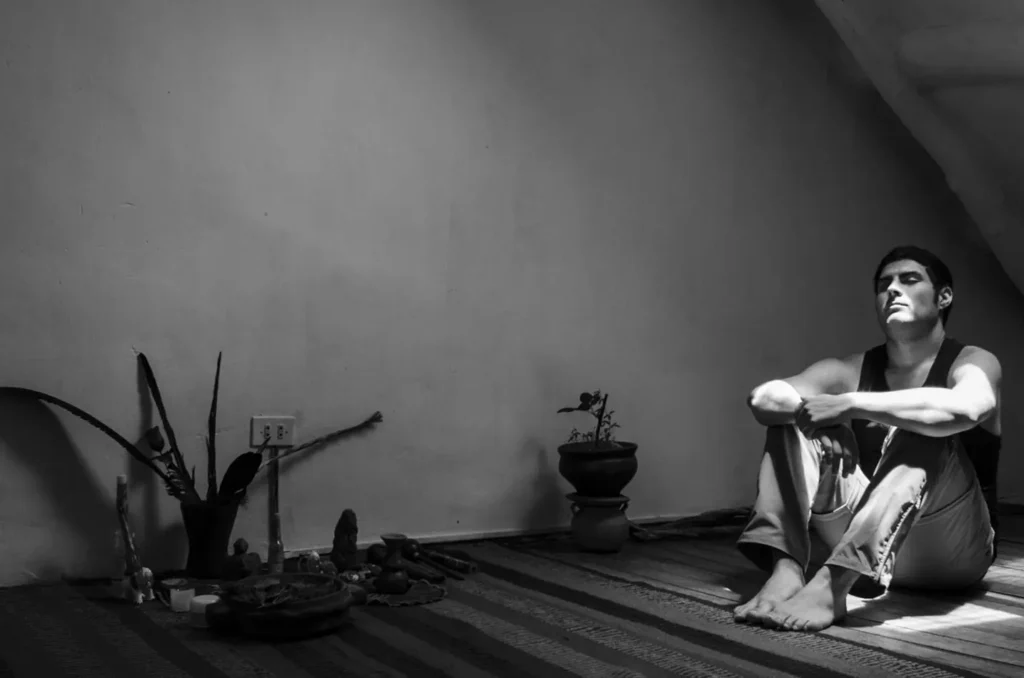
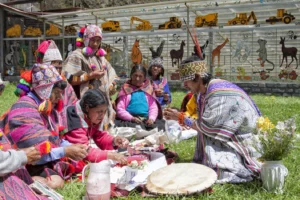
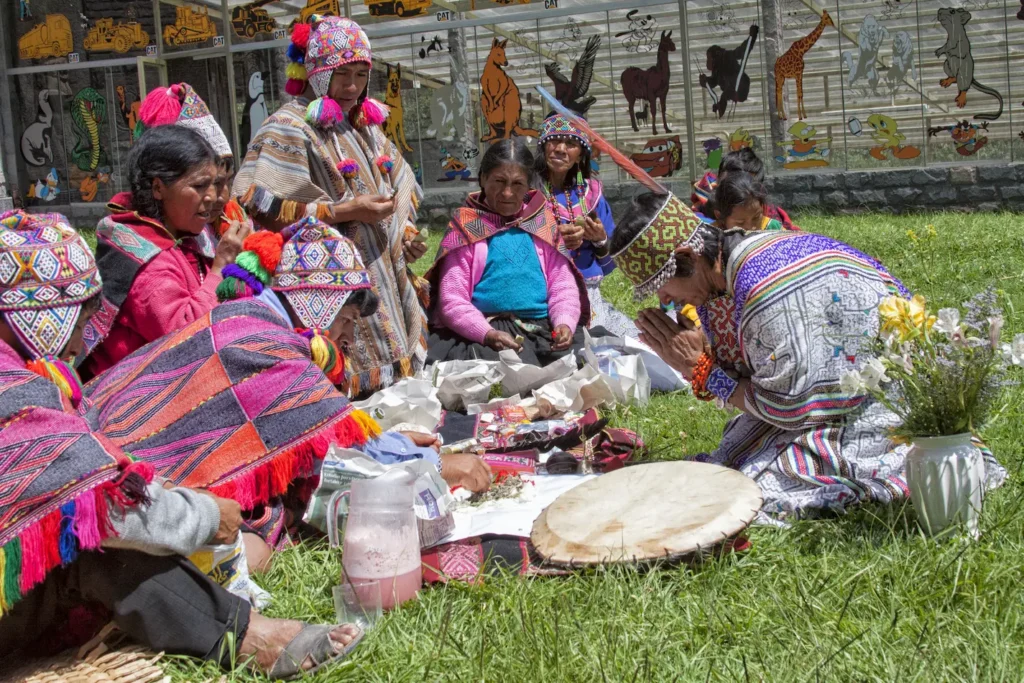
Healing center for Ayahuasca retreat in Cusco – Centro de sanación para retiro ayahuasca Cusco
Where Peru Fits in This Picture
If you are specifically drawn to ayahuasca — the brew, the ceremony, the Amazonian tradition, the specific pharmacology of DMT combined with MAOI beta-carbolines — Peru is where this medicine is most legally protected, most culturally rooted, and most richly practiced.
Cusco and the Sacred Valley offer the specific dimension of a dual Amazonian-Andean ceremonial tradition that is not available in any other geography. Ceremonies here draw from both the Shipibo tradition of the Peruvian Amazon and the Quechua healing tradition of the Andean highlands — a convergence specific to this place that creates something distinct from either tradition alone.
For participants whose research into plant medicine leads them toward ayahuasca specifically, a retreat in the Sacred Valley combines the ceremony with one of the most significant sacred landscapes on earth. The Inca sites, the Apus, the Urubamba, the open Andean sky — these are not incidental. They are part of why this geography has been a site of ceremonial practice for thousands of years.
Our retreat programs — from a 1-day ceremony to a 7-day immersion — include individual health screening, preparation guidance, facilitated ceremony nights, and integration support. For participants who want to work with both ayahuasca and San Pedro (Wachuma), our programs in the Sacred Valley offer both within their authentic ceremonial traditions. Contact us to discuss which program fits your intentions.
Frequently Asked Questions
Is ayahuasca stronger than psilocybin?
“Stronger” is not a well-defined term when comparing qualitatively different experiences. Ayahuasca tends to be more physically intense (more pronounced purging, longer duration), and many participants describe it as more emotionally confrontational. Psilocybin tends to be physically gentler and often more emotionally accessible, particularly at moderate doses. Both can produce profound experiences; the nature of those experiences differs more than their depth.
Can I take psilocybin if I’m on SSRIs?
Psilocybin does not carry the serotonin syndrome risk that makes the SSRI-ayahuasca combination dangerous. However, SSRIs significantly reduce psilocybin’s effects by occupying the serotonin receptors that psilocybin acts on — meaning the experience may be blunted or absent. Most facilitators recommend tapering SSRIs before a psilocybin session, under physician guidance, to allow the medicine to work effectively. Always discuss medication changes with your prescribing physician.
Does ayahuasca or psilocybin work better for depression?
Both have meaningful evidence for depression. Psilocybin currently has more rigorous (randomized controlled trial) evidence, including the landmark Imperial College London comparison with escitalopram. Ayahuasca’s evidence base is primarily observational but consistently shows significant antidepressant effects with large effect sizes. The mechanistic theory for both — increased neuroplasticity, reduced default mode network activity, emotional processing access — is similar. Neither is a substitute for professional mental health care, and both work best when combined with integration support.
Which is legal in the United States?
As of 2026, psilocybin has regulated legal frameworks in Oregon and Colorado for facilitated therapeutic use. Ayahuasca remains Schedule I federally, with ceremonial legal exemptions for the União do Vegetal and Santo Daime religious organizations only. Ayahuasca is fully legal in Peru, where it is recognized as National Cultural Heritage. Neither substance is legally available for general personal use in the United States outside of the state-regulated psilocybin frameworks.
What happens if I combine ayahuasca and psilocybin?
There is no established safety data on combining these substances, and the combination is not recommended. Both work primarily through serotonin receptor agonism; theoretical concerns about excessive serotonergic stimulation apply. In practice, the beta-carboline MAO inhibitors in ayahuasca would extend and intensify the effects of psilocybin taken within the same window. Most experienced practitioners recommend a minimum of two to four weeks between the two substances and advise against intentional combination.
Is San Pedro (Wachuma) comparable to psilocybin?
San Pedro contains mescaline — a phenethylamine rather than a tryptamine — which places it in a different pharmacological class from both psilocybin and ayahuasca. Its experiential profile is distinct: more outward-facing, longer in duration (8-12 hours), with a heart-opening, expansive quality rather than the inward depth of either ayahuasca or psilocybin. San Pedro is available in its authentic ceremonial tradition in the Sacred Valley and is sometimes used as an accessible introduction to ceremonial plant medicine before ayahuasca.
If this comparison has helped clarify that ayahuasca in the Sacred Valley is the right direction for you, contact us for a personal consultation before booking. We review every participant’s health history individually — including medication situations — and will give you an honest assessment of whether our program is the right fit.
Related reading: What Is Ayahuasca? · Benefits of Ayahuasca · Ayahuasca Contraindications · Is Ayahuasca Safe? · Ayahuasca for Beginners · Ayahuasca vs San Pedro