Ayahuasca Apus Cusco Andean Ceremony! The sacred mountain spirits of Andean cosmology and their unique role in ayahuasca ceremonies in Cusco and the Sacred Valley — explained with depth and respect. When healers in the Sacred Valley open an ayahuasca ceremony, they don’t just invite the medicine. They call the mountains by name.
Ausangate. Salkantay. Verónica. Pitusiray. Each name is spoken or sung as a direct address — not as a metaphor, not as a decorative invocation, but as a genuine call to presences that the Andean tradition understands as alive, aware, and capable of participating in healing work.
For participants arriving from Western cultural frameworks where mountains are geological formations, this dimension of a Cusco ceremony can feel unexpected. By the end of a ceremony in the Sacred Valley, most of them understand why it isn’t.
This article explains what the Apus are, how they are understood in Andean cosmology, which ones surround the Sacred Valley specifically, how they are invoked in ceremony, and why their presence makes a ceremony in Cusco genuinely different from any ceremony held anywhere else.
Table of Contents
What Are the Apus?
In Andean cosmology, the mountains are not inanimate geography. They are Apus — living spiritual entities with individual personalities, domains of influence, protective capacities, and the ability to respond to human intention and offering.
The word Apu comes from Quechua and carries a meaning closer to “lord” or “sovereign” than to “spirit” in the conventional sense. An Apu is a being of considerable power and wisdom, associated with a specific mountain and understood to govern the territory surrounding it — the communities, the animals, the plants, the weather, and the human activities that fall within its domain.
This is not animism in a simplistic sense, nor is it mythology in the Western understanding of stories told about things that aren’t literally true. In the Andean worldview, the Apus are as real and as present as the mountains themselves — more so, in the sense that the mountain’s physical form is the visible body of a living spiritual being. The stone, the ice, the altitude, the weather the mountain generates — all of these are manifestations of the Apu’s living presence.
Communities throughout the Andes have maintained relationships with the Apus of their local mountains for as long as oral history records. These relationships involve offerings, prayers, respect for the mountain’s prohibitions (certain areas cannot be entered, certain animals cannot be harmed within an Apu’s domain), and the understanding that the Apu’s favor or disfavor directly affects the wellbeing of the people and land in its care.
The Andean Cosmological Framework
To understand the Apus, it helps to understand the broader cosmological structure within which they exist.
Andean cosmology organizes existence into three interconnected realms:
Hanan Pacha — the upper world, the realm of celestial beings, solar and lunar energies, and the highest spiritual powers. The condor is associated with Hanan Pacha — the bird that travels highest and sees furthest.
Kay Pacha — the middle world, the realm of living human beings, animals, plants, and the visible natural world. This is the world of daily life and active relationship. The puma is associated with Kay Pacha — powerful, present, and of the earth.
Uku Pacha — the lower world, the realm of ancestors, the dead, the deep earth, and the origins of life. The serpent is associated with Uku Pacha — moving through the earth, connected to what lies beneath the surface.
The Apus exist primarily in Hanan Pacha while also being present in Kay Pacha through the physical form of the mountain. They are intermediary beings — more powerful than ordinary earthly life, connected to the celestial realm, but also rooted in the specific geography of the Andean world. This position makes them ideal ceremonial allies: powerful enough to influence the spiritual dimensions of healing work, but specific enough to be addressed by name and invoked in relation to particular places.
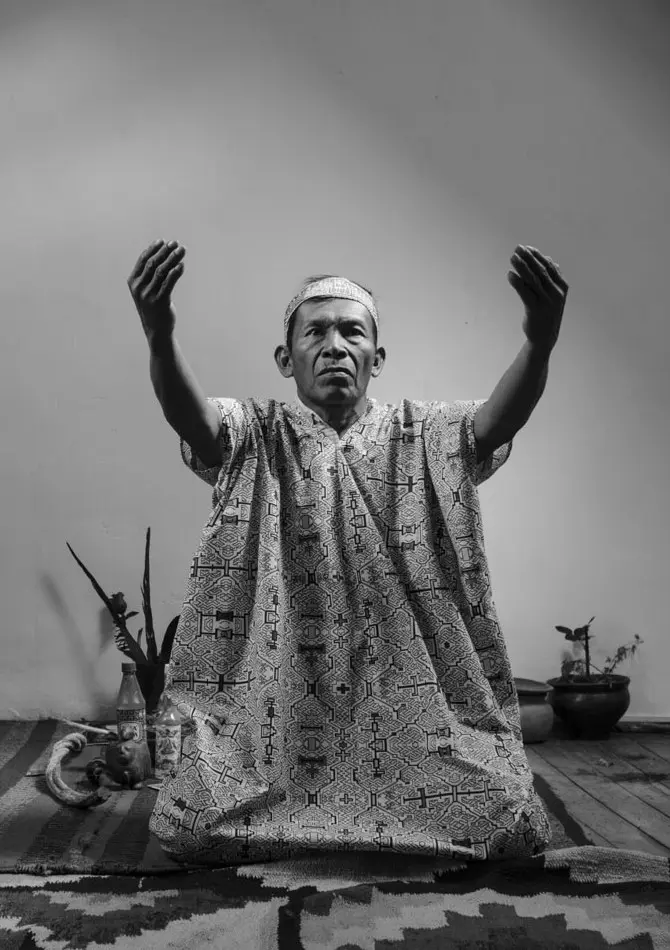
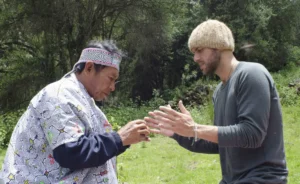
Ayahuasca retreat in Peru Sacred Valley – Retiro de ayahuasca en Cusco
Ayni: The Principle of Sacred Reciprocity
Every relationship in Andean cosmology is governed by Ayni — the principle of sacred reciprocity. Ayni is sometimes translated as “today for you, tomorrow for me,” but the concept is deeper than mutual aid. It describes the fundamental structure of the universe as a web of reciprocal exchange in which every taking must be balanced by a giving, every receiving by an offering.
Relationships with the Apus operate through Ayni. You do not simply invoke an Apu and expect its blessing without offering something in return. The despacho ceremony — the bundle of sacred offerings addressed to the Apus and Pachamama — is the primary vehicle through which Ayni is enacted in ceremony. To ask for the Apu’s protection and participation in a healing ceremony without making an appropriate offering would be to violate the fundamental principle of right relationship.
This is why the ceremonial elements that may seem peripheral to a Western participant — the coca leaves, the flowers, the offerings to the mountains — are in fact structural. They are not additions to the ceremony. They are what makes the Apu’s participation possible.
The Three Levels of Mountain Spirits
Within the Andean tradition, not all mountain spirits are equal. Understanding the hierarchy illuminates how different beings are invoked in different contexts.
Apus are the most powerful mountain spirits — associated with the great peaks that dominate the landscape. They govern large territories and are addressed for major healing work, protection of communities, agricultural abundance, and in ceremonies of the significance of an ayahuasca retreat. The Apus have individual characters and areas of strength. Apu Ausangate, for example, is associated with healing, long life, and the southern Andes; Apu Salkantay with warrior energy and physical strength; Apu Verónica with feminine energy and compassion.
Aukis (or Aukikuna) are lesser mountain spirits associated with smaller peaks, hills, and specific landscape features. They govern more local territories and are invoked for more immediate and specific purposes.
Achachilas are the ancestral mountain spirits — the spiritual presences of ancestors who have merged with the mountain world after death. They are addressed for ancestral healing and for access to the wisdom of the lineage.
In a full ceremonial context in the Sacred Valley, a paqo (Andean healer-priest) may invoke presences from all three levels — the great Apus for major protection and healing, the Aukis for more specific energetic work, and the Achachilas for ancestral connection.
The Apus of the Sacred Valley: Who They Are
The Sacred Valley is flanked by several of the most significant Apus in the Inca sacred geography. These are not abstract symbols — they are specific mountains with specific names, visible from the valley floor, and understood in the tradition to have distinct personalities and powers.
Apu Ausangate (6,384 meters) — the highest and most powerful Apu of the southern Andes, visible on clear days from the Sacred Valley and from Cusco city. Ausangate is associated with healing power, longevity, and the deep wellspring of Andean wisdom. Pilgrims have traveled to Ausangate for ceremonies of healing and initiation for centuries. Its presence in the ceremonial invocation is considered one of the most powerful blessings available in the Andean healing tradition.
Apu Salkantay (6,271 meters) — located to the southwest of the Sacred Valley and the starting point of the Salkantay trek to Machu Picchu. Salkantay carries energies of courage, physical strength, and the confrontation of obstacles. Its name in Quechua carries the meaning of “savage” or “untamed” — reflecting its character as a demanding but powerful ally.
Apu Verónica (Waqaywillka, 5,750 meters) — visible to the northwest from much of the Sacred Valley. The name Waqaywillka means “sacred weeping” in Quechua, and Verónica is associated with compassion, emotional healing, and the sacred feminine. Participants in ceremonies in the Sacred Valley often specifically feel Verónica’s presence as a maternal, emotionally opening energy.
Apu Pitusiray (5,750 meters) — to the northeast of Pisac, this Apu is connected with the energies of love and beauty. Local communities maintain a deep relationship with Pitusiray, and its invocation in ceremonies is associated with the opening of the heart.
Apu Chicón (5,530 meters) — above Urubamba, this Apu is considered one of the guardian peaks of the Sacred Valley floor and is associated with the protection of families and communities.
When a healer in the Sacred Valley calls these Apus by name at the opening of ceremony, they are addressing presences with thousands of years of human relationship behind them. The mountains respond — in the Andean understanding — because the relationship has been maintained.
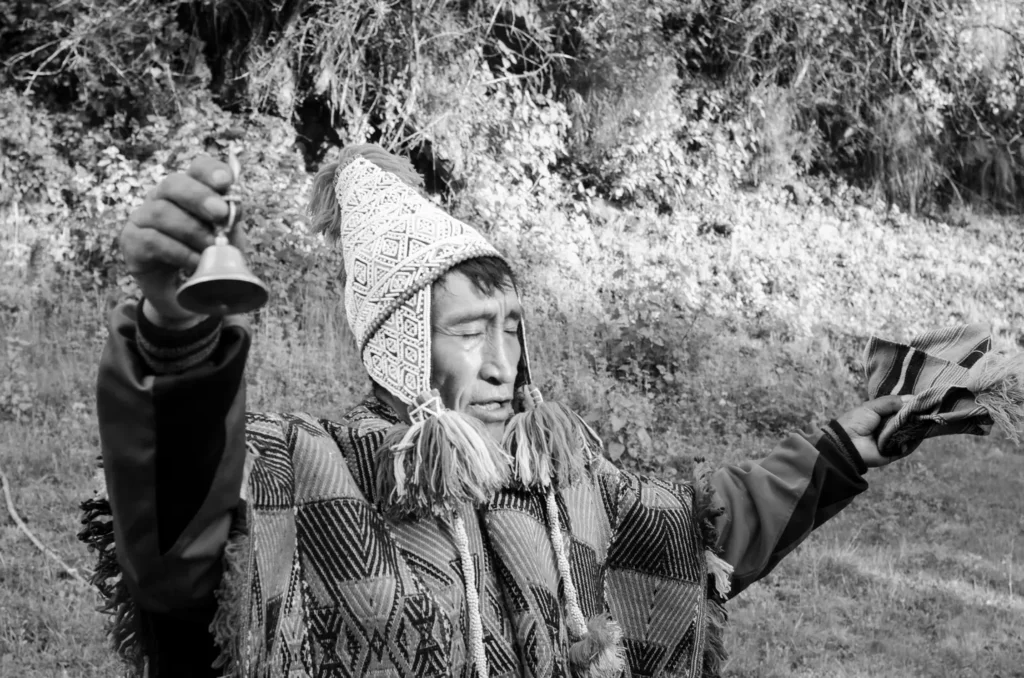
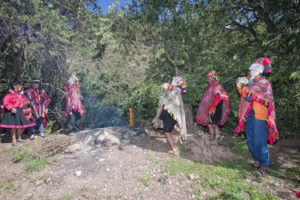
Shipibo shaman guiding ayahuasca retreat in Peru – Chamán shipibo ceremonia ayahuasca Perú
How the Apus Participate in Ceremony
Understanding the Apus as participants rather than as symbols changes how their invocation is received during ceremony.
In the Andean ceremonial framework, the Apus are called at the opening as witnesses and protectors — their presence establishes the energetic boundaries of the ceremony and creates a container of safety within which the healing work can proceed. A ceremony conducted in the presence of the Apus of the Sacred Valley is understood to be held by presences of enormous power and wisdom, not only by the human facilitation team.
During the ceremony itself, Andean healers (paqos) may work with the Apus in several ways:
Through prayers and invocations in Quechua addressed directly to each Apu by name, asking for their specific qualities — Ausangate’s healing power, Verónica’s compassion, Pitusiray’s love — to be present in the work with each participant.
Through offerings made before or during the ceremony — coca leaves arranged in specific patterns (kintu), flower petals, seeds, and other sacred objects offered to the mountain presences as expressions of Ayni.
Through direct energetic attunement — the paqo orienting their own energy toward the mountains, receiving their influence, and transmitting that influence into the healing work. This is understood as the Apu working through the healer, not alongside them separately.
For participants, the Apus’ presence may manifest experientially as a quality of vast, stable, ancient presence — something that is not the medicine, not the healer, but the landscape itself becoming a felt participant in the night’s work.
The Paqo: The Andean Priest Who Works with the Apus
The primary ceremonial relationship with the Apus is maintained by a paqo — an Andean priest, healer, and ritual specialist who has been initiated into the specific knowledge of working with the mountain spirits.
There are different levels of paqo training. A pampa mesayoq works primarily with the lower levels of the energy world — the local land spirits, Pachamama, and immediate healing concerns. An alto mesayoq has a direct connection to the Apus — the mountain spirits communicate directly with them, often through specific auditory experiences or visions. A qawaq has the capacity to perceive energetic and spiritual reality directly.
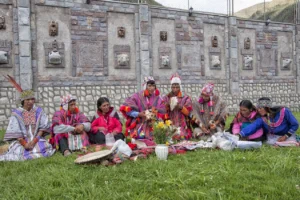
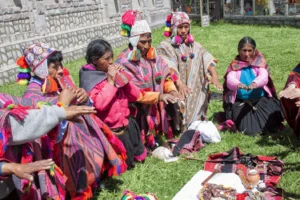
In Cusco, the most respected paqo lineages come from the Q’ero communities — high Andean communities at over 4,000 meters, considered the most direct descendants of the Inca spiritual tradition and keepers of the most intact Andean ceremonial knowledge. Q’ero paqos have maintained the relationships with the Apus of their mountain world through an unbroken tradition that predates the Spanish colonial period.
When a ceremony in the Sacred Valley involves a Q’ero paqo or a healer trained in the Q’ero tradition, the invocations of the Apus carry a different weight — they are not learned phrases, but expressions of relationships maintained across generations.
The Despacho: The Offering Ceremony
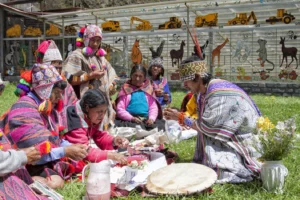
The despacho (also called haywarikuy in Quechua — “offering to the Apus”) is the primary ceremonial expression of Ayni in the Andean tradition. It is conducted before or after ayahuasca ceremonies in the Sacred Valley as an integral part of the ceremonial arc.
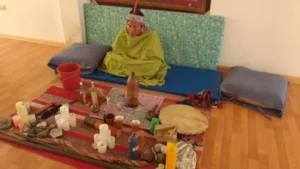
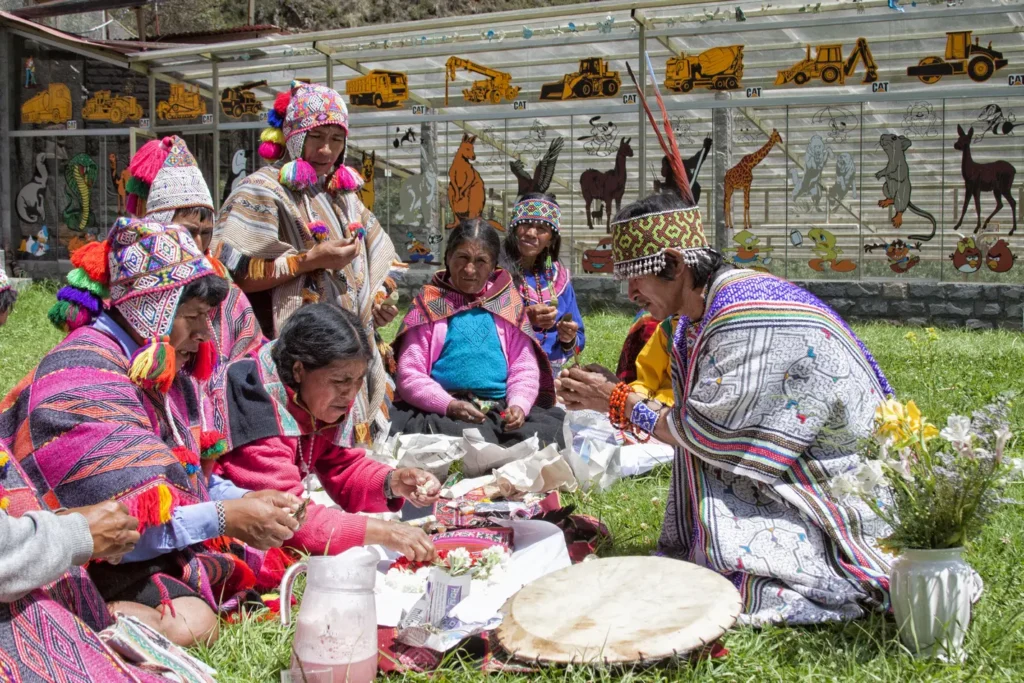
The despacho involves the careful arrangement of sacred objects into a bundle — coca leaves, flower petals, seeds, sugar figurines, grains, incense, llama fat, and other specific offerings depending on the purpose of the ceremony. Each element carries a specific symbolic meaning and is placed by the paqo with prayer and intention.
The completed bundle is then offered to Pachamama and the Apus — either burned in a ceremonial fire (the smoke carries the offering upward to the Apus) or buried in the earth (returning it to Pachamama). The burning is considered the most powerful form of transmission, as fire transforms the material offering into pure energy that can be received in the spiritual realm.
For participants in a Cusco retreat, the despacho ceremony is often one of the most unexpectedly moving elements of the experience. Something about the deliberate, respectful arrangement of offerings — the paqo’s attention to each element, the names of the Apus spoken with familiarity, the sense of an ancient protocol being carried out — communicates authenticity in a way that transcends cultural background.
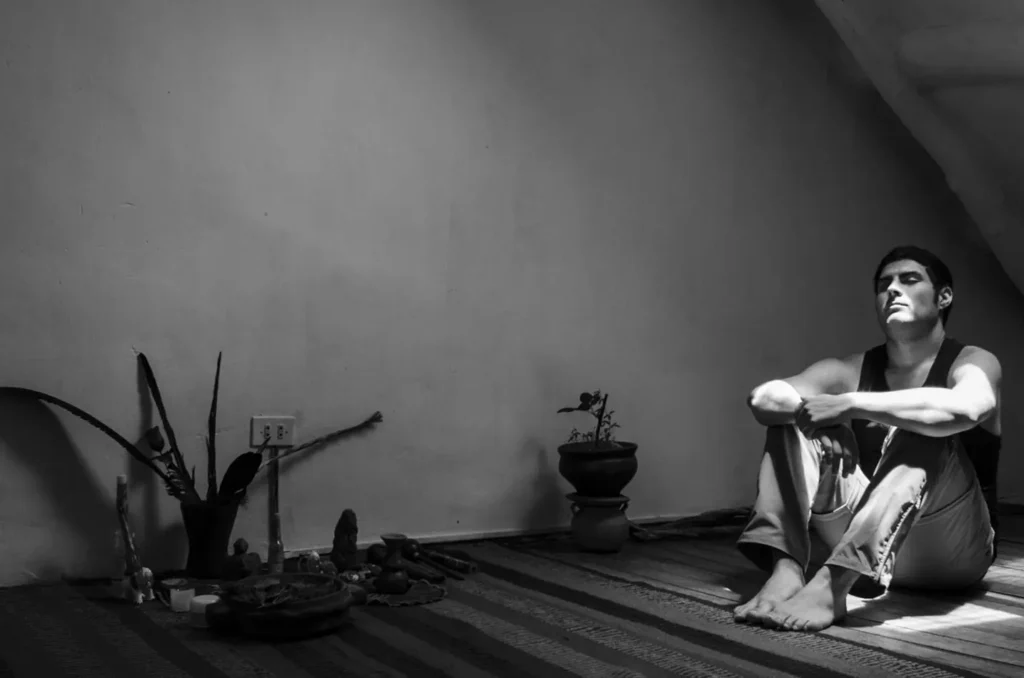
Healing center for Ayahuasca retreat in Cusco – Centro de sanación para retiro ayahuasca Cusco
Coca Leaves and the Apus
Coca leaves (kuka in Quechua) hold a specific and central role in the relationship with the Apus. This is not incidental — the coca plant itself is understood in the Andean tradition as a sacred intermediary between the human world and the spirit world.
Kintu — the arrangement of three perfect coca leaves held together — is the basic unit of ceremonial offering to the Apus. When making a kintu, the practitioner blows their prayers and intentions into the leaves before offering them — a gesture called samay (the breath of life) that transfers the practitioner’s consciousness and intention into the offering.
The coca leaf reading (coca phuquy or despacho reading) — in which a paqo reads the leaves to diagnose a patient’s condition or the general energetic state of a situation — is conducted in direct communication with the Apus. The leaves provide information that the Apu transmits through the medium of the coca plant.
For participants in Sacred Valley ceremonies, the coca leaf reading at the opening of the ceremony is the first direct encounter with this form of communication — and many participants describe it as the moment the ceremony became real, before any medicine was consumed.
What Participants Experience in Their Presence
The experiential dimension of the Apus’ presence in ceremony is described with remarkable consistency across participants with very different cultural backgrounds and prior beliefs.
The most common description is one of vast, stable presence — something that is not the medicine’s altered state and not the healer’s energy, but the landscape itself becoming felt as alive and attentive. Participants describe looking toward the mountains (during daytime San Pedro ceremonies particularly) and experiencing the sensation of being seen — not in a threatening way, but in the way of being in the presence of something ancient and genuinely aware.
Others describe the Apus as providing a specific quality of grounding during difficult ceremonial moments — as if the solidity and permanence of the mountains themselves becomes accessible as a resource when the interior experience becomes intense. “I felt the mountain holding me,” is a phrase that appears across many accounts from Sacred Valley ceremony participants.
The orientation toward the external landscape that the Andean cosmological framework provides — the sense that the mountains and the river are participants, not scenery — also shapes the integration period. Walking in the Sacred Valley in the days after ceremony with the awareness that the Apus are living presences changes the quality of that walking.
Why This Is Specific to Cusco — Not Available in Amazon Retreats
The Amazonian ayahuasca tradition is extraordinary and deserves full respect. The Shipibo lineage, the jungle setting, the specific quality of icaros developed in relationship with the Amazon ecosystem — these things cannot be replicated elsewhere.
What also cannot be replicated in an Amazonian retreat is the Andean cosmological dimension. The Apus are the mountains of the Andes — their presence, their character, their history with human communities, and their role in the ceremonial healing tradition belong to this specific geography.
A ceremony in Iquitos takes place in a river ecosystem where the vine grows wild. A ceremony in the Sacred Valley takes place in the heartland of the Inca spiritual world, flanked by Apus that have been in active ceremonial relationship with human communities for over three thousand years. These are different experiences — neither superior, both genuine, and neither able to substitute for the other.
For participants drawn specifically to the Andean dimension of their healing journey — to the mountains, to Pachamama, to the continuity of Inca spiritual tradition — the Sacred Valley is the only place this is available authentically.
Frequently Asked Questions
What is an Apu in Andean culture?
An Apu is a sacred mountain spirit in Andean cosmology — understood as a living, sentient being inhabiting the body of a mountain and governing the territory surrounding it. The word derives from the Quechua term for “lord” or “sovereign.” Apus are not symbols or myths; within the Andean worldview they are as real and present as the mountains themselves, and they have been in active relationship with Andean communities for millennia. In ceremonial contexts, they are invoked by name as protectors and co-participants in healing work.
Which Apus are present in the Sacred Valley?
The Sacred Valley is surrounded by several significant Apus, including Ausangate (the most powerful healing Apu of the southern Andes), Salkantay (courage and strength), Verónica/Waqaywillka (compassion and the sacred feminine), Pitusiray (love and beauty), and Chicón (community protection). Each has a distinct character and is invoked for its specific qualities in ceremony.
Do I need to believe in the Apus for them to affect my ceremony?
Many participants who arrive with skepticism about cosmological frameworks describe experiencing something during Sacred Valley ceremonies that they can only describe as the mountain’s presence. Whether this is interpreted as literal encounter with spiritual beings or as the psychological effect of being in a landscape thousands of years of human reverence has charged with meaning, the experiential reality is consistent. Openness rather than belief is the appropriate orientation — not performing belief you don’t have, but not closing down to experience that may arrive unexpectedly.
What is the despacho ceremony?
The despacho is an Andean offering ceremony — the careful arrangement of sacred materials (coca leaves, flowers, seeds, sugar figures, incense) into a bundle that is then burned or buried as an expression of Ayni (sacred reciprocity) toward Pachamama and the Apus. In the context of a Sacred Valley retreat, the despacho may precede or follow the ayahuasca ceremony and serves to open a relationship of right exchange with the mountain spirits whose presence and protection are being requested.
Can I experience the Apus outside of ceremony?
Yes. The Apus are present in the Sacred Valley landscape regardless of ceremonial context. Participants in retreats who spend time in the valley — walking, sitting in visible relationship with the mountains, visiting sacred sites at Pisac or Ollantaytambo — describe the quality of the Apus’ presence as accessible in daily outdoor experience, particularly in the days following ceremony when perceptual sensitivity is heightened. This is one of the integration resources specific to the Sacred Valley setting.
To experience ayahuasca ceremony in the presence of the Apus of the Sacred Valley — in a setting where both Amazonian and Andean healing traditions are authentically practiced — explore our retreat programs or contact us to discuss your intentions.
Our programs: 1-Day Ceremony · 3-Day Retreat · 5-Day Retreat · 7-Day Retreat · San Pedro Ceremony
Related reading: Ayahuasca Retreat Sacred Valley Peru · What Are Icaros? · What Is San Pedro (Wachuma)? · Ayahuasca vs San Pedro · Where to Do Ayahuasca Retreat in Peru