The Sacred Andean Cactus Medicine of Peru
Long before the Inca built their empire across the Andes, long before the Spanish arrived and gave this cactus a saint’s name, the people of Peru’s highland valleys already understood what this plant was for. They had been working with it ceremonially for thousands of years — using it to diagnose illness, strengthen community bonds, commune with the mountains, and navigate the relationship between the human world and the world of spirit.
What is San Pedro, then? At its simplest, it is a tall columnar cactus native to the Andes that contains mescaline — a psychoactive compound that alters consciousness and perception. But that description, accurate as it is, misses almost everything important about it. San Pedro is a cultural institution, a healing tradition, and for the Andean peoples who have worked with it longest, a living teacher — as much a subject of relationship as an object of consumption.
This guide covers the full picture: what San Pedro is botanically and pharmacologically, where it comes from, what its names mean, how it has been used across millennia, what actually happens in a ceremony, and why Cusco and the Sacred Valley occupy a particular place in this tradition.
Table of Contents
Ayahuasca Ceremonies Cusco
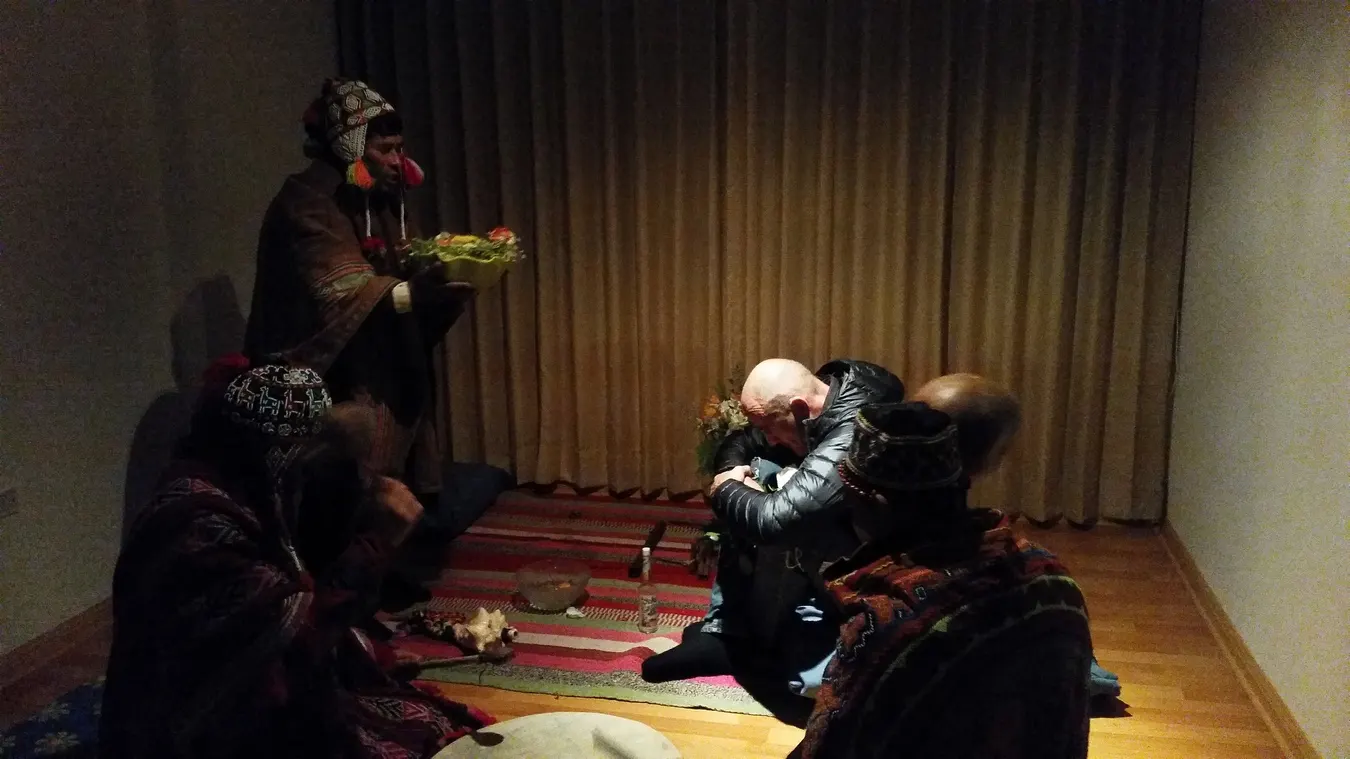
1 Day Ayahuasca Retreat Cusco
Designed for visitors with little time seeking a profound spiritual experience, the 1 Day Ayahuasca Retreat in Cusco, Peru is meant for them.
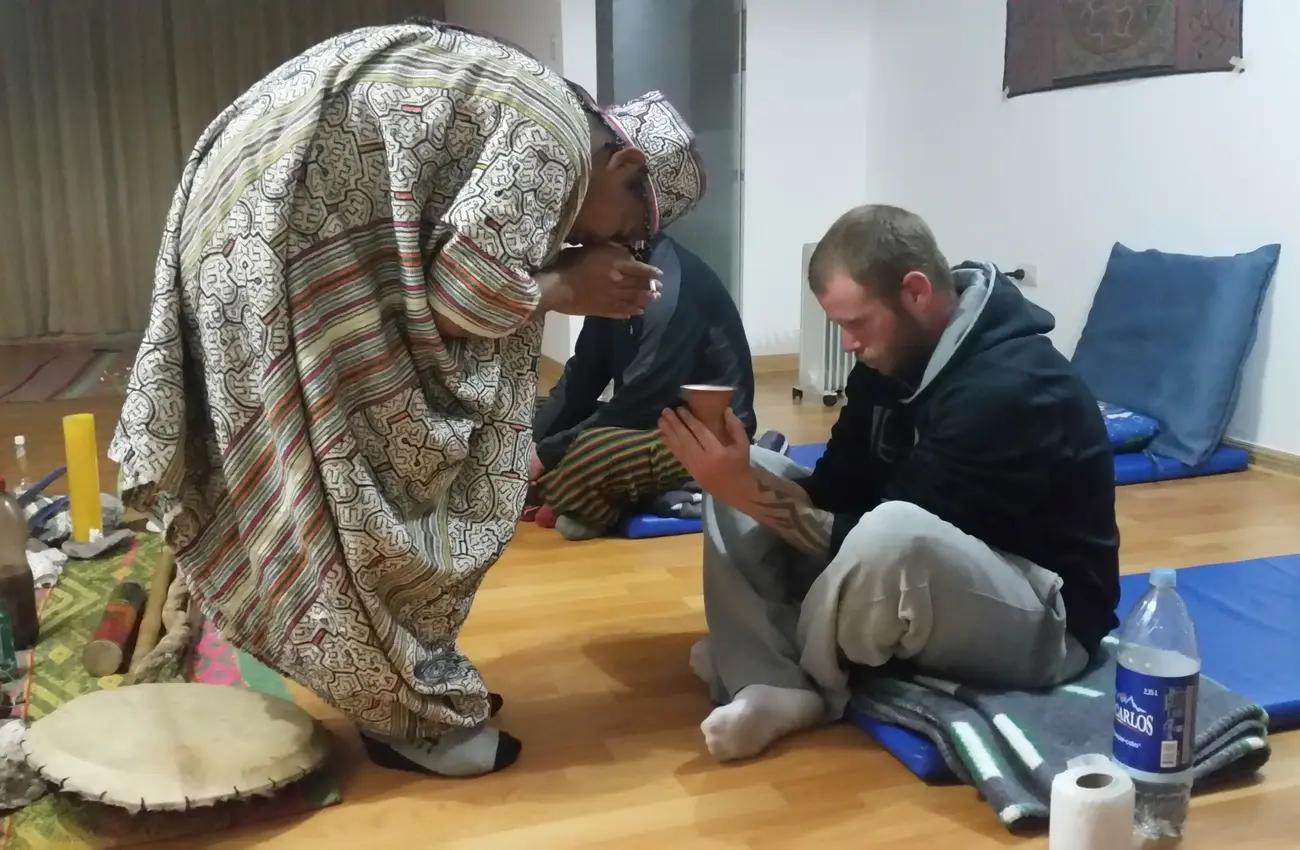
2 Day Ayahuasca Retreat Cusco
Our 2 Day Ayahuasca Retreat Cusco Peru offers a sacred space for those who seek profound healing and self-discovery in a short yet powerful journey.
The Names: San Pedro, Wachuma, Huachuma, and the Question of Etymology
This plant answers to more names than almost any other sacred medicine in South America. Understanding what those names mean — and where they come from — tells you something important about the history of the tradition itself.
San Pedro is the Spanish colonial name. When Catholic missionaries encountered the indigenous use of this cactus in the 16th century, they noted that ceremonies using it often took place around the feast day of Saint Peter (San Pedro) — June 29th. In the tradition’s own logic, it was also associated with Saint Peter as the holder of the keys to heaven, given the cactus’s role as a gateway to expanded states of consciousness. The Spanish name stuck, particularly in the northern coastal regions of Peru where colonial influence was strongest and where the curanderismo tradition developed its distinctive form.
Wachuma and Huachuma (variant spellings of the same Quechua word) are the traditional names used in Andean indigenous communities. The etymology is genuinely debated. One interpretation — the most commonly cited — derives from the Quechua words wach’u (furrow, row) and uma (head), combining to suggest something like “working the head” or “opening the mind.” Another interpretation reads uma as “without” rather than “head,” producing a meaning closer to “beyond mind” or “headless” — pointing to the dissolution of ordinary self-referential awareness that the medicine facilitates. A third reading understands the root as related to the verb wachu (to strip or remove), yielding “to remove the head” or “to cleanse perception.”
None of these translations are settled, and the ambiguity is itself revealing: the name carries multiple simultaneously true meanings, much like the plant itself works on multiple levels at once.
Other names include Achuma (used in Bolivia and parts of southern Peru), Aguacolla (found in Ecuador and northern Peru), and Hahuacollay (an older colonial-era Spanish-Quechua hybrid). The sheer variety of names reflects both the plant’s wide geographic range across the Andes and its deep integration into many distinct cultural traditions.
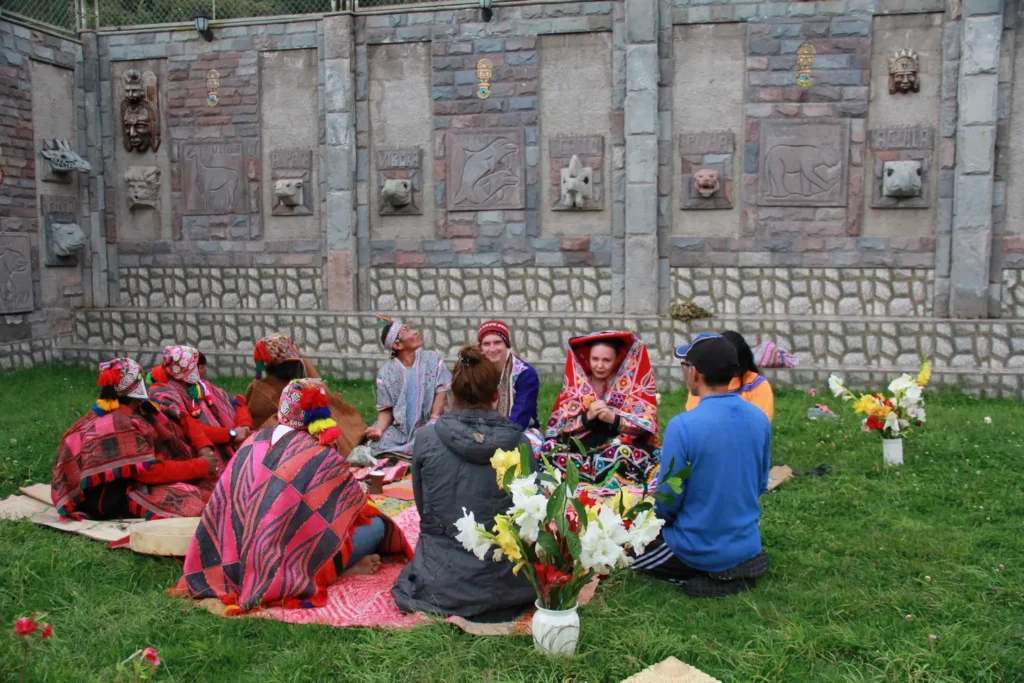
Is Wachuma (San Pedro) Legal and Safe in Peru
What San Pedro Is: Botanical Profile
San Pedro (Echinopsis pachanoi, previously classified as Trichocereus pachanoi) is a fast-growing columnar cactus native to the western slopes of the Andes in Peru and Ecuador, typically found between 2,000 and 3,000 meters above sea level. Its closest relative is Echinopsis peruviana (the Peruvian Torch cactus), which is used interchangeably in some ceremonial contexts, though the two are botanically distinct.
The plant grows in an upright columnar form, reaching heights of three to six meters at maturity, with four to eight ribs running along its length. Its color ranges from light to dark green, sometimes with a bluish or glaucous quality in younger growth. Unlike many other cacti, San Pedro is relatively fast-growing — it can put on 30 to 40 centimeters of new growth per year under good conditions, which is one of the characteristics that traditional healers sometimes associate with its generous, expansive quality.
The flowers — large, white, trumpet-shaped, and intensely fragrant — bloom at night, generally in midsummer. Their nocturnal blooming and the plant’s height together create a botanical presence that stands out in the Andean landscape in ways that explain, in part, why so many cultures in the region independently identified it as significant.
The plant’s adaptation to the Andes is remarkable: it tolerates temperature extremes from near freezing at night to intense solar radiation during the day, requires very little water, and grows on rocky slopes with minimal soil. Traditional healers often describe these qualities — endurance, adaptability, resilience — as reflective of the medicine’s character. The cactus survives extremes not by avoiding them but by developing the internal resources to withstand them. In that sense, it offers a model for the kind of emotional strength it is said to cultivate in participants.
The Pharmacology: Mescaline and the Alkaloid Profile
San Pedro contains mescaline (3,4,5-trimethoxyphenethylamine) as its primary psychoactive alkaloid. Mescaline is a phenethylamine — meaning it belongs to the same broad chemical family as dopamine, norepinephrine, and MDMA — which distinguishes it pharmacologically from the tryptamines (DMT, psilocybin) found in ayahuasca and psilocybin mushrooms.
This pharmacological distinction is directly relevant to the experiential difference between San Pedro and ayahuasca. Tryptamines primarily act on serotonin receptors (5-HT2A) and tend to produce inward, deeply introspective states characterized by vivid closed-eye visions and intense emotional processing. Mescaline also activates serotonin receptors but additionally engages dopamine and norepinephrine systems in ways that produce a more outward-facing, sensory-expansive, and energizing quality of altered consciousness. The Andean understanding of San Pedro as a medicine of the heart, of connection, and of the outer world is not just spiritual characterization — it reflects something real about the pharmacology.
According to ICEERS (the International Center for Ethnobotanical Education, Research and Service), the mescaline concentration in Echinopsis pachanoi and Echinopsis peruviana ranges considerably — from 0.053% to 4.7% of total cactus weight depending on specimen, age, growing conditions, and the portion of the cactus used. This variability is one of the reasons experienced ceremonial preparation matters: a curandero who knows how to work with a specific plant from a specific source can better calibrate the medicine than someone without that relationship.
The active oral dose of mescaline ranges between 150 and 700 milligrams depending on individual sensitivity, body weight, and preparation method. In ceremonial contexts, the dose is determined by the amount of brew prepared and served by the healer rather than measured chemically.
Beyond mescaline, San Pedro also contains a range of other alkaloids including hordenine, lophophine, DMPEA (3,4-dimethoxyphenethylamine), and lobivine. These compounds are not psychoactive in isolation at the concentrations present in the plant, but they contribute to the overall alkaloid profile and may modulate the mescaline experience in ways that differ from isolated or synthetic mescaline. This is the same principle that applies to ayahuasca: the whole plant preparation produces an experience that differs meaningfully from any single extracted compound.
The Archaeological Record: How Old Is This Tradition?
The evidence of San Pedro use in the Andes is among the oldest of any entheogenic plant medicine anywhere in the world.
Fossil remains of the cactus — including samples from different eras — have been found in the Guitarrero Cave in the Callejón de Huaylas valley in Peru, dated to approximately 6800 to 6200 BCE. This represents the earliest physical evidence of human association with the plant, predating the great Andean civilizations by several thousand years.
Stone carvings from the Chavín culture (circa 1200 BCE) at the site of Chavín de Huántar in the northern Andes show shamanic figures holding or associated with the cactus. These carvings are among the most frequently cited evidence of San Pedro’s ceremonial use, and they place it at the center of what appears to have been the earliest major pan-Andean religious tradition. The Chavín horizon is understood by archaeologists as a period when a coherent set of spiritual practices — including the use of San Pedro — spread across a wide range of Andean communities.
Subsequent cultures including the Moche, Nazca, and Wari incorporated San Pedro into their iconography and, by implication, their ceremonial practice. Ceramic vessels from the Moche period (100-700 CE) depict shamanic figures alongside the columnar cactus with a consistency that suggests the medicine occupied a stable and central role in the healing and spiritual systems of these civilizations.
By the time the Inca Empire emerged in the 13th and 14th centuries and consolidated control over the Andes, San Pedro was already an ancient tradition embedded in the spiritual geography of multiple cultures across Peru, Bolivia, and Ecuador. The Inca did not create the San Pedro tradition — they inherited it.
The Traditional Healers: Curanderos, Paqos, and the Mesa Tradition
Two distinct but overlapping traditions of San Pedro healing exist in Peru, and understanding them separately helps clarify why ceremonies in Cusco carry a specific character.
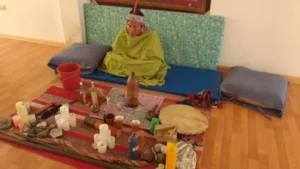
The northern coastal curanderismo tradition — centered in the Trujillo-Lambayeque region of Peru and associated with the Mesa (the ceremonial table of sacred objects) — is one of the most complex and well-documented shamanic healing systems in the Americas. Curanderos in this tradition typically hold extended nighttime ceremonies using San Pedro brew alongside an elaborate mesa of objects with specific energetic functions. The northern tradition integrates pre-Inca, Inca, and Catholic colonial elements, and its healers often work with both plants and material objects as vehicles of spiritual power.
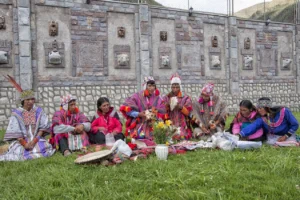
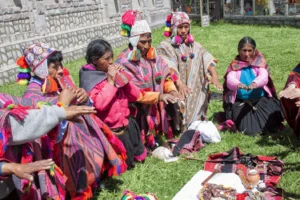
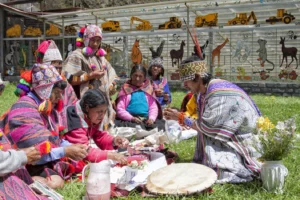
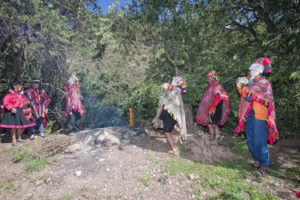
The southern Andean tradition — the context most relevant to ceremonies in Cusco and the Sacred Valley — draws from Quechua cosmology and the role of the paqo (Andean healer or priest). Paqos work within a cosmological framework oriented toward the Apus (mountain spirits) and Pachamama (Mother Earth), and their ceremonial work often takes place outdoors during the day, in direct relationship with the landscape. San Pedro in this context is less about complex ritual paraphernalia and more about direct immersion in the natural world and the mountain energies surrounding it.
In Cusco, where both traditions intersect, ceremonies often weave elements of both lineages — the healer’s songs and prayers, offerings to Pachamama, the invocation of specific Apus by name, and the medicine’s own relationship with the participants and the landscape. This fusion is not syncretism in a diluted sense — it is the genuinely complex product of millennia of cultural exchange across the Andean geography.
What San Pedro Feels Like: The Ceremonial Experience
A San Pedro ceremony lasts eight to twelve hours, beginning in the morning and extending through most of the day. The brew is typically consumed once, on an empty stomach, in the opening phase of the ceremony. Effects begin between 30 and 90 minutes after ingestion — more gradually than ayahuasca — and build slowly to a peak that can last several hours before descending over the late afternoon.
The quality of the experience has a consistent character across thousands of participant accounts, despite individual variation. Where ayahuasca tends inward — producing deep introspective states, intense emotion, and often vivid closed-eye visions — San Pedro tends outward. The sensory world becomes richer and more present: colors intensify, natural sounds deepen, the movement of light across the landscape becomes extraordinarily vivid. The wind in the trees, the shape of the mountains, the Urubamba River below — these things take on a quality of presence that ordinary perception doesn’t access.
The emotional register is similarly distinctive. Where ayahuasca frequently brings buried grief, fear, and shadow material to the surface in ways that require direct engagement, San Pedro tends to work through expansion and opening rather than excavation. Participants describe a feeling of warmth — not just metaphorically but physically, a sense of warmth spreading from the chest. Compassion for oneself and for others often arises spontaneously. Old resentments or fears may become visible from a perspective that is more spacious and less charged than how they are normally encountered.
Nausea affects roughly 20-30% of participants and is typically mild and limited to the first hour. Physical purging is significantly less common than with ayahuasca. The predominant physical experience is energizing rather than depleting — many participants find they can walk, sit outdoors, and engage with the landscape throughout much of the ceremony, which is part of why daytime ceremonies in nature are the traditional format.
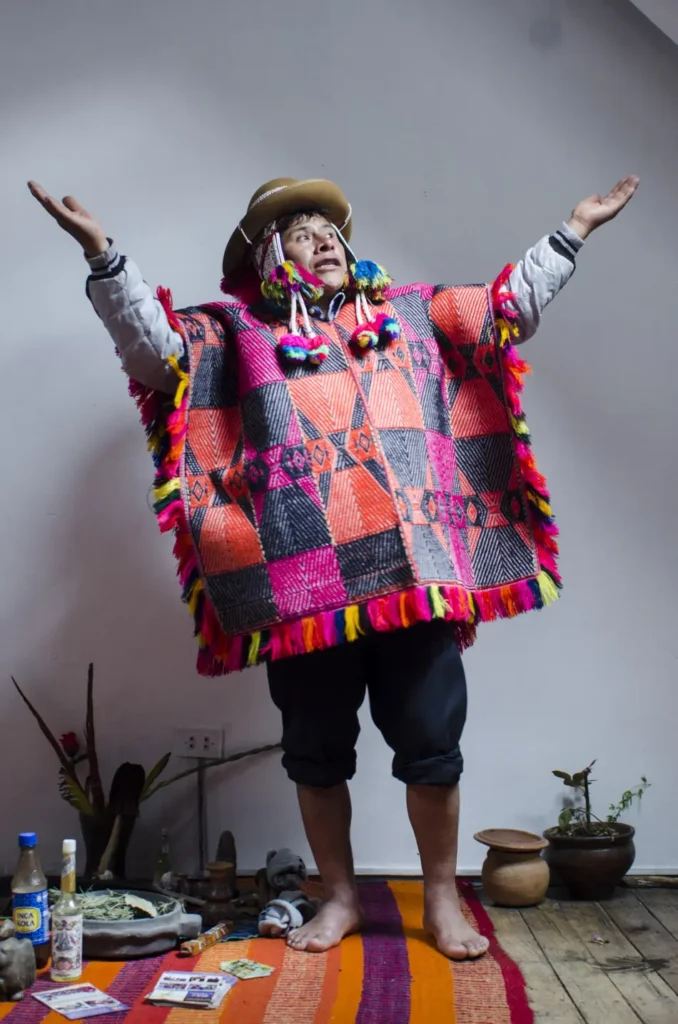
San Pedro Wachuma Ceremonies in Cusco
San Pedro as the Grandfather Medicine
In the Andean and broader plant medicine tradition, ayahuasca is often described as a feminine presence — Madre Ayahuasca, the mother who shows you what you need to see. San Pedro is described as masculine — Abuelo (Grandfather) — a paternal elder energy that is wise, patient, and gentle. Rather than confronting or overwhelming, the Grandfather walks beside you through the landscape, pointing things out without force.
This characterization is not merely poetic. It reflects something consistently experienced by participants: the medicine teaches through beauty and presence rather than through confrontation. It tends to show you your own strength and capacity for connection rather than your wounds and deficits. Where ayahuasca’s lessons often arrive through difficulty, San Pedro’s tend to arrive through wonder.
The phrase Ayahuasca shows you where you’ve been; San Pedro shows you where you’re going circulates widely in plant medicine communities. Like all such simplifications, it is imprecise — but it points at something real about the different orientations of these two medicines. The backward-looking, depth-seeking quality of ayahuasca versus the forward-looking, expansive quality of San Pedro is a distinction that most practitioners and participants acknowledge, however they frame it.
San Pedro and Pachamama: The Andean Cosmological Context
Understanding San Pedro without its cosmological context is like understanding a key without knowing what door it opens.
In Andean cosmology, the world is not divided into natural and supernatural. Everything is alive — the mountains, the rivers, the wind, the soil — and everything participates in a web of reciprocal relationships. Pachamama is not a metaphor for nature; she is nature understood as a living, sentient, giving presence with whom human beings are in ongoing relationship. The Apus are not symbols of the mountains; they are the mountains understood as living spiritual entities with distinct personalities, domains of influence, and the capacity to protect or withdraw protection from human communities.
San Pedro is understood within this framework as a medicine that restores right relationship — between a person and their own body, between a person and their community, between human beings and the natural world. The ceremony is not primarily an interior journey (though it includes interior work). It is a relational event: a realignment of the participant within the broader web of living relationships.
This is why San Pedro ceremonies are traditionally held outdoors, during the day, in direct relationship with the landscape. The mountains, the sky, the plants surrounding the ceremony — these are not backdrop. They are co-participants. The medicine opens the participant’s capacity to perceive and feel into those relationships in ways that ordinary consciousness typically doesn’t allow.
In Cusco and the Sacred Valley specifically, this context is amplified by the specific energetic geography of the Inca sacred landscape. The Apus surrounding the valley — named, known, and understood as individual presences — are invoked by name in ceremonies. The Urubamba River, the terraced hillsides, the ancient stones of Pisac and Ollantaytambo — all of it participates in a ceremony held here in ways that cannot be replicated anywhere else.
How San Pedro Is Prepared
The preparation of San Pedro brew is a skilled process that traditional healers undertake with care and intention. The general principle is to extract the active alkaloids from the outer flesh of the cactus — the green chlorenchyma layer just inside the skin — which contains the highest concentration of mescaline.
The cactus is harvested in sections, with only mature plants used and with offerings made to Pachamama before any cutting occurs. The skin is removed, and the waxy outer layer and fibrous core are typically discarded or minimally included. The remaining green flesh is sliced and cooked in water for an extended period — often 8 to 12 hours or longer — reducing gradually into a dense liquid.
The resulting brew varies in color from green to dark brown depending on the preparation, the species, and how much material was used. It is typically thick and bitter, though less immediately unpleasant than ayahuasca. The concentration varies considerably based on the cactus’s alkaloid content and the amount used per person.
Experienced healers develop an understanding of specific plants over time — their potency, their particular character, how they interact with different participants. This accumulated knowledge, developed through years of ceremonial work, is part of what distinguishes a ceremony held by a trained curandero from one held by someone who simply purchased and cooked a cactus.
San Pedro vs Ayahuasca: The Essential Difference
Both medicines are sacred, both are used in Peru, and both are increasingly sought by international visitors — but they are genuinely different in ways that affect which is more appropriate for any given person and intention.
Pharmacology: Ayahuasca works through DMT (a tryptamine) activated by MAO inhibitors. San Pedro works through mescaline (a phenethylamine). Different receptor systems, different experiential qualities.
Setting and time: Ayahuasca ceremonies are nighttime, indoor, horizontal. San Pedro ceremonies are daytime, typically outdoor, involving movement.
Duration: Ayahuasca 4-6 hours. San Pedro 8-12 hours.
Depth vs. breadth: Ayahuasca tends inward and downward — depth, interiority, confrontation with shadow. San Pedro tends outward and upward — expansion, connection, the world.
Physical experience: Ayahuasca purge common (70%+), often intense. San Pedro nausea moderate, purge uncommon (20-30%).
First-time suitability: San Pedro is generally more accessible for first-time participants because of its maintained cognitive clarity, gentler physical profile, and less disorienting quality of altered state.
For a complete comparison, see our guide on Ayahuasca vs San Pedro (Wachuma).
Is San Pedro Legal in Peru?
Yes. The San Pedro cactus (Echinopsis pachanoi) and its traditional ceremonial use are legal in Peru. While mescaline is a controlled substance under international conventions in many countries, Peru’s recognition of its indigenous healing traditions — formalized in the 2008 National Cultural Heritage Declaration that also protects ayahuasca — extends to the traditional use of San Pedro in ceremonial contexts.
Internationally, the legal situation is more complex. Mescaline is Schedule I in the United States, making it illegal to ingest there regardless of ceremonial context. In the UK, Germany, Australia, and most other Western countries, similar restrictions apply. The San Pedro cactus itself may be cultivated legally in many of these countries as an ornamental plant — it is the mescaline content that creates legal issues when the plant is prepared for consumption.
What is clear: participating in a San Pedro ceremony in Peru is legal, culturally protected, and poses no legal risk to participants on Peruvian soil. What happens when you return home is a separate question, and the brew itself cannot be transported across international borders.
San Pedro in Cusco and the Sacred Valley
Cusco and the Sacred Valley occupy a particular position in the San Pedro tradition that deserves more than a passing mention.
The Sacred Valley — Willka Mayu, the Sacred River — has been understood as spiritually significant for well over a thousand years. The Apus that surround it, the Urubamba flowing through its floor, the ancient agricultural terraces and ceremonial sites at Pisac, Moray, and Ollantaytambo — this is one of the most energetically concentrated sacred landscapes anywhere in the Andean world. Performing a San Pedro ceremony here, in direct relationship with this landscape and with the mountains that Andean tradition understands as living presences, creates a ceremonial context that is genuinely distinct from a ceremony performed in any other setting.
The daytime nature of San Pedro ceremonies makes the Sacred Valley setting particularly meaningful. Where ayahuasca requires darkness and interiority, San Pedro works with the open sky, the direct sunlight of the Andean high altitude, and the visible landscape surrounding the ceremony. The mountains do not need to be imagined or invoked in the abstract — they are visible, present, and imposing. The Urubamba is audible. The wind moves through the terraces with a quality that participants consistently describe as felt rather than merely observed.
Our San Pedro ceremony in Cusco draws from both the Andean curanderismo tradition native to this specific geography and the broader heritage of Andean healing that has been practiced in this landscape for millennia. The ceremonies are held during the day, outdoors when possible, in direct relationship with the Sacred Valley setting.
Frequently Asked Questions
What is San Pedro made of, and what makes it psychoactive?
San Pedro (Echinopsis pachanoi) is a columnar cactus native to the Andes. Its primary psychoactive compound is mescaline (3,4,5-trimethoxyphenethylamine), a phenethylamine alkaloid concentrated in the outer green layer of the cactus. It also contains hordenine, DMPEA, and other alkaloids that contribute to the overall effect. The brew is prepared by cooking the green flesh of the cactus in water for an extended period, reducing it to a concentrated liquid.
How long has San Pedro been used ceremonially?
Physical evidence of association with the plant dates to approximately 6800-6200 BCE in the Guitarrero Cave in Peru. Ceremonial use depicted in iconography appears in the Chavín culture around 1200 BCE. Conservative estimates place its continuous ceremonial use at over 3,000 years; the earliest physical evidence suggests the relationship between humans and this plant is closer to 8,000 years old.
What is the difference between Wachuma and San Pedro?
They are the same plant. San Pedro is the Spanish colonial name; Wachuma (also spelled Huachuma) is the Quechua indigenous name. Other names include Achuma, Aguacolla, and Hahuacollay. In ceremonial contexts in Cusco and the Sacred Valley, Wachuma is generally preferred as a sign of respect for the indigenous origins of the tradition.
Is San Pedro safe for first-time participants?
For most physically and psychiatrically healthy individuals without contraindicated medications, San Pedro in a well-facilitated ceremonial context is considered accessible and safe. Its gentler physical profile, maintained cognitive clarity, and daytime setting make it more suitable for first-time plant medicine participants than ayahuasca in many cases. As with any plant medicine, medical screening before participation is important — particularly for anyone on psychiatric medications, with cardiovascular conditions, or with a history of psychotic disorders.
What does a San Pedro ceremony in Cusco feel like?
The experience unfolds over 8-12 hours beginning in the morning. The physical setting — the Sacred Valley landscape, the surrounding Apus, the sky at altitude — becomes an active part of the ceremony as the medicine heightens sensory perception and emotional openness. Participants typically describe warmth, expanded awareness, heightened connection with nature, and a quality of presence in the physical world that is difficult to access in ordinary states. The experience is generally more outward-facing and expansive than introspective.
Can I combine San Pedro and Ayahuasca during the same trip to Peru?
Yes, and Cusco is the ideal location to do so — both traditions are authentically present here. Most experienced practitioners suggest Wachuma before Ayahuasca when doing both. The San Pedro experience tends to open the heart and restore emotional warmth that creates a better foundation for the deeper introspective work of ayahuasca. Allow at least three to five days between ceremonies for proper integration of each experience.
Ready to experience San Pedro (Wachuma) in the Sacred Valley? Our 1-day San Pedro ceremony offers a complete ceremonial experience guided by experienced Andean healers in the landscape where this tradition has been practiced for millennia.
Related reading: Benefits of Wachuma · San Pedro Diet Before Ceremony · Ayahuasca vs San Pedro · Ayahuasca Retreat Sacred Valley Peru · What to Expect at an Ayahuasca Ceremony