Two sacred plant medicines. Two ancient traditions. Two completely different journeys — and yet they come from the same geography, the same reverence for the natural world, and the same fundamental intention: healing.
The question “ayahuasca vs San Pedro” is one that most people searching for a retreat eventually ask, and it deserves a more honest answer than most comparison guides provide. Not a list of bullet points dressed up as guidance — but a real exploration of what each medicine actually is, how each works in the body and mind, what kind of person and what kind of intention each one tends to suit, and what it means to experience them in Cusco, where both traditions have deep ancestral roots.
This guide covers all of it: pharmacology, ceremony setting, duration, emotional and spiritual character, contraindications, sequencing, and the practical question of what to choose when both are available to you.
Table of Contents
Ayahuasca Retreats in Cusco
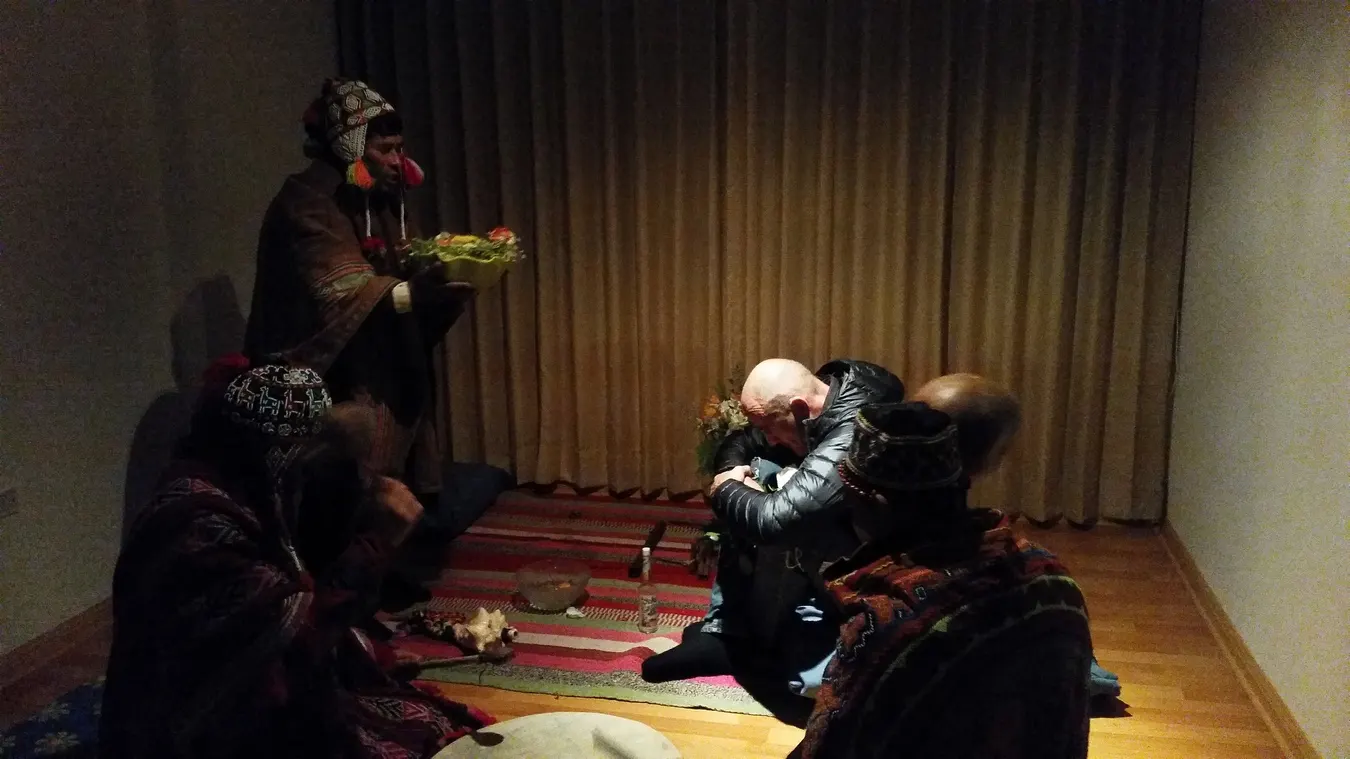
1 Day Ayahuasca Retreat Cusco
Designed for visitors with little time seeking a profound spiritual experience, the 1 Day Ayahuasca Retreat in Cusco, Peru is meant for them.
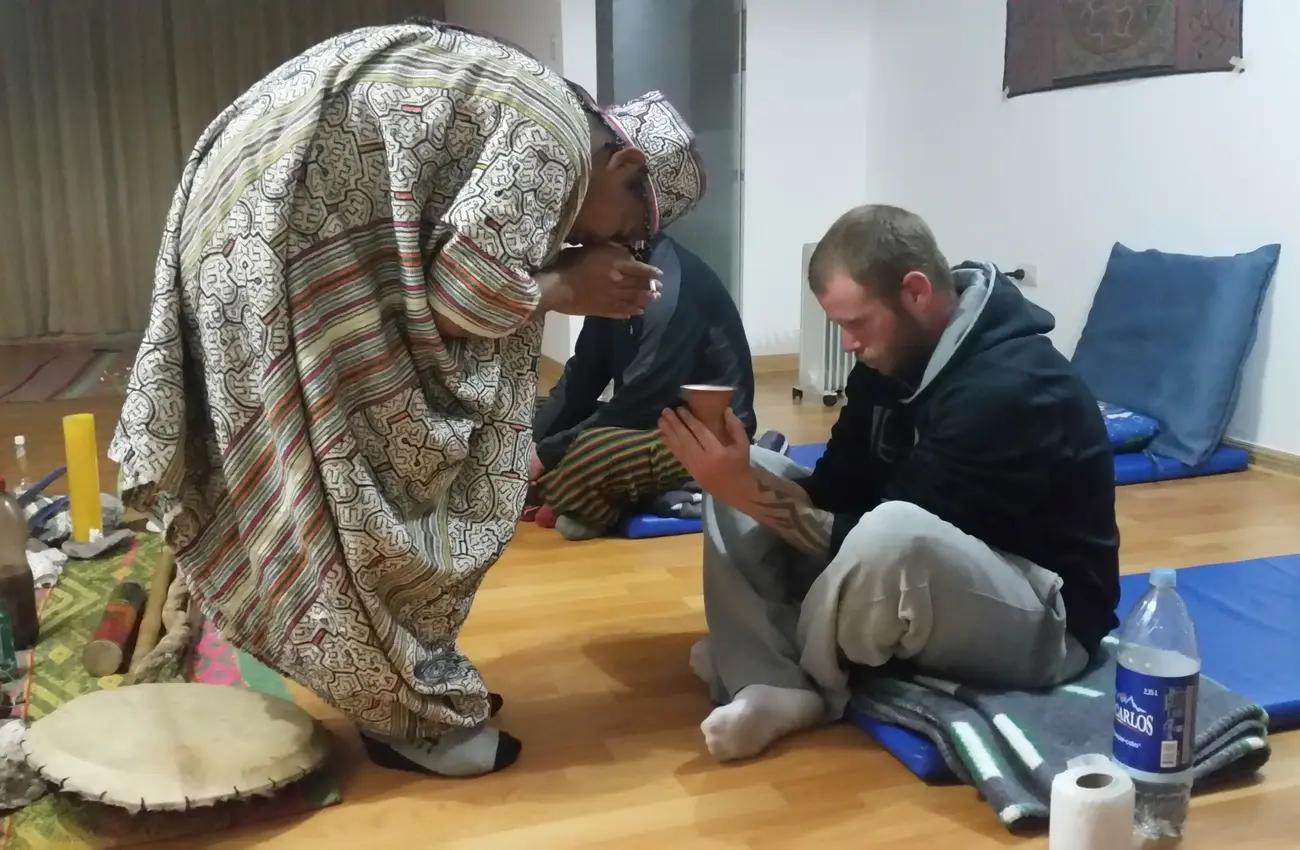
2 Day Ayahuasca Retreat Cusco
Our 2 Day Ayahuasca Retreat Cusco Peru offers a sacred space for those who seek profound healing and self-discovery in a short yet powerful journey.
Two Medicines, Two Traditions
Ayahuasca and San Pedro (Wachuma) are often grouped together as “Peruvian plant medicines” — and geographically, that’s accurate. Both have deep roots in Peruvian territory. But they come from different ecosystems, different cultural lineages, and different cosmological frameworks.
Ayahuasca is an Amazonian medicine. It emerged from the lowland jungle traditions of the Western Amazon — in what is now Peru, Colombia, Ecuador, and Brazil — where indigenous peoples developed healing systems built around the vine Banisteriopsis caapi and its combination with the chacruna leaf. The ceremonial framework of ayahuasca — the maloca, the icaros, the healer’s songs, the nighttime darkness — is Amazonian in its roots.
San Pedro (Wachuma or Huachuma) is an Andean medicine. The Trichocereus pachanoi cactus grows in the high Andes, and its ceremonial use by Andean peoples predates written history by thousands of years. Archaeological evidence of Wachuma use in the Andes dates back at least 3,000 years — to cultures that preceded the Inca and shaped the spiritual geography of what is now Peru and Ecuador.
Cusco sits at the intersection of these two worlds. The Sacred Valley, the Apus, the ancient Inca sites — this is the heartland of Andean cosmology and Wachuma tradition. And the Amazonian healing traditions have been present in Cusco for centuries, carried by curanderos from the jungle who brought their medicine into the mountains. This is why a ceremony in Cusco can legitimately draw from both lineages simultaneously — something that is genuinely rare and geographically unique.
What Is Ayahuasca? Origin and Nature
Ayahuasca is a brewed drink prepared from two Amazonian plants: the Banisteriopsis caapi vine and the leaves of Psychotria viridis (chacruna). The vine provides beta-carboline compounds that act as monoamine oxidase inhibitors (MAOIs). The chacruna leaves provide DMT — N,N-Dimethyltryptamine — a compound that produces the visionary and altered states characteristic of the ceremony.
Neither plant produces the experience alone. The combination is the medicine: the vine’s MAOIs allow the DMT from chacruna to become orally active, crossing the blood-brain barrier and producing effects that last 4 to 6 hours.
The word ayahuasca comes from the Quechua words aya (spirit, soul, or ancestor) and huasca (vine or rope). The “vine of the soul” or “rope of the dead” — both translations point to the medicine’s role as a bridge between the living world and deeper spiritual dimensions.
Ayahuasca ceremonies are traditionally held at night, guided by a curandero or ayahuasquero whose primary ceremonial tool is the icaro — the healing song through which the healer navigates the ceremony, directs energy, and works with each participant’s process. The darkness is intentional: it removes visual distraction and turns attention inward.
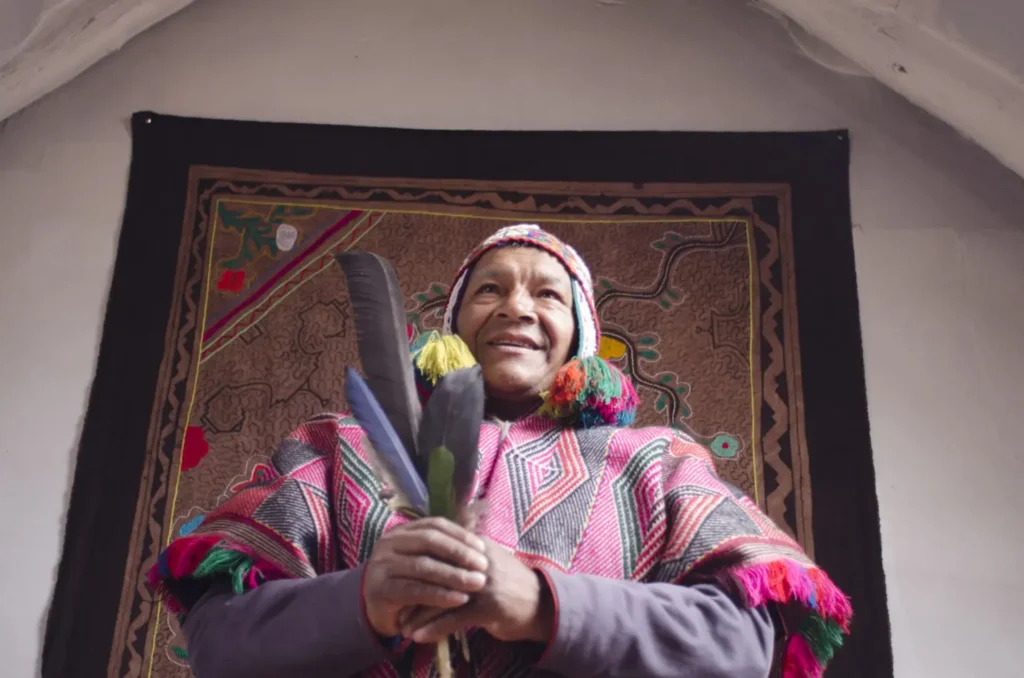
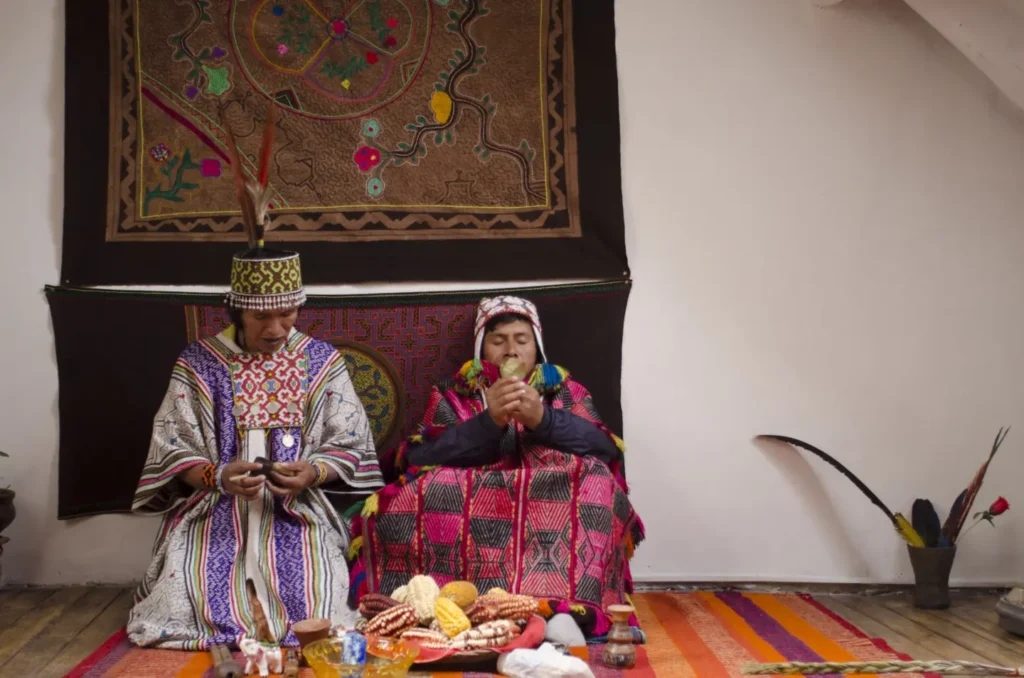
Group Ayahuasca ceremony in Cusco retreat – Ceremonia grupal ayahuasca en Cusco Perú
What Is San Pedro (Wachuma)? Origin and Nature
San Pedro is a tall columnar cactus native to the Andes that contains mescaline as its primary psychoactive alkaloid, along with a range of related phenethylamine compounds. The cactus is prepared by cutting and boiling the skin and flesh over many hours, reducing it into a dense liquid that is consumed at the beginning of the ceremony.
Its use in the Andes stretches back at least 3,000 years, with evidence of ceremonial use found in coastal Peruvian cultures like the Chavín and the Moche — civilizations that predate the Inca Empire by centuries.
The naming of this cactus reflects its dual cultural heritage. San Pedro is the Spanish colonial name, given by Catholic missionaries who noticed ceremonial use of the plant and named it after Saint Peter — the apostle who holds the keys to paradise, a reference to the cactus’s role as a gateway. Wachuma and Huachuma are Quechua names with their own layered meaning: believed to derive from ach/wach (to work, to move) and uma (head, mind) — suggesting both “working the mind” and, read differently, “beyond mind” or “no mind.” One name points to the spiritual opening it provides. The other to the mental quieting it creates.
In Andean cosmology, Wachuma is understood as the medicine of the heart — a substance that opens connection with Pachamama, the Apus, nature, and one’s own emotional truth. San Pedro ceremonies are traditionally held during the day, outdoors, in direct relationship with the landscape.
The Pharmacology: DMT vs Mescaline
This is the dimension most comparison articles skip, and it’s the one that explains most of the differences in experience.
Ayahuasca works through DMT and beta-carboline MAO inhibitors. DMT is a serotonergic psychedelic — it binds primarily to serotonin receptors (particularly 5-HT2A receptors) and produces its effects by modulating the brain’s serotonin system. Combined with the MAOIs from the vine, it produces vivid visionary states, significant ego dissolution, and altered sensory perception. The onset is relatively fast (20–45 minutes), the intensity peaks strongly, and the effects taper within 4 to 6 hours from ingestion.
The beta-carbolines in the vine also contribute independently. Harmine, harmaline, and tetrahydroharmine have their own psychoactive properties — mildly sedating, dream-enhancing, and emotionally opening — which shape the overall character of the experience alongside the DMT.
San Pedro (Wachuma) works through mescaline. Mescaline is a phenethylamine rather than a tryptamine — chemically closer to dopamine and norepinephrine than to serotonin, though it also activates serotonin receptors. Its pharmacological profile is distinct from DMT in ways that translate directly into the experiential differences participants describe: longer duration, more gradual onset, less visual intensity in most people, and a more expansive, outward-facing quality of awareness rather than the inward, introspective depth of ayahuasca.
Mescaline also activates the sympathetic nervous system — increased heart rate and energy are common, which is part of why San Pedro ceremonies are daytime experiences: participants need the physical energy available during daylight hours to work with the medicine’s expansive, activating character.
San Pedro ceremonies typically last 8 to 12 hours. This is not a minor logistical detail — it shapes everything about how the medicine is used, what can be done within the ceremonial container, and how the day following the ceremony unfolds.
Effects Compared: Mind, Body and Spirit
Rather than parallel bullet points, what follows is an honest account of how each medicine actually works across different dimensions of experience.
The Mind
Ayahuasca tends toward depth and dissolution. The default mode network — the brain’s self-referential system, associated with habitual thought, ego, and rumination — shows significantly reduced activity under ayahuasca. What fills that space is often a non-ordinary mode of cognition: symbolic, visual, associative, deeply inward. Many participants describe a state in which the ordinary narrator of their inner life goes quiet, and something else — deeper, more honest, sometimes terrifying — becomes audible.
San Pedro produces a different quality of mental clarity. The mind doesn’t dissolve — it expands. Participants typically maintain coherent thought, clear memory, and the ability to speak and move throughout the ceremony. What shifts is perception: colors intensify, sensory experience becomes richer, the field of awareness widens. Rather than diving inward into the subconscious, the mind opens outward into the present moment and the natural world surrounding it.
The Heart
Both medicines work on the emotional level, but in different registers.
Ayahuasca tends to surface what has been buried: grief that was never fully felt, fear that has been managed rather than resolved, anger that found no outlet. The emotional release in an ayahuasca ceremony can be intense — crying, shaking, vomiting as emotional as much as physical. This directness can feel confrontational, but most participants describe it as deeply healing precisely because it reaches material that ordinary introspection doesn’t.
San Pedro works more through opening than through excavating. The emotional quality most consistently described is warmth: a feeling of unconditional love — for the self, for other people, for the natural world. Participants don’t typically encounter their darkest material in a San Pedro ceremony. They encounter their capacity for connection, gratitude, and perspective. The grief or trauma may be touched, but through compassion rather than confrontation.
The Body
Here the differences are significant and practically important.
Ayahuasca’s physical effects are pronounced. Nausea and vomiting — la purga — affect roughly 70% of participants and are considered an integral part of the healing process. There is also often sweating, crying, and physical trembling. The body is engaged intensely throughout the night. The day following an ayahuasca ceremony typically requires rest.
San Pedro is considerably gentler physically. Nausea affects roughly 20% of participants, and vomiting is relatively uncommon. The physical sensation is often described as energizing rather than depleting — expansive, warmly alive in the body. Participants can walk, sit outdoors, engage with nature. The ceremony happens in the world, not in a darkened room.
Ceremony Setting and Duration
The physical context of each ceremony is not incidental. It is part of how the medicine works.
Ayahuasca ceremonies take place at night, indoors or in a ceremonial maloca, in darkness or near-darkness. Participants lie down for most of the experience, often with eye masks. The shaman’s icaros fill the space and guide the energy. The darkness, the horizontal position, and the inward orientation all support the medicine’s characteristic quality: depth, vision, and introspection. Duration: 4–6 hours, typically beginning between 8pm and 10pm.
San Pedro ceremonies take place during the day, outdoors or semi-outdoors, in direct relationship with the natural landscape. In Cusco, this means the mountains, the sacred sites, the open sky and Andean light. Participants sit, walk, and move throughout the ceremony. The daytime, the upright posture, and the open environment support Wachuma’s characteristic quality: expansion, connection, and presence in the outer world. Duration: 8–12 hours, typically beginning in the morning.
The practical implications of this difference matter for retreat planning. A San Pedro ceremony requires a full day — beginning around 8am and ending in the early evening. The following morning participants are typically recovered and clear. An ayahuasca ceremony occupies the full night and requires the following day for rest and initial integration.
The Purge: A Tale of Two Cleansings
Because both medicines can involve some form of purging, and because this question concerns many prospective participants, it deserves its own treatment.
In ayahuasca ceremonies, purging is expected, common, and understood by traditional healers as a core part of the medicine’s function — not a side effect to be minimized. La purga can involve vomiting, diarrhea, crying, yawning, sweating, or shaking — all understood as forms of releasing stagnant energy, toxins, and emotional material that the medicine has drawn to the surface. Participants who purge typically report feeling significantly lighter immediately afterward. The release is the point.
In San Pedro ceremonies, purging is much less common. When it occurs — typically in the first hour as the medicine settles — it tends to be milder and briefer than with ayahuasca. The medicine’s relationship with the digestive system is gentler, and most participants move through the entire 8–12 hours without significant physical distress.
This difference is meaningful for participants who are particularly apprehensive about the physical aspects of a ceremony — and for those with specific health conditions where intense physical purging could be contraindicated.
Emotional and Psychological Character
If you read traditional accounts and participant descriptions across traditions, a consistent characterization emerges that is worth taking seriously rather than dismissing as new age projection.
Ayahuasca is frequently described as feminine — as Madre Ayahuasca (Mother Ayahuasca) — a maternal energy that is unconditionally loving but also entirely uncompromising. A mother who shows you exactly what you need to see, regardless of whether you wanted to see it. The emotional experience is often one of being held accountable, of having the truth revealed with care but without softening. This is why ayahuasca is described as a teacher in the strictest sense: it instructs by showing, often in uncomfortable detail.
San Pedro is frequently described as masculine — as Abuelo (Grandfather) — a grandfatherly energy that is wise, patient, and gentle. Rather than taking you into the depths, it walks beside you through the landscape, pointing things out with quiet clarity. The emotional quality is more invitation than confrontation. It teaches through beauty, through connection, through the restoration of perspective rather than the exposure of shadow.
These are not fixed or universal experiences. Every participant’s ceremony is shaped by their own psychology, intentions, and what the medicine finds to work with. But the consistent pattern across thousands of accounts suggests that the characterizations reflect something real about the different energetic qualities of these two plants.
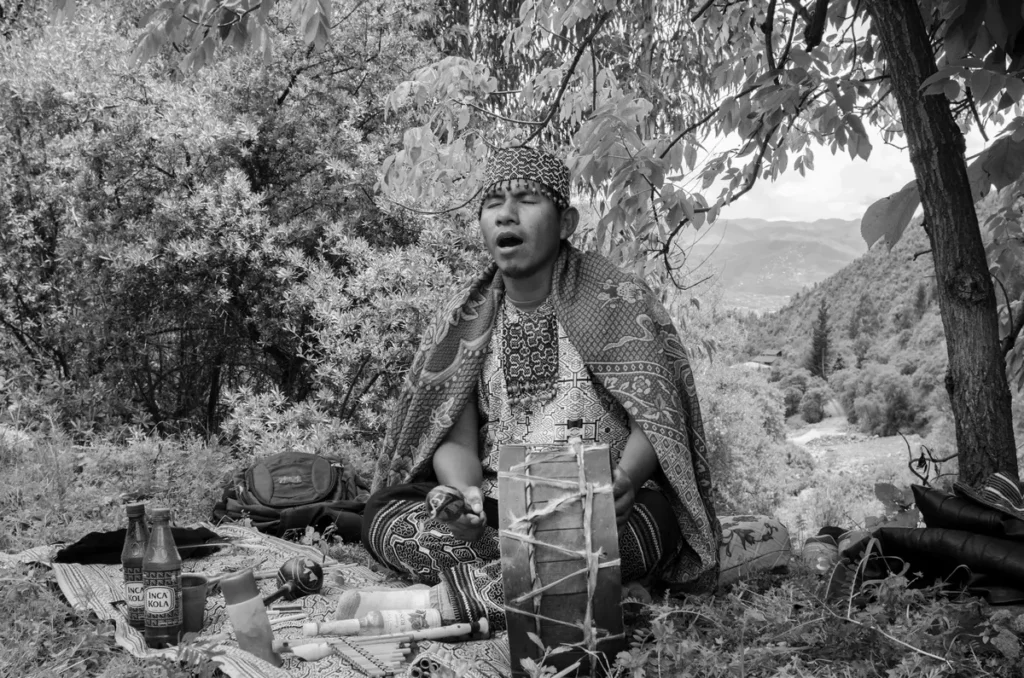
Ayahuasca Cusco Peru
Who Is Each Medicine For?
This is the most practical question, and it deserves a direct answer rather than the equivocating “it depends on your path” that most guides offer.
San Pedro (Wachuma) tends to be more suitable when:
You are new to plant medicine and want to understand what ceremonial work feels like before committing to the more intense experience of ayahuasca. The gentler physical profile and maintained mental clarity make Wachuma accessible in a way that ayahuasca is not.
You are specifically seeking emotional opening, reconnection with nature, or a restored sense of love and gratitude — rather than deep excavation of trauma or unconscious patterns.
You are in a relatively stable emotional state but feeling disconnected, flat, or unclear about direction. Wachuma tends to restore perspective and warmth rather than initiate dramatic confrontation.
You have physical sensitivities that make the intense purging of ayahuasca a significant concern — such as certain gastrointestinal conditions or cardiac sensitivities to sudden intense physical exertion.
Ayahuasca tends to be more suitable when:
You are specifically seeking deep work on trauma, persistent depression, addiction, or longstanding psychological patterns that haven’t responded to other approaches.
You have some prior experience with non-ordinary states of consciousness and a developed capacity to stay present with difficult emotional material.
You are ready for intensity — not in a bravado sense, but in the genuine sense of being willing to encounter difficult internal material without fleeing from it.
You are drawn to visionary, deeply introspective work rather than an expansive, outward-facing experience.
Neither is universally “better” or “easier.” San Pedro’s longer duration (8–12 hours) is not inherently more manageable than ayahuasca’s 4–6 hours of greater intensity. What matters is alignment between the medicine’s character and the participant’s intentions and readiness.
Contraindications Compared
Both medicines have contraindications, and a responsible comparison addresses them directly.
Ayahuasca contraindications are primarily driven by its MAOI content: SSRIs, MAOIs, tricyclic antidepressants, lithium, some blood pressure medications, certain decongestants, tramadol, and St. John’s Wort all carry meaningful interaction risks. People with a history of schizophrenia, schizoaffective disorder, or bipolar disorder with psychotic features should not take ayahuasca. Pregnancy and significant cardiovascular conditions are also contraindications.
San Pedro (Wachuma) contraindications are less extensively documented but real. Lithium is a significant contraindication for San Pedro specifically — the interaction between mescaline and lithium can provoke unpredictable neurological responses. People with kidney conditions should exercise caution, as mescaline is primarily renally excreted. Severe cardiovascular conditions, uncontrolled hypertension, and pregnancy are also contraindications. San Pedro does not carry the SSRI interaction risk that ayahuasca does — mescaline is not serotonergic in the same pharmacological sense, and does not interact with the MAOI-sensitive pathways. That said, anyone taking psychiatric medication should disclose this to the retreat center before participating in either ceremony.
A legitimate center will screen for all of this before accepting participants. If yours doesn’t, that is a signal worth heeding.
Sequencing: Which First, and Why?
Many people who plan to experience both medicines in Cusco ask about sequencing — which to do first, and whether the order matters.
The most common recommendation among experienced facilitators, and the one that reflects the majority of participant accounts, is: Wachuma before Ayahuasca.
The reasoning is practical and well-founded. San Pedro opens the heart — it restores a quality of emotional warmth, openness, and connection that can be difficult to access when someone arrives carrying significant tension, grief, or psychological armor. Going into an ayahuasca ceremony with a heart already opened by Wachuma tends to allow deeper, more navigable emotional work. The San Pedro experience provides a kind of preparation that cannot be achieved through dietary restriction or meditation alone.
The reverse sequence — ayahuasca first, then Wachuma — is also meaningful and not uncommon. Ayahuasca tends to surface material; Wachuma can then help integrate and settle what was opened. Some participants describe this as the ayahuasca turning over the soil and the San Pedro bringing sun and water to what grew from it.
There is no universal rule. For people with very little prior experience of non-ordinary states, beginning with Wachuma — experiencing a full ceremony that maintains cognitive clarity and physical mobility — provides a foundation that makes a subsequent ayahuasca ceremony more navigable. For experienced practitioners with specific deep psychological work to do, starting with ayahuasca may be more aligned with their intentions.
What matters most is a clear sense of your own intentions, honest communication with the facilitators, and sufficient time between the two ceremonies — typically a minimum of three to five days — to integrate each experience before proceeding to the next.
Combining Both: The Cusco Advantage
Cusco occupies a position that no other location on earth quite replicates: it is simultaneously the ancestral home of Andean Wachuma tradition and a well-established center for Amazonian ayahuasca ceremony. The Sacred Valley, the Apus, the ancient Inca sites, and the mountain landscape form the natural ceremonial context for San Pedro work. And experienced Amazonian curanderos have been bringing their medicine to Cusco for generations, creating a setting where both traditions are authentically present rather than imported or approximated.
For a visitor spending 7 to 14 days in the Cusco region — typically combining the retreats with visits to Machu Picchu, Pisac, Ollantaytambo, or the Sacred Valley — there is a natural coherence between the cultural and spiritual landscape of the Inca world and the medicine work available here. The mountains don’t just serve as backdrop. They are, in the Andean understanding, presences — Apus who witness and support the ceremonial work happening in their territory.
Our programs include standalone San Pedro ceremonies, standalone ayahuasca retreats ranging from 1 day to 7 days, and combined programs that include both medicines with appropriate time for integration between ceremonies. We are happy to discuss which sequence and combination best fits your intentions and the time available to you.
Frequently Asked Questions
What is the main pharmacological difference between ayahuasca and San Pedro?
Ayahuasca works through DMT (N,N-Dimethyltryptamine) and beta-carboline MAO inhibitors — a serotonergic mechanism that produces intense visionary states, ego dissolution, and deep inward experience. San Pedro works primarily through mescaline, a phenethylamine alkaloid that activates serotonin receptors but also engages dopamine and norepinephrine pathways, producing an expansive, outward-facing clarity rather than intense inward visions. These different pharmacological mechanisms explain most of the experiential differences between the two medicines.
How long does each ceremony last?
Ayahuasca ceremonies typically last 4 to 6 hours, beginning in the evening and ending before dawn. San Pedro (Wachuma) ceremonies last 8 to 12 hours, beginning in the morning and extending through most of the day. The San Pedro experience has a more gradual onset and a longer, gentler descent than ayahuasca.
Which medicine causes less nausea and vomiting?
San Pedro produces significantly less physical purging than ayahuasca. Roughly 70% of ayahuasca participants experience vomiting at some point during the ceremony, which is considered part of the medicine’s cleansing process. With San Pedro, nausea affects approximately 20% of participants and tends to be milder and shorter-lasting when it occurs.
Can I take San Pedro if I’m on antidepressants?
San Pedro (Wachuma) does not carry the same SSRI interaction risk as ayahuasca, because mescaline does not engage the same MAOI-sensitive pathways. However, lithium is a specific contraindication for San Pedro — the interaction can be neurologically unpredictable. Anyone on psychiatric medication should disclose this fully to the retreat center before participating in either medicine.
Is it safe to experience both medicines during the same trip to Peru?
Yes, provided sufficient time is allowed between ceremonies — a minimum of three to five days between San Pedro and ayahuasca (in either order) — and provided both are conducted under proper facilitation with medical screening. Many participants who come to Cusco for 10 to 14 days experience both medicines, typically with Wachuma first. We recommend discussing your intentions with us before booking to ensure the sequencing and timeline are appropriate for your specific situation.
Which medicine is better for trauma healing?
Both medicines support trauma healing, but through different mechanisms. Ayahuasca tends to surface buried emotional material directly and rapidly, facilitating deep confrontation and release. San Pedro works more through the restoration of emotional openness, compassion, and perspective — a gentler form of trauma processing that doesn’t force the same confrontation but can be profoundly healing in its own right. For severe, longstanding trauma, ayahuasca is often considered the more directly effective tool — but it also requires greater psychological readiness and robust facilitation. San Pedro may be a more appropriate entry point for people working with trauma for the first time in a ceremonial context.
Which is better for someone completely new to plant medicine?
For a first-time participant with no prior experience of non-ordinary states, San Pedro (Wachuma) is generally the more accessible starting point. The maintained cognitive clarity, the daytime outdoor setting, the longer but gentler trajectory, and the significantly lower likelihood of intense physical purging make it a more navigable first experience. It also provides a reference point — an understanding of what ceremonial plant medicine work feels like — that can inform a more intentional approach to ayahuasca if that is pursued subsequently.
Both San Pedro and ayahuasca ceremonies are available at Ayahuasca Cusco in the Sacred Valley. If you’re unsure which medicine — or which combination — is right for your intentions, contact us directly. We offer personal consultations before any booking and can help you design a program that fits your time in Cusco, your goals, and your level of experience.
Explore our ceremonies: San Pedro (Wachuma) Ceremony · 1-Day Ayahuasca Retreat · 3-Day Ayahuasca Retreat · 7-Day Ayahuasca Retreat
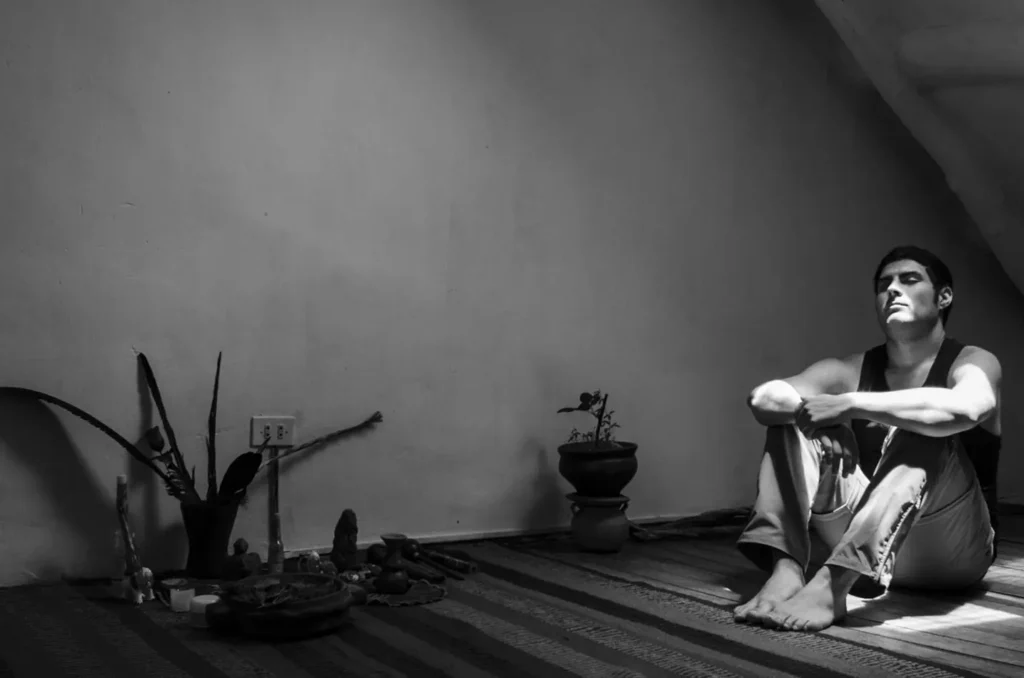
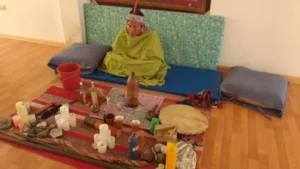
Healing center for Ayahuasca retreat in Cusco – Centro de sanación para retiro ayahuasca Cusco