Ayahuasca for beginners — a complete honest guide covering what it is, if you’re ready, what to expect, how to prepare, common myths, and how to choose your first retreat safely.
You’ve read the articles. Watched the documentaries. Heard someone’s story at dinner or a friend’s account that stayed with you for weeks. Something about ayahuasca pulled your attention and hasn’t let go — a curiosity that feels different from ordinary curiosity, more personal, harder to explain.
And now you’re trying to figure out what’s actually true. What this medicine really is, whether it’s appropriate for you, what a ceremony involves, what the risks are, and whether the experience people describe bears any resemblance to reality or is mostly projection and storytelling.
This guide is written for that exact moment. Not to persuade you in either direction — but to give you the most complete and honest picture available of what ayahuasca involves for someone approaching it for the first time, so that whatever decision you make is genuinely informed.
Table of Contents
What Ayahuasca Actually Is — Beyond the Headlines
Ayahuasca is a brewed drink prepared from two Amazonian plants. The vine Banisteriopsis caapi contains compounds called beta-carbolines, which act as monoamine oxidase inhibitors (MAOIs). The leaves of Psychotria viridis (chacruna) contain DMT, a naturally occurring psychoactive compound. Together, these two plants produce a brew that — when consumed in a ceremonial context guided by an experienced healer — generates a 4 to 6 hour altered state of consciousness.
That is the pharmacological description. It is accurate and useful, and it also misses most of what matters.
Ayahuasca is not a recreational substance. It is not a drug in the sense that most people use that word. It is not a shortcut to enlightenment, nor is it a guaranteed therapy, nor is it something you do for entertainment. What it is, in the tradition from which it comes and in the experience of the millions of people who have sat with it in genuine ceremonial contexts, is a medicine — a tool for healing, for confronting what has been avoided, for accessing dimensions of self-awareness and emotional intelligence that ordinary life rarely makes available.
The altered state it produces is not a “trip” in the colloquial sense of hallucinating random imagery. The visionary and emotional experiences that arise during ceremony tend to be deeply personal — connected to the specific psychological and emotional material of the participant, shaped by their intentions and their history, and guided by the healer’s work throughout the night. It is not unpredictable in the sense of random. It tends, rather reliably, to go to exactly where it is most needed — which is not always where you wanted it to go.
That quality — of the medicine going to what needs attention rather than what you planned for — is both its greatest gift and the thing that makes preparation genuinely important.
Ayahuasca Retreat in Cusco
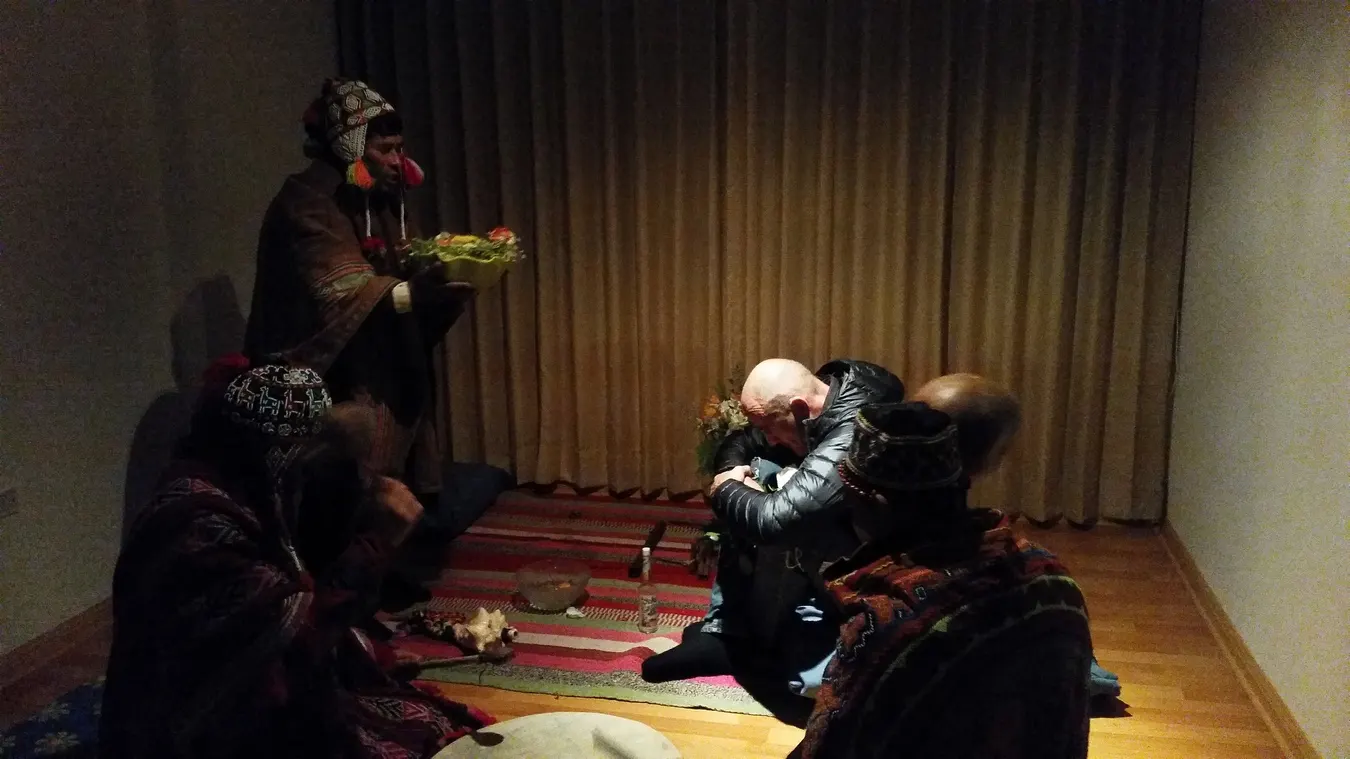
1 Day Ayahuasca Retreat Cusco
Designed for visitors with little time seeking a profound spiritual experience, the 1 Day Ayahuasca Retreat in Cusco, Peru is meant for them.
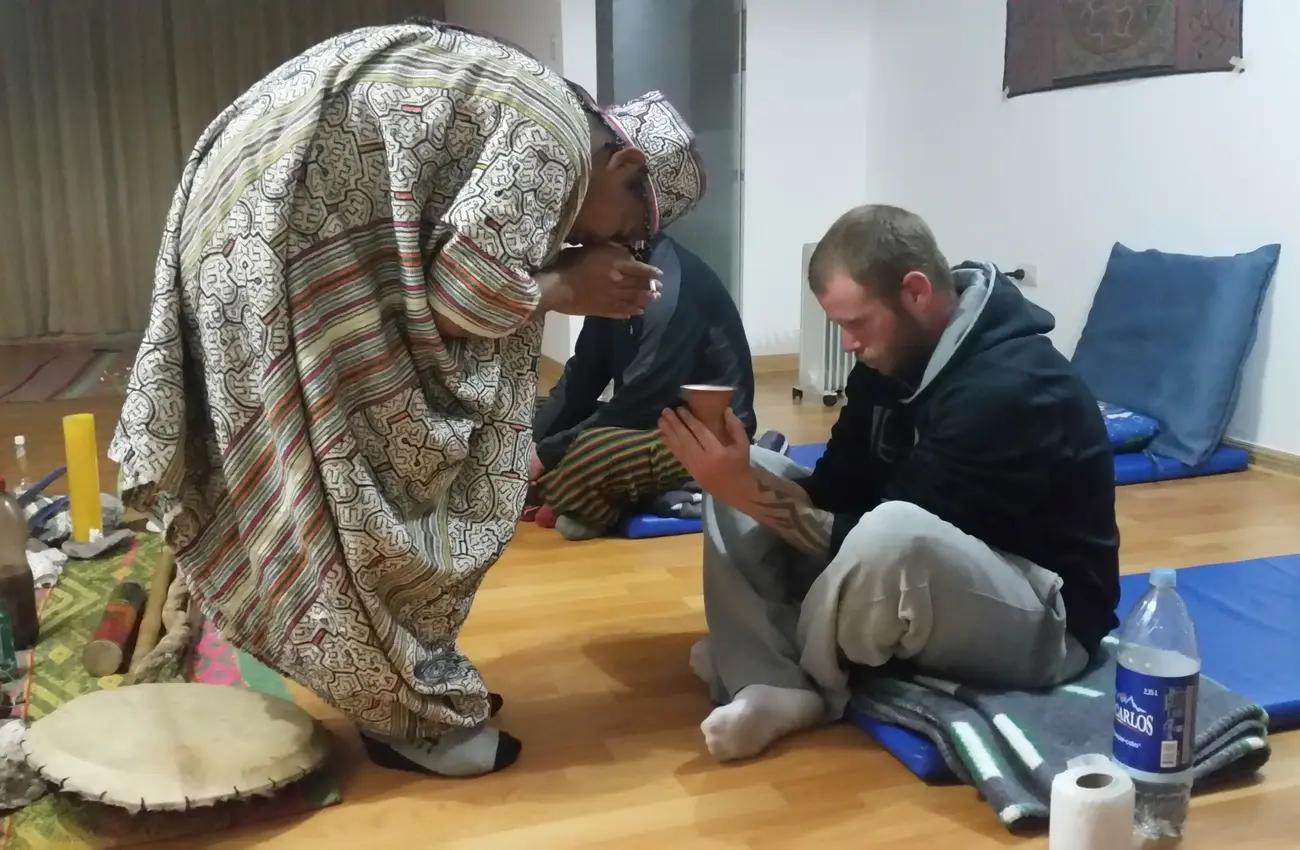
2 Day Ayahuasca Retreat Cusco
Our 2 Day Ayahuasca Retreat Cusco Peru offers a sacred space for those who seek profound healing and self-discovery in a short yet powerful journey.
Where It Comes From and Why That Matters
Ayahuasca originated in the Amazonian rainforest traditions of South America, where indigenous peoples — particularly communities like the Shipibo-Conibo in Peru — have been working with it as a central element of their healing systems for centuries, possibly millennia. The earliest confirmed archaeological evidence of ceremonial plant medicine use in the region dates back over a thousand years.
In these traditions, ayahuasca is inseparable from the healer who works with it. The curandero or ayahuasquero — a trained shaman who has typically spent years or decades in apprenticeship, including extended periods of dietary and social restriction called dietas — uses the medicine as a diagnostic and healing tool. The icaros, the healing songs sung throughout the ceremony, are not accompaniment. They are the primary healing instrument, through which the healer works directly with each participant’s energy.
Peru recognized ayahuasca as part of the country’s National Cultural Heritage in 2008, and its ceremonial use is legally protected. This is why Peru — and specifically Cusco, where both Amazonian and Andean healing traditions converge — has become the primary destination for international visitors seeking this work.
Understanding the cultural origin of ayahuasca matters practically for beginners: it shapes how you should approach it (with respect for the tradition, not as a consumer experience), what you should look for in a retreat center (authentic shamanic training and lineage, not just a pleasant facility), and what the experience is designed to accomplish (healing in the broadest sense, not entertainment).
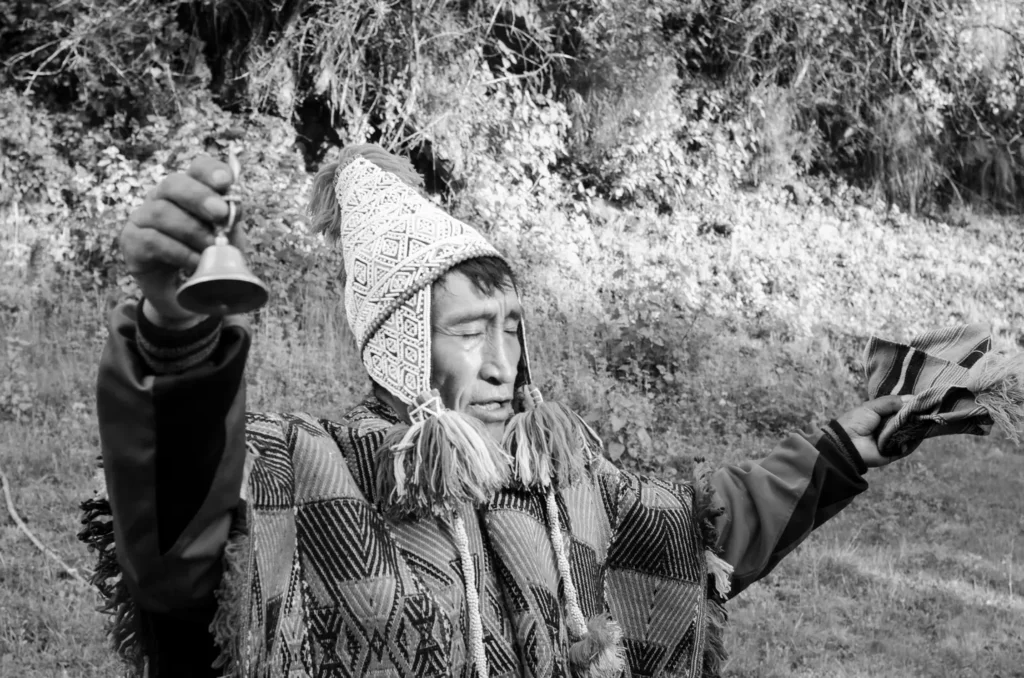
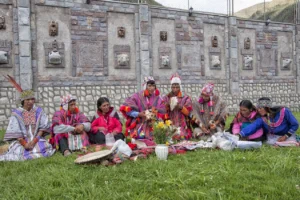
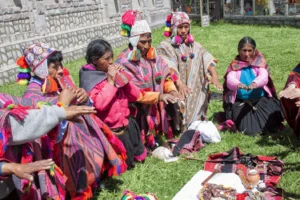
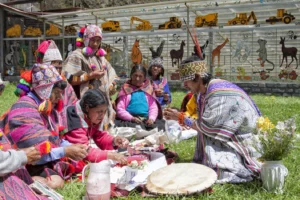
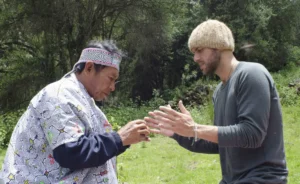
Shipibo shaman guiding ayahuasca retreat in Peru – Chamán shipibo ceremonia ayahuasca Perú
What Brings People to Their First Ceremony
People arrive at their first ayahuasca ceremony from very different starting points, and none of them are more or less valid than the others. Being honest about your actual reason for being there — rather than the reason that sounds most acceptable — is one of the most useful things you can do in the preparation period.
Some come because they are suffering — from depression, anxiety, trauma, addiction, grief — and conventional approaches have not been sufficient. The research on ayahuasca’s effects on these conditions is growing and, in the case of depression in particular, compelling. These participants often arrive with the greatest urgency and the most specific expectations.
Some come out of genuine spiritual curiosity — a sense that there is more to consciousness and existence than ordinary life makes accessible, and a desire to explore that. This has been a motivation for working with plant medicines across cultures for as long as those cultures have existed.
Some come because someone they trust had an experience that changed them, and they want to understand what that was. Some come because they feel they have reached a threshold in their life — a relationship ending, a career transition, a sense of being stuck — and want clarity they can’t seem to find another way.
Some come specifically for the cultural and historical experience — an interest in Andean and Amazonian traditions, in shamanic healing, in the living continuity of practices that predate contemporary life by thousands of years.
All of these are legitimate reasons. None of them guarantee a particular experience. What matters more than why you came is whether you arrive with genuine openness — a willingness to receive what the medicine has to offer rather than what you’ve decided in advance it should provide.
How to Know If You’re Ready
Readiness for a first ayahuasca ceremony is not about meeting a threshold of spiritual development or emotional health. It is not about being fearless or having worked through all your issues. Both of those are impossible standards, and neither is required.
Readiness is more practical than that. These are the indicators that point toward it:
You can stay with discomfort without immediately escaping it. The ceremony will bring up difficult material — emotions, memories, fears, physical sensations. The ability to remain present with something uncomfortable, even briefly, without immediately reaching for a distraction or exit, is the most important capacity you can bring into a ceremony. You don’t need to be masterful at this. You need to be capable of it.
You understand this is not a solution. Ayahuasca is a tool. It can provide insight, emotional access, and perspective that is genuinely difficult to reach another way. It cannot resolve what you are unwilling to change. It cannot make decisions for you. It cannot do the work of integration that gives any ceremony its lasting value. If you are arriving hoping the medicine will fix something so you don’t have to, that is worth examining honestly before you book.
You have support available. A ceremony is an intense experience, and the days and weeks following can be emotionally demanding. Having at least one person in your life — a therapist, a close friend, a family member — who knows you are doing this and can be available to you afterward matters considerably. You don’t need a full integration team. You need not to be completely alone with whatever the experience opens.
You are not in active crisis. A psychological crisis — suicidal ideation, a psychotic episode, severe dissociation — is not a state in which ayahuasca is appropriate. The medicine amplifies what is present. If what is present is already destabilized, amplification is not what is needed. Stability comes first; ceremony follows.
The timing feels right from within, not from external pressure. Ayahuasca participated in because a partner suggested it, because a social circle makes it seem expected, or because you feel guilty about not doing the inner work — is not the same as ayahuasca approached from a genuine sense of readiness. The distinction matters for what the experience can offer.
When It’s Not the Right Time
Being honest about when to wait is as important as understanding when to proceed. Some of the most responsible guidance on ayahuasca comes from experienced practitioners who recommend postponement rather than attendance.
If you are in acute psychological crisis. Depression that has become severe to the point of suicidal ideation, a recent breakdown, an active psychotic episode, or a mental health emergency of any kind warrants stabilization before any ceremonial plant medicine work. Ayahuasca can be deeply healing for people with a history of depression or trauma — but only when approached from a position of sufficient stability to navigate what arises.
If your primary motivation is escape. Coming to ayahuasca to stop feeling a certain way — to no longer be depressed, to not be afraid anymore, to erase something difficult — sets up an internal conflict with how the medicine works. Ayahuasca does not remove what is difficult. It brings it into awareness. The impulse to escape and the medicine’s tendency to reveal work in opposite directions. This doesn’t make you inappropriate for ceremony — but the motivation worth examining first.
If you haven’t done any prior inner work. This is not a rigid rule, but a practical observation. People who have some experience with therapy, meditation, journaling, or any practice that involves turning attention inward tend to have more navigable first ceremonies than those for whom a ceremony is the first time they’ve engaged with their interior life deliberately. You don’t need years of therapy. A few months of honest self-reflection — including the preparation work described later in this guide — is often sufficient.
If the timing in your life is chaotic. An ayahuasca ceremony and the integration period that follows require a degree of spaciousness that is genuinely hard to create in the middle of a professional crisis, a family emergency, or a period of extreme external pressure. The ceremony itself can be held in those circumstances, but the integration work cannot, which means the most valuable part of the experience may be lost.
If you haven’t told your doctor. This is not optional if you take any prescription medications. The interactions between ayahuasca and certain drugs — particularly antidepressants and MAO inhibitors — range from clinically significant to potentially dangerous. A conversation with your physician before attending a ceremony is part of responsible preparation, not an optional extra.
Medical Realities: Who Should Not Participate
Certain medical and psychiatric conditions make ayahuasca inappropriate, and these are not negotiable. A responsible retreat center will screen for all of them. If you encounter a center that does not ask detailed health questions before accepting you, treat that as a significant warning sign.
Absolute contraindications:
People taking SSRIs, SNRIs, tricyclic antidepressants, MAOIs, or lithium. The interaction between these medications and ayahuasca’s beta-carboline MAO inhibitors can cause serotonin syndrome — a potentially life-threatening condition. Tapering off these medications requires weeks of medical supervision. Never stop psychiatric medication abruptly or without physician guidance.
People with a personal or family history of schizophrenia, schizoaffective disorder, or bipolar disorder with psychotic features. Ayahuasca can trigger or amplify psychotic episodes in vulnerable individuals, and this risk is serious enough to constitute an absolute contraindication.
Pregnancy. The physiological demands of a ceremony — sustained purging, cardiovascular activation, hours of altered state — are not appropriate during pregnancy.
Significant cardiovascular conditions or severe liver disease. The brew imposes real physiological demands. These conditions require physician assessment before any decision is made.
Situations requiring careful medical evaluation:
Certain blood pressure medications, tramadol, some antihistamines and decongestants, St. John’s Wort, and high-dose Vitamin B6 supplements all warrant disclosure and assessment. If you take any medication — prescription or over-the-counter, regularly or occasionally — disclose it to the retreat center during intake.
The bottom line for beginners: your medical history is not a bureaucratic inconvenience in this context. It is directly relevant to your safety, and the center’s ability to serve you well depends on having accurate information about it.
What to Expect From Your First Ceremony (Honestly)
The most useful thing to know about your first ceremony is this: it will probably not look like what you imagined, in ways that are meaningful and often surprising.
The popular image of an ayahuasca ceremony — dramatic visions, encounters with serpents and spirits, ego death, profound revelations arriving fully formed — reflects a real range of experiences but not a universal one. For many first-time participants, the first ceremony is less spectacular than expected. This is not a failure. It is often simply how the medicine introduces itself.
What commonly happens in a first ceremony:
The medicine takes 20–45 minutes to begin working, and many beginners spend much of this time worried that it won’t. The first signs are usually subtle — a shift in how the body feels, a change in the quality of awareness, perhaps the beginning of nausea or a faint visual texture to the darkness behind closed eyes.
The purge — vomiting, which occurs in roughly 70% of participants — often happens in the first hour and is frequently described afterward as a release rather than an illness. Most people feel noticeably lighter immediately after.
The peak, which typically occurs between hours two and four, can involve visual phenomena (geometric patterns, symbolic imagery, scenes that feel more like memory than hallucination), intense emotional material (grief, fear, love, sudden clarity about something long avoided), altered time perception, and a quality of self-awareness that is difficult to describe and often impossible to access in ordinary states.
Many first-time participants describe the first ceremony as an orientation — an introduction to the medicine rather than the deepest work. This is expected and appropriate. Subsequent ceremonies in a multi-day retreat often go considerably deeper.
What many beginners don’t expect:
That the experience might not be visual at all — and that this is entirely valid. That the most significant moments may be emotional rather than spectacular. That the medicine might go directly to something they were hoping to avoid. That the morning after may feel raw, tender, or emotionally complicated in ways that require care.
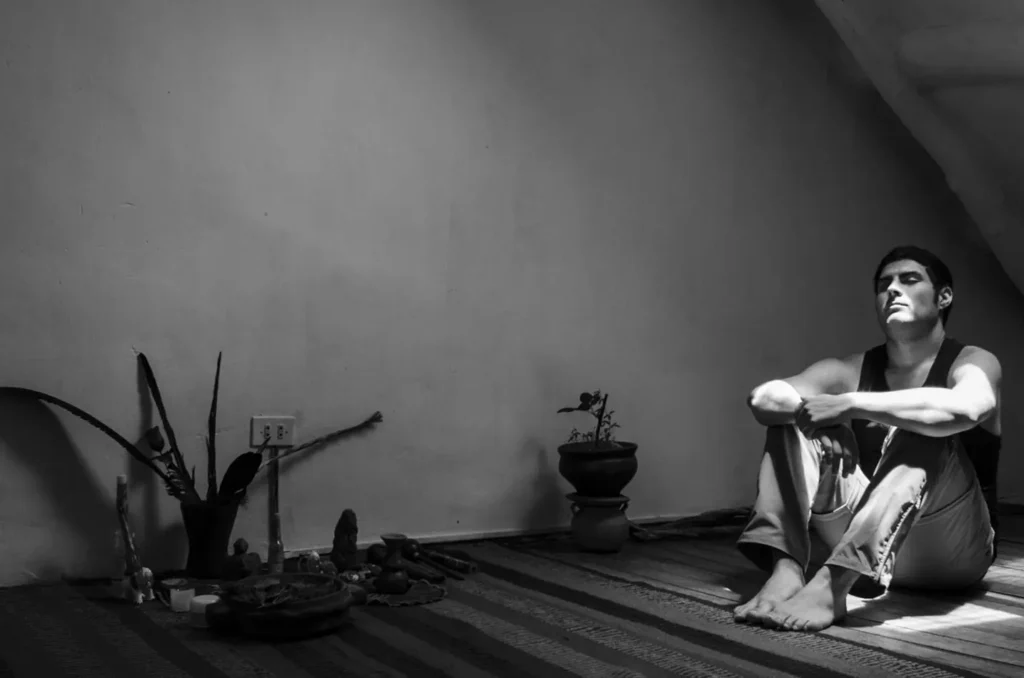
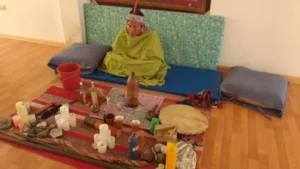
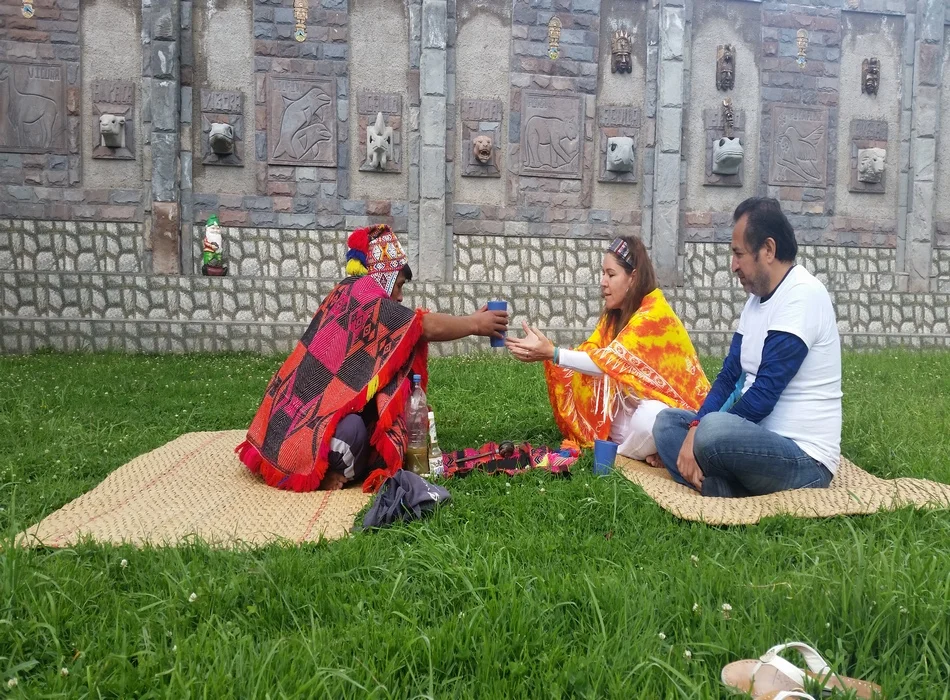
Healing center for Ayahuasca retreat in Cusco – Centro de sanación para retiro ayahuasca Cusco
The Most Common Beginner Myths — and What’s Actually True
Myth: Ayahuasca is safe for everyone as long as you follow the diet.
Reality: The diet is important for safety reasons, but it addresses only one category of risk. Medical contraindications — particularly regarding psychiatric medications and conditions — exist independently of diet and must be assessed separately. The diet cannot neutralize the interaction between ayahuasca and SSRIs.
Myth: If the medicine is difficult, something has gone wrong.
Reality: The medicine working often feels difficult. Confronting buried grief, fear, or repressed emotion is not comfortable. The distinction between a difficult experience and a genuinely unsafe one is something experienced facilitators are trained to recognize and manage. Difficulty is expected; suffering without support is not.
Myth: You need prior psychedelic experience to be ready.
Reality: Prior experience with other psychedelics is not a prerequisite and is not particularly relevant to readiness for ayahuasca. The preparation that matters is inner work — therapy, journaling, intentional self-reflection — not a history of recreational substance use.
Myth: More ceremonies means more healing.
Reality: Integration between ceremonies is where healing consolidates. A single well-prepared, well-held, and well-integrated ceremony can produce more lasting change than ten ceremonies done without preparation or integration work. Volume is not the variable that matters most.
Myth: The visions are the medicine.
Reality: The visionary dimension of ayahuasca is one possible expression of the experience, not its defining feature or measure of success. Many of the most meaningful ceremonial experiences involve minimal visual content and profound emotional or cognitive processing. Participants who arrive expecting visions and experience an emotionally quiet but deeply moving night sometimes dismiss their experience as incomplete, which is a significant misunderstanding.
Myth: You can stop the experience if you want to.
Reality: Once the medicine has been consumed, the experience unfolds on its own timeline. You cannot turn it off. This is one of the reasons set, setting, and preparation matter so much — and why entering a ceremony with an experienced, trustworthy facilitation team is essential rather than optional.
Myth: Ayahuasca is guaranteed to help with depression/trauma/addiction.
Reality: The research on ayahuasca’s therapeutic potential is genuinely promising, particularly for depression. It is not conclusive, and it is not a substitute for ongoing professional support. Many people experience significant and lasting improvement after ceremonial work. Others find the experience meaningful but don’t see the specific changes they hoped for. Outcomes vary by individual and are significantly shaped by integration.
How to Choose Your First Retreat
The choice of retreat center is among the most important decisions a first-time participant makes, and it deserves more attention than most people give it.
The questions that matter:
Who leads the ceremonies? Can the center give you the name, healing lineage, and years of practice of the shaman who will conduct your ceremony? If the answer is vague — “our experienced team” without individual identification — that is a meaningful signal.
What does the medical screening process look like? Any responsible center will ask for your complete medication list and health history before accepting your booking. The depth of this screening — whether it is a cursory form or a genuine conversation — reflects the center’s actual commitment to participant safety.
What integration support is provided? A ceremony without integration is incomplete. Does the center provide structured integration sessions during the retreat? Is there follow-up support available after you return home? Integration is where lasting change happens, and centers that treat it as an afterthought are missing something essential.
What is the group size? Smaller groups allow for more individual attention during ceremony — the difference between a facilitator who can check in with each participant meaningfully versus one stretched thin across twenty people. For a first ceremony, more individual attention is better.
What is the emergency protocol? Ask directly what happens if a participant experiences a medical or psychological crisis during ceremony. A clear, specific answer is reassuring. Vagueness is not.
What do verifiable reviews say? Reviews on Google, TripAdvisor, and AyaAdvisors from real, identifiable participants over a period of time tell a more reliable story than testimonials on a center’s own website. Look for consistency across many reviewers, and read the critical ones as carefully as the positive.
Red flags to watch for:
A center that accepts participants without detailed health screening. Promises of specific outcomes (“heal your depression,” “overcome your addiction”). No information about the shamans’ backgrounds or training. Pressure tactics or urgent booking deadlines. An absence of follow-up support after the ceremony.
The Ayahuasca Diet: What Beginners Need to Know
The dietary preparation before a ceremony — la dieta — is not optional, and understanding it before you book helps you plan the weeks before your retreat realistically.
The diet serves two distinct purposes. The first is pharmacological safety: certain foods contain tyramine, which interacts with ayahuasca’s MAO inhibitors and can cause dangerous blood pressure elevation. Aged cheeses, cured meats, fermented foods, alcohol, and overripe fruit are the primary concern — and these restrictions are safety-critical, not traditional preference.
The second purpose is traditional and energetic: a simplified diet reduces what Amazonian healers describe as density or interference in the energetic field, creating better conditions for the medicine’s work. Pork, excess sugar, spicy food, processed food, and coffee fall into this category.
For beginners, the key points:
Start dietary preparation at least one to two weeks before your ceremony, with safety-critical restrictions in place for the full two weeks. If you take SSRIs or other psychiatric medications, the preparation timeline is longer — your physician needs to be involved in tapering, and this process typically takes weeks to months.
Follow the specific protocol your retreat center provides — it supersedes any general guide, including this one. When in doubt about whether something is restricted, ask the center directly rather than guessing.
For a complete breakdown of foods to avoid, foods to embrace, and the week-by-week timeline, see our complete ayahuasca diet guide.
How Many Ceremonies Do You Need?
First-time participants often ask this question hoping for a specific answer. Here is the most honest one available.
A single ceremony can produce significant and lasting change. It is not a guaranteed minimum or a threshold below which nothing meaningful happens. Some of the most profound transformations in people’s lives follow a single ceremony.
That said, multiple ceremonies — particularly within a structured retreat — tend to allow for deeper work than a single night. The first ceremony often functions as an introduction: the body and mind encounter the medicine for the first time, the system adjusts, the shaman and participant begin developing a relationship. The second and third ceremonies frequently go deeper, with the ground cleared by the first allowing for more intentional, less disorienting work.
Most experienced practitioners recommend a minimum of two ceremonies for a meaningful first encounter, and many suggest that a 3-day retreat with two ceremonies offers considerably more than a single night for someone approaching this work seriously.
For those with limited time in Peru, a 1-day ceremony is a genuine and meaningful experience — not a compromise. For those who want to go deeper from the beginning, a 5-day or 7-day retreat creates the spaciousness for multiple ceremonies with adequate integration time between them.
What matters more than the number of ceremonies is the quality of each one — the preparation, the facilitation, and the integration work that follows.
What Happens After: Integration for Beginners
Integration is the process of making sense of what arose during ceremony and translating it into change in daily life. It is not automatic. It requires active engagement — and for beginners, it is often the most unfamiliar part of the entire process.
The days immediately following a ceremony are some of the most important in the whole arc of the experience. Emotional sensitivity is heightened. Insights that seemed crystalline in ceremony may need time and attention to consolidate. The impulse to return immediately to ordinary life — work, screens, social obligations, the familiar pace — can interrupt a process that benefits significantly from space and quiet.
Practical integration support for beginners:
Journal immediately and consistently. The morning after each ceremony, write — without filtering, without trying to be coherent. Images, emotions, phrases, anything present from the night. Return to this writing in the following days. The meaning of ceremonial material often deepens significantly over time, and having a written record makes that unfolding more accessible.
Allow a quiet return. If at all possible, protect at least two to three days after returning home from major professional or social demands. This is not weakness — it is recognizing that you have done something significant and that the work of integrating it needs space.
Find someone to talk with. Putting language to the experience — whether with a therapist familiar with psychedelic integration, a trusted friend who understands what you’ve done, or in an integration circle — helps consolidate what was accessed. We don’t fully understand our experiences until we articulate them.
Continue the dietary protocol for at least three to five days after the ceremony. Alcohol, heavy food, and stimulants in the days immediately following can disrupt the process that is still unfolding.
Resist the impulse to book another ceremony immediately. The integration work of the first ceremony often takes weeks or months to complete. Chasing the next experience before this work is done tends to accumulate material faster than it can be processed.
Why Cusco Is a Strong Starting Point for First-Timers
Not all locations are equally appropriate for a first ayahuasca experience, and the practical differences matter more than they might seem.
Cusco and the Sacred Valley offer several specific advantages for beginners:
Accessibility. Multiple daily flights from Lima make Cusco one of the most logistically accessible retreat destinations in Peru. The city has robust medical infrastructure — hospitals, clinics, pharmacies — for any pre- or post-ceremony needs. Amazon retreat centers near Iquitos involve remote jungle logistics that add practical complexity first-timers often don’t need.
Shorter retreat options. Amazon retreat centers typically recommend minimum 7-day programs. In Cusco, programs ranging from 1 to 7 days are available, which suits beginners who want to approach this work incrementally rather than committing to a long immersion as their first experience.
The dual lineage. A ceremony in Cusco draws from both Amazonian and Andean healing traditions simultaneously — something that is genuinely specific to this geography and not available anywhere else. The Apus (sacred Andean mountain spirits), the Sacred Valley landscape, and the living Inca heritage create a ceremonial context that participants consistently describe as distinct and powerful.
Climate and comfort. The Andean highlands are cool and dry rather than humid and equatorial. For participants from temperate climates, this is often physically more comfortable than the intense heat and humidity of jungle settings.
Combination with Machu Picchu. Cusco’s position as the starting point for Machu Picchu travel means that beginners can integrate their ceremonial experience with broader cultural exploration of the Inca world — an addition that many participants find gives the entire trip a coherent spiritual dimension.
The one element of Cusco that requires additional preparation is altitude — at 3,400 meters, the city demands proper acclimatization of at least two to three days before a ceremony. This is not a disadvantage so much as a variable that requires planning, and one that centers operating in Cusco address directly in their intake process.
The Questions Beginners Are Afraid to Ask
These are the questions we hear most often that participants hesitate to ask because they worry the questions themselves reveal something unflattering.
What if I can’t handle it and want to stop?
You cannot stop the experience once the medicine is in your system — it unfolds on its own timeline. What you can do is ask for support from a facilitator at any moment during the ceremony. “I’m struggling” or a simple gesture is enough — that is precisely what the facilitation team is there for. You do not have to manage the experience alone.
Will they force me to drink more if I don’t want to?
No. A legitimate ceremony never involves pressure to consume more medicine than you want to take. The decision about whether to take a second cup is yours, and any facilitator who pressures you otherwise is operating outside the boundaries of responsible practice.
Is it normal to feel nothing?
Yes. Approximately 15% of first-time participants describe minimal or no effects from their first ceremony. This does not mean the medicine failed or that something is wrong with you. Some participants connect very deeply on a second ceremony after an apparently quiet first one. Inform your facilitators — they have context that can help assess what happened.
Am I going to lose my mind permanently?
No. The pharmacological effects of ayahuasca are time-limited — they resolve within the ceremony’s natural duration. There is no evidence of lasting psychotic episodes in healthy individuals without prior history of psychosis who participate in well-facilitated ceremonies with appropriate screening. The appropriate screening process exists precisely to identify and exclude people for whom the risk profile would be different.
What if I cry in front of everyone?
Crying during ceremony is among the most common experiences reported, particularly by participants who are not used to feeling emotions that fully. It is not embarrassing in a ceremonial context — it is normal, expected, and often the sign that something meaningful is happening. Everyone in the maloca is in their own interior experience. No one is watching.
What if the shaman can see things about me I don’t want them to see?
Traditional healers describe the ability to perceive aspects of a participant’s energetic or emotional state through their work in ceremony. This is not an intrusion — it is the function of the healer, and it serves the participant’s healing. The appropriate response is not worry but openness.
Frequently Asked Questions
Is ayahuasca appropriate for someone with no experience with psychedelics?
Yes. Prior psychedelic experience is not a prerequisite and has limited relevance to readiness for ayahuasca. The preparation that matters is psychological — some capacity for self-reflection, the ability to stay present with discomfort, honest intention, and appropriate medical screening. Many people with no prior psychedelic experience have profound and deeply healing first ceremonies.
How long before my trip should I start preparing?
The dietary preparation ideally begins two to four weeks before the ceremony. For anyone taking SSRIs or other psychiatric medications, the medical preparation — tapering under physician supervision — typically requires four to six weeks minimum. Medical preparation should drive your overall timeline planning. Allow more time rather than less.
What is the minimum retreat duration for a first-time participant?
A single ceremony (1 day) is a real and meaningful experience. For those who want more depth and the benefit of multiple ceremonies, a 3-day retreat with two ceremonies is a strong starting point. The right choice depends on your available time, intentions, and what you are hoping to work with.
Do I need to have a spiritual belief system to benefit from ayahuasca?
No. The medicine produces its effects regardless of prior belief — you do not need to believe in plant spirits, Amazonian cosmology, or any specific spiritual framework. What matters is openness to the experience and willingness to engage honestly with what arises.
What should I tell my family or employer about where I’m going?
You are not obligated to disclose the nature of your retreat to anyone. “A healing retreat in Peru” is accurate and sufficient if you prefer not to elaborate. What is worth communicating to those close to you is that you may return from this experience somewhat different than you left — more emotional, more contemplative, in a process of change — so that they can receive that with understanding rather than concern.
Is one ceremony enough for lasting change?
It can be. The research on ayahuasca’s effects on depression and trauma shows significant improvements persisting at 30, 90, and 180 days after single ceremonies. That said, the durability of any change is strongly tied to integration — to the work done with the insights and emotional material that arises. One ceremony with excellent preparation and thorough integration can produce more lasting change than multiple ceremonies without either.
How do I choose between Cusco and the Amazon for my first ceremony?
For most first-time participants, Cusco and the Sacred Valley offer meaningful practical advantages: shorter program options, better medical infrastructure, easier logistics, and the unique dual Amazonian-Andean healing lineage available in this geography. The Amazon — particularly around Iquitos — offers deeper cultural immersion in the Shipibo tradition specifically, but typically requires longer programs and involves more remote logistics. If your primary time constraint or travel plan centers on Cusco and Machu Picchu, starting in the Sacred Valley is a natural and highly appropriate choice.
Considering your first ayahuasca ceremony in Cusco? Contact us for a personal consultation — we will answer your questions honestly, assess whether our program is the right fit for your situation, and discuss which retreat duration best suits your intentions and available time.
Our programs for first-time participants: 1-Day Ceremony · 3-Day Retreat · 5-Day Retreat · 7-Day Retreat
Further reading: What is Ayahuasca? · The Ayahuasca Diet · How to Prepare for a Retreat · What to Expect at a Ceremony · Is Ayahuasca Legal in Peru?