How to prepare for an ayahuasca retreat — the complete guide covering diet, medications, mental preparation, intention setting, altitude in Cusco, and what to bring.
Preparation is where the ceremony begins. Not the night you arrive, not when you drink the medicine — but weeks earlier, in the daily choices, the questions you sit with, the way you start paying attention to what your body and mind have been carrying.
This guide covers every dimension of preparation for an ayahuasca retreat: dietary, physical, medical, psychological, logistical, and spiritual. It’s written specifically for people preparing for a retreat in Cusco and the Sacred Valley, where altitude adds a layer of consideration that most general guides ignore — but the principles apply to any retreat in Peru.
Read it once for the overview. Then return to each section as your retreat date approaches.
Table of Contents
Why Preparation Matters More Than Most People Expect
Ayahuasca is not passive. It amplifies what you bring to it — your physical state, your emotional readiness, your mental clarity or noise, your unspoken fears, your genuine intentions. Arriving unprepared doesn’t mean the medicine won’t work. It means the ceremony spends a significant portion of its energy doing the clearing work that the preparation period was designed to do in advance.
Think of it this way: preparation is not a set of hoops to jump through before the ceremony begins. It is the beginning of the ceremony. Every meal you choose carefully, every hour of additional sleep, every time you sit with an uncomfortable feeling instead of distracting yourself from it — these are acts of readiness. They change what is available to you when the medicine starts working.
The research supports this too. Studies consistently show that outcomes from ayahuasca ceremonies are significantly shaped by what researchers call “set” — the mindset, intentions, and psychological preparation of the participant. A clear, grounded, well-rested, intentional participant has access to a qualitatively different experience than one who arrives depleted, anxious, and unprepared.
This guide will not tell you preparation guarantees anything. Ayahuasca doesn’t work that way. What it does do is give you the best possible foundation — physically safer, emotionally more navigable, and spiritually more open.
Ayahuasca Retreats in Cusco
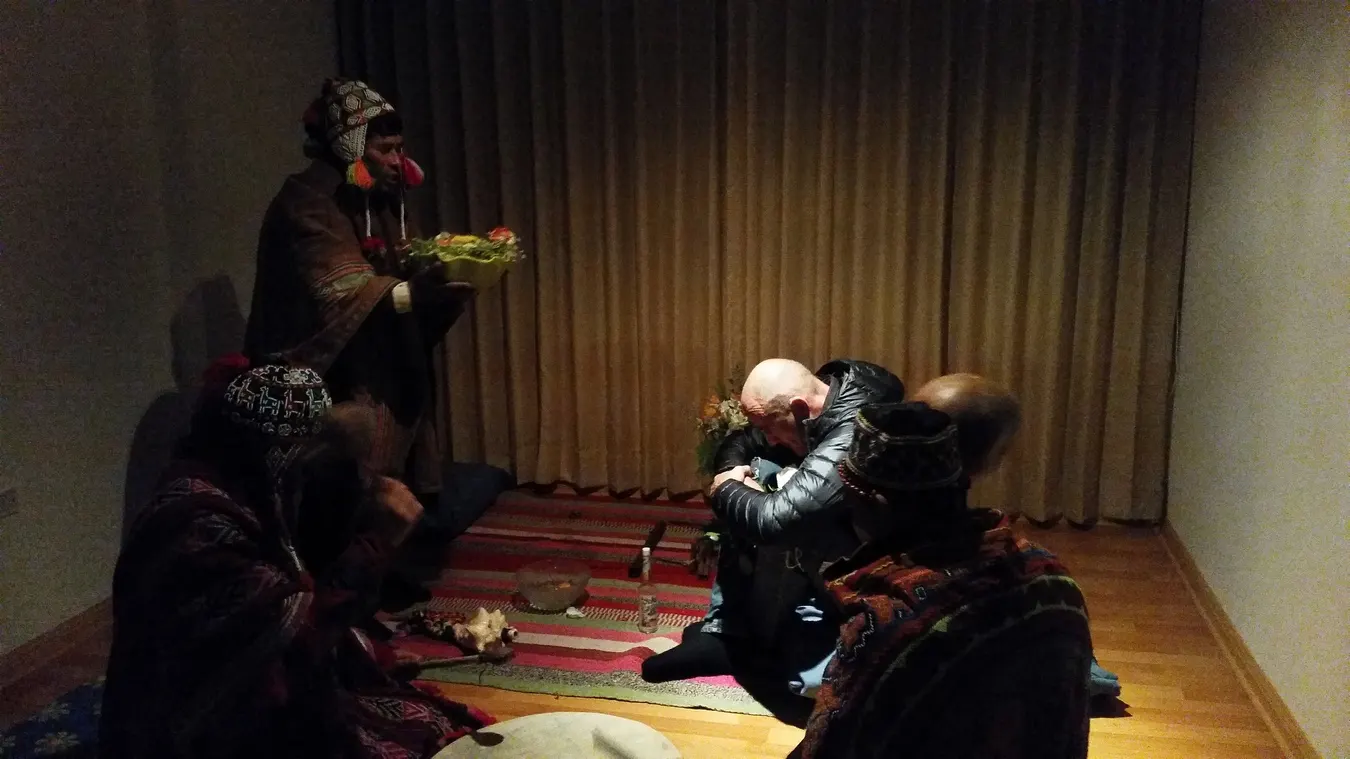
1 Day Ayahuasca Retreat Cusco
Designed for visitors with little time seeking a profound spiritual experience, the 1 Day Ayahuasca Retreat in Cusco, Peru is meant for them.
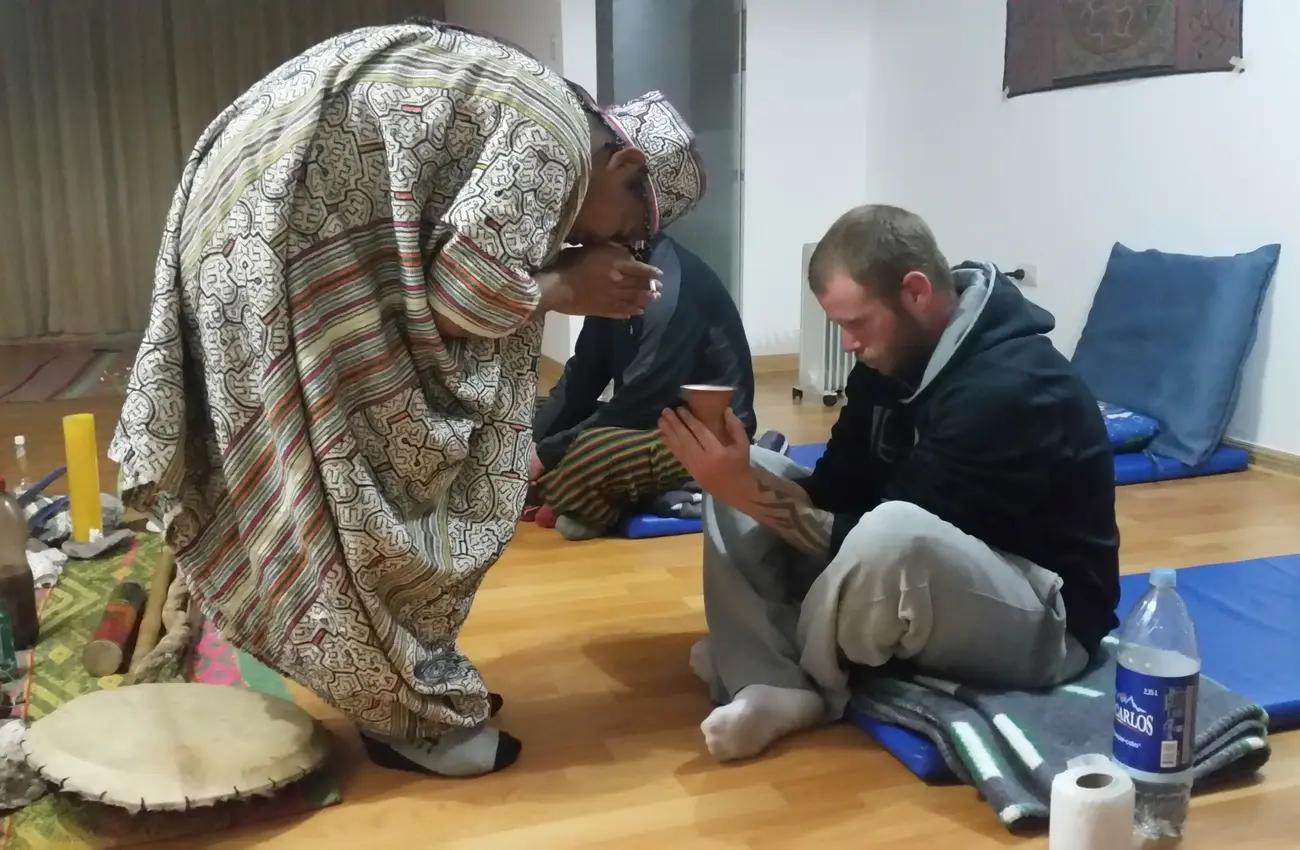
2 Day Ayahuasca Retreat Cusco
Our 2 Day Ayahuasca Retreat Cusco Peru offers a sacred space for those who seek profound healing and self-discovery in a short yet powerful journey.
Medical Preparation: The Non-Negotiable First Step
Before anything else — before the diet, before the intentions, before booking flights — you need a clear picture of your medical situation and how it relates to ayahuasca’s pharmacology.
Start here regardless of your health history:
Contact your retreat center and complete their health screening questionnaire honestly and in full. This is not a formality. A responsible center uses this information to assess whether participation is safe for you, what adjustments may be needed, and in some cases whether you should postpone or reconsider. Providing incomplete information protects no one, including you.
If you are taking any prescription medications:
Certain medications interact seriously with ayahuasca. The most critical category is antidepressants — SSRIs (sertraline, fluoxetine, escitalopram, paroxetine, and others), SNRIs, MAOIs, and tricyclics. The interaction between these medications and the beta-carboline MAO inhibitors in ayahuasca can cause serotonin syndrome, a potentially life-threatening condition. This is not a theoretical risk — it is well-documented and the reason experienced centers screen so carefully.
If you are taking SSRIs or other psychiatric medications, you need to speak with your prescribing physician about tapering off before the retreat. This process typically takes between two weeks and six weeks depending on the medication and your dosage. Do not taper without medical supervision. Do not stop abruptly. And do not assume that a few days off your medication is sufficient — most SSRIs require a washout period of at least two weeks after the last dose before it is safe to participate.
Other medications worth discussing with your physician and retreat center: certain blood pressure medications, tramadol, some antihistamines and decongestants containing pseudoephedrine, lithium, and some herbal supplements including St. John’s Wort and 5-HTP.
If you have a psychiatric history:
Ayahuasca is contraindicated for people with a personal or family history of schizophrenia, schizoaffective disorder, or bipolar disorder with psychotic features. If you have any history of psychotic episodes, discuss this with a mental health professional before pursuing a ceremonial ayahuasca experience — and disclose this fully to the retreat center.
The rule for medical preparation: If you are uncertain whether something is contraindicated, ask. Your retreat center has handled these questions before and should be able to give you a clear answer or direct you to appropriate medical resources.
The Dietary Preparation (Dieta): What to Do and When
The ayahuasca diet — la dieta — is covered in detail in our complete guide to the ayahuasca diet. What follows is the timeline and the reasoning.
Why the diet matters in preparation:
The dietary restrictions exist for two distinct reasons that are worth keeping separate in your mind. The first is pharmacological safety: certain foods contain tyramine, which interacts with the MAO inhibitors in ayahuasca and can cause dangerous blood pressure elevation. These restrictions — aged cheeses, cured meats, fermented foods, alcohol — are safety-critical and non-negotiable. The second reason is traditional and energetic: a simplified diet reduces the physical density that Amazonian and Andean healers associate with interference in the ceremony’s work. These restrictions — pork, excess sugar, spicy food, heavy oils — are meaningful but not pharmacologically urgent.
The preparation timeline for diet:
4 weeks before: Begin reducing caffeine, alcohol, recreational substances, and processed food. Gradual reduction avoids the withdrawal symptoms (caffeine headaches, irritability) that can coincide with your retreat if you stop abruptly too close to the date.
2 weeks before: All safety-critical restrictions now fully in effect. No aged cheese, cured meats, fermented products, alcohol. Stop all recreational drugs including cannabis. Stop St. John’s Wort, 5-HTP, and other supplements on the interaction list.
1 week before: Diet simplifies significantly. Whole grains, fresh vegetables, fresh fruit, eggs, fresh fish. No pork, red meat, excess salt, coffee, sugar, spicy food, or processed food. Begin sexual abstinence if your tradition recommends it.
3 days before: Diet at its cleanest. Your body should be noticeably lighter and clearer. This is normal and expected — it is a sign the preparation is working.
The day before: Eat simply and lightly. Stop eating by 7pm. Rest well.
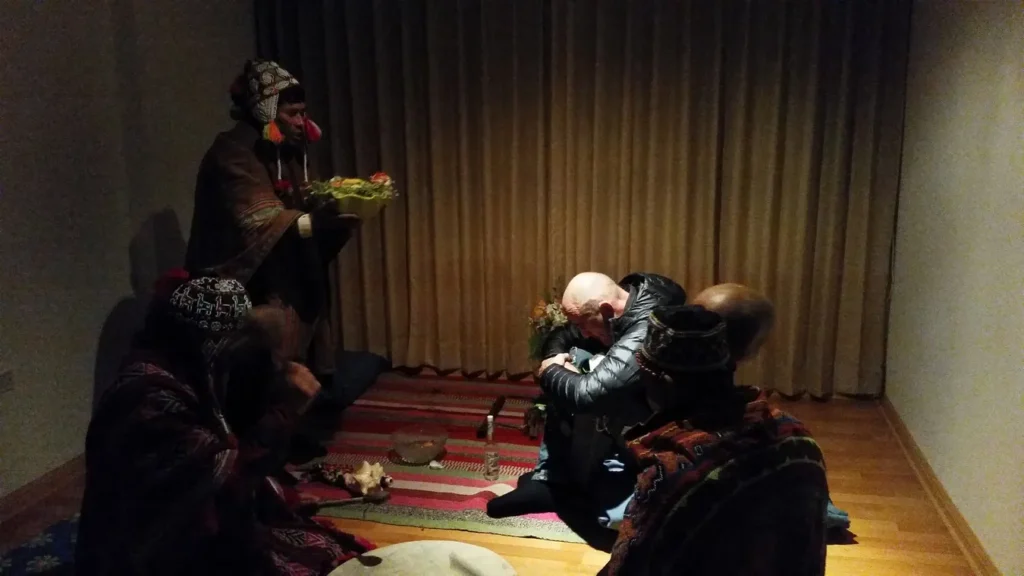
Ayahuasca Cusco
Stopping Medications and Supplements: A Timeline
This section deserves its own space because the timing is frequently underestimated.
| Substance | Recommended stop time before ceremony | Notes |
| SSRIs (most) | 2–6 weeks | Depends on half-life; taper under medical supervision |
| Fluoxetine (Prozac) | 5–6 weeks | Especially long half-life |
| MAOIs (pharmaceutical) | 2 weeks minimum | Discuss with psychiatrist |
| St. John’s Wort | 2 weeks | |
| 5-HTP | 2 weeks | |
| Cannabis | 2 weeks ideally, minimum 1 week | |
| Alcohol | 1–2 weeks | |
| Caffeine | 1 week before | Gradual reduction recommended |
| Ibuprofen / NSAIDs | 48–72 hours | Light use generally fine earlier |
| Melatonin | 1 week | |
| Vitamin B6 in high doses | 1 week |
Always confirm the specific timeline with your retreat center and your prescribing physician. The table above reflects general guidance — individual circumstances vary.
Mental and Emotional Preparation
This is the dimension most preparation guides treat as an afterthought — a paragraph about meditation after five pages about food. It deserves considerably more attention, because the quality of your mental and emotional state going into the ceremony shapes everything that follows.
Start paying attention to what’s underneath.
In the weeks before a retreat, most people notice that life becomes slightly more vivid. Emotions that were comfortably managed start becoming more present. Dreams become more vivid or symbolic. Situations that you usually navigate on autopilot start feeling more charged. This is not coincidence — it is the preparation beginning to work before the ceremony does.
Instead of managing these moments away with distraction, try turning toward them. When something brings up unexpected emotion, stay with it a little longer than usual. Not to force insight, but simply to practice the skill of remaining present with discomfort. That skill is exactly what the ceremony will ask of you, and developing it in advance makes the night significantly more navigable.
Journaling as active preparation.
A physical journal kept throughout the preparation period serves multiple functions. It gives you a space to process what’s arising without suppression. It creates a record of your psychological state before the ceremony — useful for comparison afterward. It helps clarify your intentions. And it is the beginning of the integration practice that will matter so much after the retreat.
Write without editing yourself. Write about what draws you to this experience, what you’re afraid of, what you’re hoping for, what you don’t want to look at. The medicine will likely find its way to the material you didn’t write down anyway — but writing it down beforehand means you arrive with it already partially held in awareness rather than entirely buried.
Reduce the noise.
Psychological preparation is not only about adding practices — it is also about reducing inputs. The weeks before a ceremony are particularly unsuited to heavy news consumption, social media scrolling, violent or disturbing media, and high-stimulation social environments. This is not about spiritual purity — it is about signal-to-noise ratio. The preparation period is one of increasing internal clarity, and that clarity is harder to access when the mind is continuously flooded with external information.
This doesn’t mean becoming a hermit. It means being deliberate about what you allow in, and why.
Working With Fear Before the Ceremony
Nearly everyone who is being honest about their pre-ceremony experience will admit to some level of fear. Not necessarily overwhelming fear — but a real, present awareness that they are about to do something significant and unknown, with no ability to control what arises or how the night unfolds.
This fear is appropriate. It would be stranger not to feel it.
What matters is not eliminating the fear but developing a relationship with it. Fear that is suppressed or denied tends to resurface during the ceremony with additional force. Fear that is acknowledged, examined, and met with some curiosity tends to be more manageable.
A few questions worth sitting with in the weeks before your retreat:
What specifically am I afraid of? Get granular. “Something going wrong” is too vague to work with. “Losing control and not coming back to normal” is a specific fear that can be addressed by understanding what the medicine actually does to brain state and how long effects last. “Seeing things I don’t want to see” is a specific fear that can be explored through reading about others’ experiences and what actually helps in difficult moments.
What is underneath the fear? Sometimes the surface fear — of vomiting, of losing control, of the dark — is covering a deeper one. The fear of discovering something true about yourself that you have been avoiding. The fear that you are not ready to change, even while part of you knows something needs to. These deeper fears are worth knowing before you walk into the ceremony.
What resources do I have? What in your own history tells you that you can navigate difficult experiences and come through them? You have evidence of your own resilience. Connecting with that evidence before the ceremony — not as bravado, but as a genuine anchor — is part of preparation.
Communicate your fears to your facilitators before the ceremony. They have heard them before. A good facilitator will not minimize them or offer false reassurance — they will help you understand what support is available during the night and how the ceremonial container is held.
Setting Intentions: How to Do It Without Overdoing It
Intentions matter. Coming to a ceremony without any sense of what you’re bringing or hoping to work with is a missed opportunity — the medicine tends to work with what participants consciously offer.
At the same time, overly rigid or specific intentions can work against you. “I want to heal my relationship with my father” is a useful direction of attention. “I expect the medicine to show me exactly why I’m afraid of intimacy and give me a clear resolution by 2am” is a recipe for a frustrating night.
The most useful intentions are open-ended and honest. They point toward a territory — a relationship, a pattern, a question, a form of suffering — without demanding a specific itinerary.
A process for setting intentions:
Write at the top of a page: Why am I doing this? Write everything that comes, without editing. Write what sounds spiritually impressive and what sounds embarrassing. Write the practical and the profound. Write for ten minutes without stopping.
Then look at what you wrote. Underneath the surface reasons — healing, growth, curiosity — there is usually something more personal and more specific. A relationship that doesn’t feel right. A pattern of behavior you keep returning to despite knowing it doesn’t serve you. A grief that hasn’t been fully processed. A question about the direction of your life that you’ve been carrying without answering.
Your intention doesn’t need to be phrased perfectly. “I want to understand why I keep shutting people out” is a complete intention. “I want to feel something real” is a complete intention. The medicine doesn’t require formal language.
Write your final intention or intentions in your journal and bring them with you. Read them the afternoon before the ceremony. Then let them go — not abandon them, but release the grip. Trust that what needs to happen will happen, whether or not it follows the map you drew.
Lifestyle Preparation: Sleep, Screen Time, and Sensory Input
Sleep is the most underrated element of preparation. Arriving at a ceremony depleted by inadequate sleep significantly impacts both the experience quality and the difficulty of recovery afterward. In the two weeks before your retreat, prioritize sleep above almost everything else in your schedule. If you typically operate on six hours, move toward eight. If you have chronic sleep issues, let your facilitators know — they may have recommendations.
Reduce screen time, particularly in the evening. The light suppresses melatonin and delays sleep onset. The content — news, social media, emotionally provocative material — introduces agitation that compounds through the night into the next day. An hour without screens before bed in the preparation period has more benefit than it might seem.
Physical movement helps. Not intense training that depletes the body, but daily movement — walking outdoors, gentle yoga, swimming — that supports nervous system regulation. Time in nature is particularly valuable in this period. The medicine that waits for you in the ceremony has a deep relationship with the natural world, and beginning to attune to that relationship before you arrive is a real form of preparation.
Alcohol and stimulants as discussed in the diet section — but worth emphasizing here that their effect on sleep quality is significant. Even small amounts of alcohol in the week before a ceremony degrade sleep architecture in ways that leave you less rested despite the same number of hours in bed.
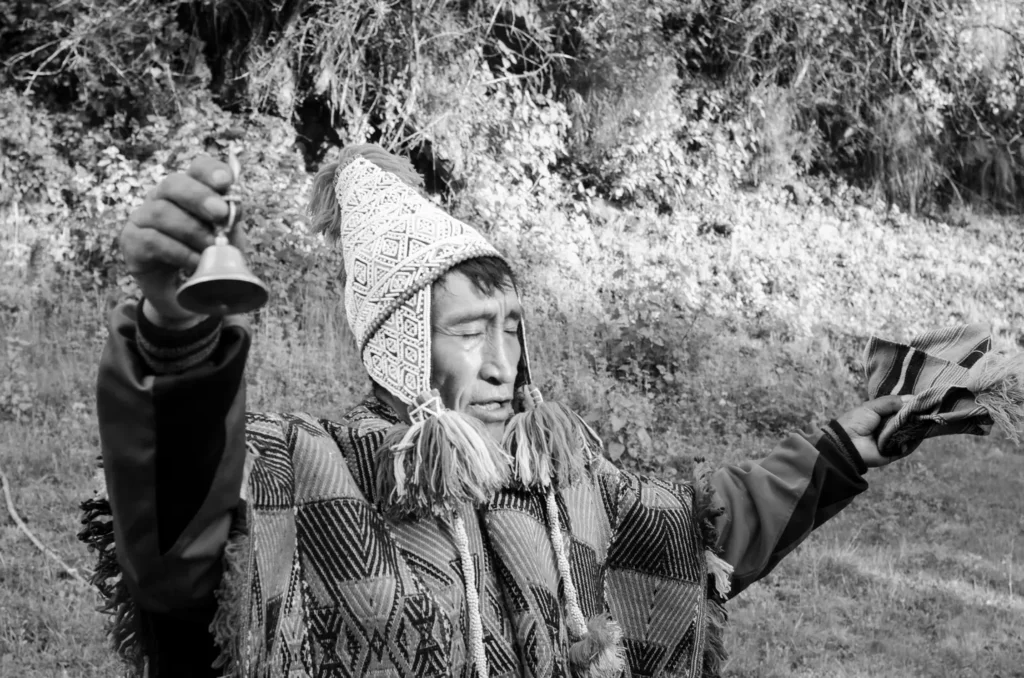
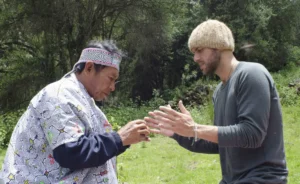
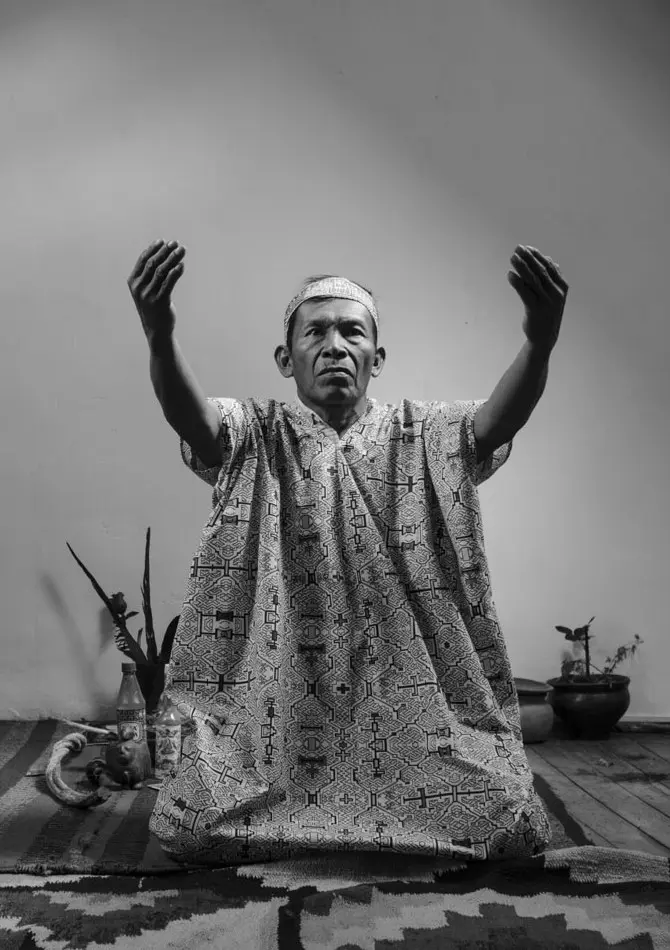
Shipibo shaman guiding ayahuasca retreat in Peru – Chamán shipibo ceremonia ayahuasca Perú
Preparing Your Life at Home Before You Leave
This section rarely appears in preparation guides, and it is genuinely important — particularly for participants who plan to take the retreat seriously and do meaningful integration afterward.
Tell the right people. You don’t need to tell everyone. But the people in your daily life who will notice that you’re different when you return deserve some advance context. You don’t need to explain ayahuasca in detail — “I’m doing a retreat in Peru that involves plant medicine ceremonies” is sufficient for most conversations. What matters is that you are not returning to a life that expects you to be immediately available, fully functional, and unchanged within 48 hours of landing.
Clear your calendar for the week after your return. Integration requires space. The days immediately following a retreat are some of the most important in the entire process. Scheduling a major work presentation or a family gathering for the day after you land is counterproductive. If possible, keep the first three to five days after return quiet, low-stimulus, and relatively free of major social or professional demands.
Prepare your home. Small things matter. Stock the kitchen with simple, clean food — you will want to continue eating lightly for several days after the ceremony. Identify a corner of your home that can serve as a quiet reflection space. Put your journal somewhere visible. If you have a meditation practice, set it up so it’s easy to return to. These preparations take twenty minutes and significantly ease the transition home.
Leave your finances and professional commitments settled. Nothing disrupts a ceremony more reliably than unresolved practical stress. Pay the bills that are due. Send the emails that are pending. If you have professional responsibilities that will need attention during your absence, arrange coverage in advance so your mind is not carrying them into the ceremony. Practical clarity creates psychological space.
Altitude Preparation: The Cusco-Specific Protocol
This section applies specifically to retreats in Cusco and the Sacred Valley, and it is the most frequently neglected element of preparation for participants arriving from sea level.
Cusco sits at 3,400 meters above sea level. The Sacred Valley, where many retreat centers operate, sits at 2,800 meters. If you are arriving from a city at or near sea level — London, New York, São Paulo, Sydney — your body will need time to adapt.
Altitude sickness (soroche) typically manifests as headache, fatigue, nausea, disturbed sleep, and general heaviness. Symptoms peak 12–24 hours after arrival and resolve for most healthy people within 48–72 hours of proper acclimatization. Some people experience mild symptoms; others are significantly affected. There is no reliable way to predict this in advance.
The critical rule: arrive at least two to three full days before your retreat begins. Not the morning of your first ceremony — two to three days earlier.
During those acclimatization days:
Rest genuinely. Not tourist-pace exploring the city — actual rest. Short, slow walks. Early evenings. Adequate sleep. Your body is working hard to adapt even when you feel fine.
Drink coca leaf tea (mate de coca) throughout the day. It is widely available throughout Cusco, inexpensive, and genuinely effective for mild altitude symptoms. Do not confuse this with cocaine — the traditional preparation of coca leaves contains very small amounts of alkaloids and is both legal and safe in Peru.
Hydrate more than usual. The dry Andean air accelerates water loss through respiration. Drink water consistently throughout the day.
Eat lightly. Heavy meals are harder to digest at altitude. Continue your preparation diet through the acclimatization period — it aligns naturally with the lighter eating that altitude typically demands.
Avoid alcohol entirely during acclimatization. Alcohol and altitude interact to produce significantly more intense dehydration and impaired adaptation.
Do not begin your ceremony while actively altitude-sick. If you are experiencing significant headache, nausea, or extreme fatigue on the day of your first ceremony, communicate this to your facilitators. A responsible center will delay rather than proceed with a participant who is physically compromised. Combining the physical effects of ayahuasca with active altitude sickness is uncomfortable, potentially unsafe, and significantly reduces the quality of the experience.
If you have a history of significant altitude sensitivity or cardiovascular conditions, discuss this with your physician before booking a Cusco retreat.
What to Bring to an Ayahuasca Retreat in Cusco
Essential:
- Loose, comfortable clothing in natural fibers (cotton, linen, wool) — synthetic fabrics feel restrictive during ceremony
- A warm layer or blanket — maloca spaces in the Sacred Valley can become cold after midnight
- A change of clothes for after the ceremony
- Your journal and a pen that works in the dark (cap-style rather than click)
- A small personal item of significance if you have one — a photograph, a stone, something with personal meaning
- Any personal medications pre-approved by the center
- Water bottle
For the days around ceremony:
- Simple, plain clothing for the preparation and integration days
- Walking shoes suitable for uneven terrain
- Sunscreen and lip balm (Andean sun is intense at altitude)
- Insect repellent for evening hours
- A light rain layer — weather in the Sacred Valley can shift quickly
Leave at home or in your accommodation:
- Phone — turn it off and leave it at the center, or at minimum keep it completely out of the ceremonial space
- Perfumes and heavily scented products — these are disruptive in ceremony and many centers specifically request their absence
- Any food from outside — the center will provide what’s appropriate
What not to bring:
- Expectations written in stone
- The belief that you know what the medicine will show you
- The assumption that difficulty means something is wrong
The Days of Travel: How to Use the Journey
The flight and transit to Cusco is not dead time. For many participants it is the first sustained period of quiet they’ve had in weeks, and it can be used well.
On the plane, resist the pull toward films and Netflix. Read something that opens rather than closes — something philosophical, contemplative, or connected to the tradition you’re heading toward. Use part of the flight to write in your journal. Sleep if your body wants to sleep.
In the Lima transit (most international flights to Cusco connect through Lima), avoid alcohol at the airport — tempting in transit situations but counterproductive given the altitude ahead. Eat lightly. Use the time to arrive in Cusco as rested and clean as possible.
The first night in Cusco, however well you feel, go to sleep early. The acclimatization window is real and the body does its adaptation work primarily during sleep.
Arrival and Pre-Ceremony: The Final 24 Hours
The day before the ceremony is its own phase of preparation — distinct from the weeks before and equally worth approaching consciously.
Morning: Light, simple breakfast. No coffee. A slow walk if you feel well — not sightseeing, just movement. Coca leaf tea. Journal if you feel called to.
Afternoon: Rest. Read your intentions. Sit quietly with whatever is present. If anxiety is rising, that is normal — meet it with curiosity rather than suppression. Write it down if that helps.
Evening meal: Light and simple. Stop eating by 6–7pm. Your stomach needs to be relatively empty when you take the medicine.
Before sleep: Read your intentions one final time. Not to recite them into the ceremony like a shopping list — but to arrive with them present. Then let the evening be quiet. No screens, no stimulating conversations, no alcohol. Sleep as early as feels natural.
The morning of the ceremony: Light breakfast if the ceremony is that evening. The afternoon is best spent in stillness — a walk in nature, reading, journaling. Arrive at the retreat center rested, hydrated, and present.
When you arrive, tell your facilitators honestly how you’re feeling. If something unexpected has come up physically or emotionally in the final days, share it. This is not weakness — it is the information they need to support you well through the night.
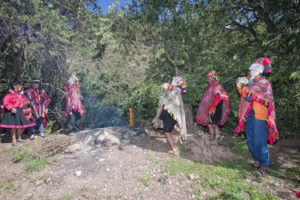
Ayahuasca retreat in Peru Sacred Valley – Retiro de ayahuasca en Cusco
How to Prepare for Not Getting What You Expected
This may be the most important section in this guide, and the one most preparation articles skip entirely.
Ayahuasca does not reliably deliver the experience you expect or plan for. This is not a failure of the medicine or of your preparation — it is one of the medicine’s most consistent characteristics. It works with what you need, which is not always the same as what you came for.
Some participants arrive seeking deep visionary experiences and have a primarily emotional or physical night with minimal visions. Others expect a difficult purge and have a gentle, quiet inward journey. Some people have their most significant experience in the third ceremony of a five-day retreat, after the first two felt unremarkable. Others are moved to tears and complete emotional release in a single cup on the first night.
The preparation for this reality is not about lowering expectations — it is about loosening the grip on them. The difference between an expectation and an intention is the degree of attachment. An intention says: I am bringing this to the medicine. An expectation says: The medicine owes me this in return. The medicine does not respond well to the second stance.
If your ceremony doesn’t go the way you imagined, the question to ask afterward is not “did it work?” but “what actually happened, and what does that mean?” Some of the most transformative ceremonial experiences are ones participants initially described as “nothing happened” — until three weeks later, when they realized that something fundamental had shifted and they had been unable to see it from the inside.
The preparation for uncertainty is simply this: arrive with genuine openness. Not performed openness — real curiosity about what this experience actually is, rather than certainty about what it should be.
Frequently Asked Questions
How long before my retreat should I start preparing?
For most participants, two to four weeks of dietary and lifestyle preparation is appropriate. The longer window — four weeks — is recommended for anyone who needs to taper off medications, has a high caffeine or alcohol intake to reduce, or wants more time for the psychological and intention-setting work. The minimum for safety-critical restrictions (medications, contraindicated foods) is one week, but two weeks is significantly more thorough. Medical tapering for SSRIs may require six weeks or more under physician supervision — this is the longest single lead time in the preparation process and should drive your timeline planning.
What if I accidentally eat something restricted in the final days?
Tell your facilitators before the ceremony, not after. For minor traditional violations — a coffee, a bit of spice — the situation is generally manageable and your facilitators will assess accordingly. For safety-critical violations — a tyramine-heavy meal, a dose of contraindicated medication — transparency allows the team to make an informed decision about whether and how to proceed. Disclosure is always the right choice.
Can I drink alcohol on the flight to Cusco?
It’s strongly inadvisable. Alcohol at altitude accelerates dehydration and significantly impairs acclimatization. It also counteracts the preparation work of the preceding weeks. Most participants who arrive in Cusco after drinking on the flight describe feeling significantly worse during the first 24–48 hours. Keep the in-flight behavior consistent with the preparation protocol you’ve been following.
Is meditation experience necessary to prepare well?
No. Meditation experience is helpful — it develops the capacity to remain present with difficult internal states — but it is not a prerequisite. If you have no meditation practice, a simple daily exercise of sitting quietly for 10–15 minutes and focusing on your breath is sufficient to begin developing that capacity before your retreat. The more important preparation is the journaling and intention-setting work, which requires no prior experience, only honesty and willingness.
What should I do if I’m feeling very anxious in the days before the ceremony?
First, recognize that this is common — so common it would be unusual not to feel some anxiety. Second, write about it specifically: what are you afraid of, and what is underneath that fear? Third, communicate it to your retreat center. Facilitators are experienced with pre-ceremony anxiety and can offer grounding perspectives and, in some cases, practical adjustments to the ceremony approach. What you should not do is self-medicate the anxiety with alcohol or cannabis — both are on the restricted list and both complicate the ceremony.
Do I need to tell my employer or family where I’m going?
You are not obligated to disclose the nature of your retreat to anyone. That said, the people closest to you will notice that something significant happened when you return, and having to perform normalcy while integrating a major experience creates unnecessary friction. A neutral framing — “I’m doing a healing retreat in Peru” — is accurate and requires no further explanation if you don’t want to give one.
Is physical fitness necessary for participating in a ceremony?
You don’t need to be particularly fit to participate in an ayahuasca ceremony — it takes place lying down. However, reasonable physical health matters. If you have significant cardiovascular, respiratory, or kidney conditions, these need to be disclosed and assessed before participation. The altitude in Cusco places additional demands on the cardiovascular and respiratory systems, which is relevant if you have conditions in either area.
If you have specific questions about preparation for a retreat at Ayahuasca Cusco — particularly regarding medications, health conditions, or altitude concerns — contact us before booking. We review every participant’s situation individually and will give you an honest assessment of whether our program is the right fit and what your specific preparation should include.
Our retreat programs range from a 1-day ceremony to a 7-day immersion in the Sacred Valley — each with preparation guidance, health screening, and integration support included.