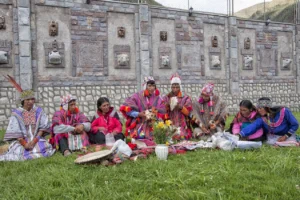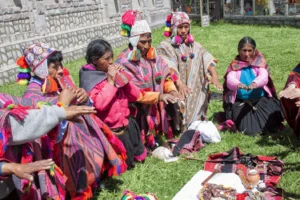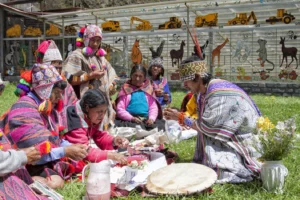
People who have sat with San Pedro describe the experience in ways that are remarkably consistent across backgrounds, cultures, and intentions. A sense of the heart opening — not metaphorically but as something physically felt, a warmth in the chest that spreads outward. An unusual clarity about things that had seemed complicated for years. A quality of connection with the natural world that makes mountains and rivers feel less like scenery and more like presences. And afterward, a tendency for those shifts to stay.
The benefits of San Pedro Wachuma don’t make themselves known through spectacle. This medicine works slowly, through gentleness — which is precisely why its effects can go deep. When something doesn’t overwhelm you, you have room to actually receive it. And what participants receive, across centuries of traditional use in the Andes and in a growing body of contemporary research, turns out to be genuinely significant.
This guide covers what the benefits of San Pedro Wachuma actually are — emotionally, mentally, physically, and spiritually — grounded in both the Andean healing tradition and the scientific research that is beginning to document what that tradition has always known.
Table of Contents
How San Pedro Wachuma Produces Its Benefits
Understanding how San Pedro works pharmacologically helps explain why its benefits have the specific character they do.
The primary active compound in San Pedro (Echinopsis pachanoi) is mescaline — a phenethylamine that activates serotonin receptors (particularly 5-HT2A) while also engaging dopamine and norepinephrine systems. This pharmacological profile distinguishes it from the tryptamines (DMT, psilocybin) found in ayahuasca and mushrooms, which act primarily on serotonin receptors alone.
The dual engagement with serotonin and dopamine-norepinephrine pathways produces an experience that is simultaneously introspective and outward-facing — emotionally opening without being destabilizing, perceptually expanded without being disorienting. The default mode network (the brain region associated with self-referential rumination and habitual mental patterns) shows reduced activity under mescaline, similar to other psychedelics. What fills that space, in the San Pedro experience, tends to be a quality of present-moment awareness and emotional openness rather than the intense inward visionary states more characteristic of ayahuasca.
This mechanism helps explain the specific texture of the benefits: they arise from increased receptivity and expanded awareness rather than from confrontation with suppressed material. The emotional releases that occur during a San Pedro ceremony typically feel more like releasing than like excavating.
Emotional Healing: What Changes and Why
Emotional healing is the benefit most consistently reported across the full spectrum of San Pedro Wachuma experience — from traditional Andean ceremonial accounts to contemporary retreat participant surveys.
The specific quality of this healing is worth distinguishing from the emotional work more commonly associated with ayahuasca. Where ayahuasca tends to bring buried emotional material to the surface in ways that require active engagement and can be confrontational, San Pedro tends to approach the emotional interior through compassion and expanded perspective. Old grief, resentment, or fear becomes accessible not because the medicine forces it forward but because the quality of awareness the medicine generates makes it possible to encounter those feelings without the usual defensive responses.
Participants consistently describe the process as one of recognition rather than revelation: not discovering something they didn’t know was there, but finally being able to feel what they already knew was present without flinching away. A resentment carried for years becomes visible in a context where compassion for the person who caused it — and for oneself for carrying it — is immediately available. A sadness that has been managed rather than felt finds its way to the surface in a setting where crying is not a loss of control but a natural release.
The result is what participants most frequently describe as emotional lightness — a sense of having put something down that had been carried for a long time. This can include:
Releases of grief around loss, separation, or the death of relationships and loved ones. The gentle dissolution of resentments whose roots become visible during the ceremony. Shifts in the relationship to shame — a recontextualization of events that had been held as evidence of personal inadequacy. A renewed sense of self-compassion that doesn’t require any particular insight to explain, but simply arrives as the experience deepens.
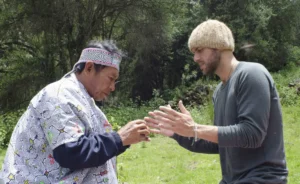
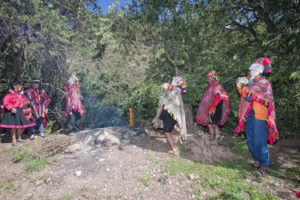
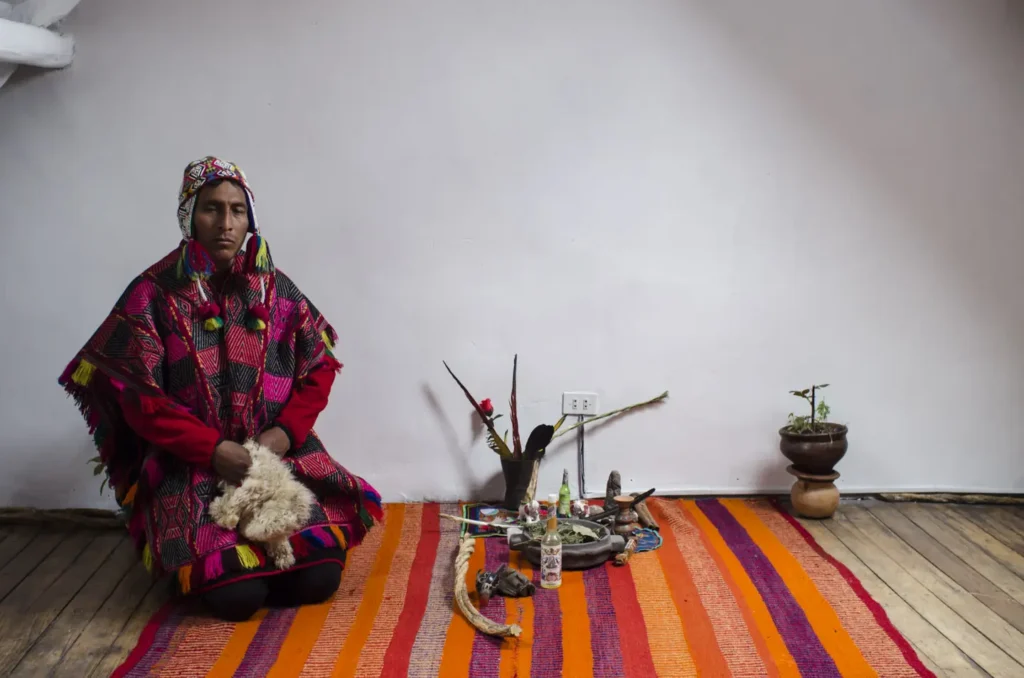
The mechanism behind these shifts involves more than pharmacology. The ceremonial setting — the daytime outdoor environment, the presence of the healer’s songs and prayers, the specific landscape of the Andes — creates a holding container that makes emotional release safer and more supported than ordinary life typically allows.
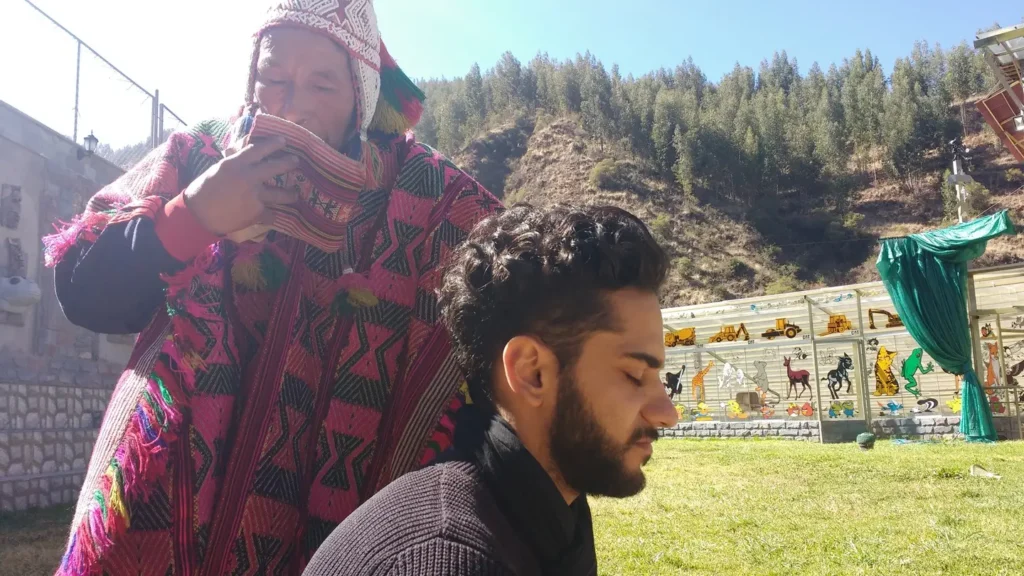
San Pedro Ceremony in Cusco What to Expect
Mental Clarity and Psychological Insight
The experience participants most frequently struggle to explain about San Pedro Wachuma is a particular quality of mental clarity — the sense that something that had seemed hopelessly complicated becomes suddenly comprehensible from a different vantage point.
This isn’t the same as insight in the ordinary therapeutic sense. It doesn’t always arrive as a verbal realization or a clear “now I understand” moment. It arrives more often as a shift in how things look: the same situation that had seemed like a labyrinth seen from within becomes, briefly, a map seen from above. The patterns that were invisible because you were inside them become visible.
Practical applications of this that participants frequently describe include: clarity about the direction of relationships that had felt ambiguous or stuck; a settled understanding of what they actually value versus what they had been pursuing because of fear or social pressure; the resolution of a decision that had felt impossible; and a renewed sense of what they want their life to look like, often accompanied by a surprising simplicity — a recognition that the answer was available all along, just not accessible in the usual state.
This clarity tends to persist. It is one of the characteristics that distinguishes San Pedro’s benefits from the insights of ordinary altered states: the lucidity experienced during the ceremony doesn’t always fade when the medicine leaves. What was seen from the wider perspective can often still be accessed weeks later, informing decisions and orienting behavior in ways that participants describe as genuinely lasting.
Spiritual Benefits: Connection, Meaning and Presence
The spiritual benefits of San Pedro Wachuma are perhaps the hardest to describe accurately and the easiest to either overstate or dismiss. Neither approach serves people who are genuinely trying to understand what this medicine offers.
What the research captures is instructive here. A peer-reviewed study published in the Journal of Psychedelic Studies (2022) investigating 42 participants in ceremonial San Pedro retreats found that the medicine produced deviations from normal waking consciousness across all 11 dimensions measured, moderate ego dissolution, and a complete mystical experience in two thirds of participants. Spiritual experience was the most strongly expressed dimension — more prominent than the visionary or cognitive dimensions — across the ceremonial sample.
What do participants describe as “spiritual experience” in this context? The language varies, but the content is remarkably consistent: a sense of being part of something larger than the individual self; the felt experience of connection with other people, with nature, and with what participants variously describe as life itself, the universe, or the divine; a quality of reverence for ordinary things — the movement of light, the sound of water, the texture of the ground — that isn’t available in ordinary perception; and a sense of meaning that doesn’t require explanation, that presents itself as obvious in the experience even when it resists articulation afterward.
For participants who arrive with a defined spiritual framework, the experience often deepens and confirms that framework. For those who arrive skeptical of spiritual language, the experience tends to produce what is perhaps best described as a genuine encounter with something that exceeds what they expected — a quality of presence in the natural world that they hadn’t previously accessed and can’t easily reduce to a neurological event alone.
Physical Benefits and the Body
The physical benefits of San Pedro Wachuma are less extensively documented than the psychological and spiritual ones, but they are consistently reported and worth acknowledging.
The most immediate physical experience is typically one of increased sensory clarity — colors more vivid, sounds fuller, the body’s proprioceptive awareness more precise. This heightened embodied presence is not just a perceptual novelty; it creates a quality of physical aliveness that many participants describe as something they hadn’t realized was absent from their ordinary experience.
Nausea affects roughly 20-30% of participants, typically in the first hour. When it occurs, it is usually mild and transient, and most participants describe it as passing once the medicine settles. The significant purging that characterizes roughly 70% of ayahuasca ceremonies is comparatively rare with San Pedro — one of the practical reasons it is more accessible to participants who are particularly apprehensive about the physical dimensions of ceremony.
The daytime, outdoor, mobile nature of San Pedro ceremonies means the physical experience involves genuine engagement with the environment — walking on the earth, sitting in the sun, feeling the wind. This physical grounding in nature is not incidental to the medicine’s benefits. Being in a body that is in contact with the natural world, with heightened sensory awareness, while the medicine gently expands emotional and spiritual perception, creates an integration between inner and outer experience that is specifically facilitated by San Pedro’s character.
Traditional Andean medicine has also used San Pedro for treating various physical conditions including hypertension, nerve pain, and joint conditions, and the plant has documented antimicrobial properties. These physical applications are less relevant to contemporary ceremonial use but reflect the breadth with which the Andean tradition understood this medicine.
Ayahuasca Retreats in Cusco
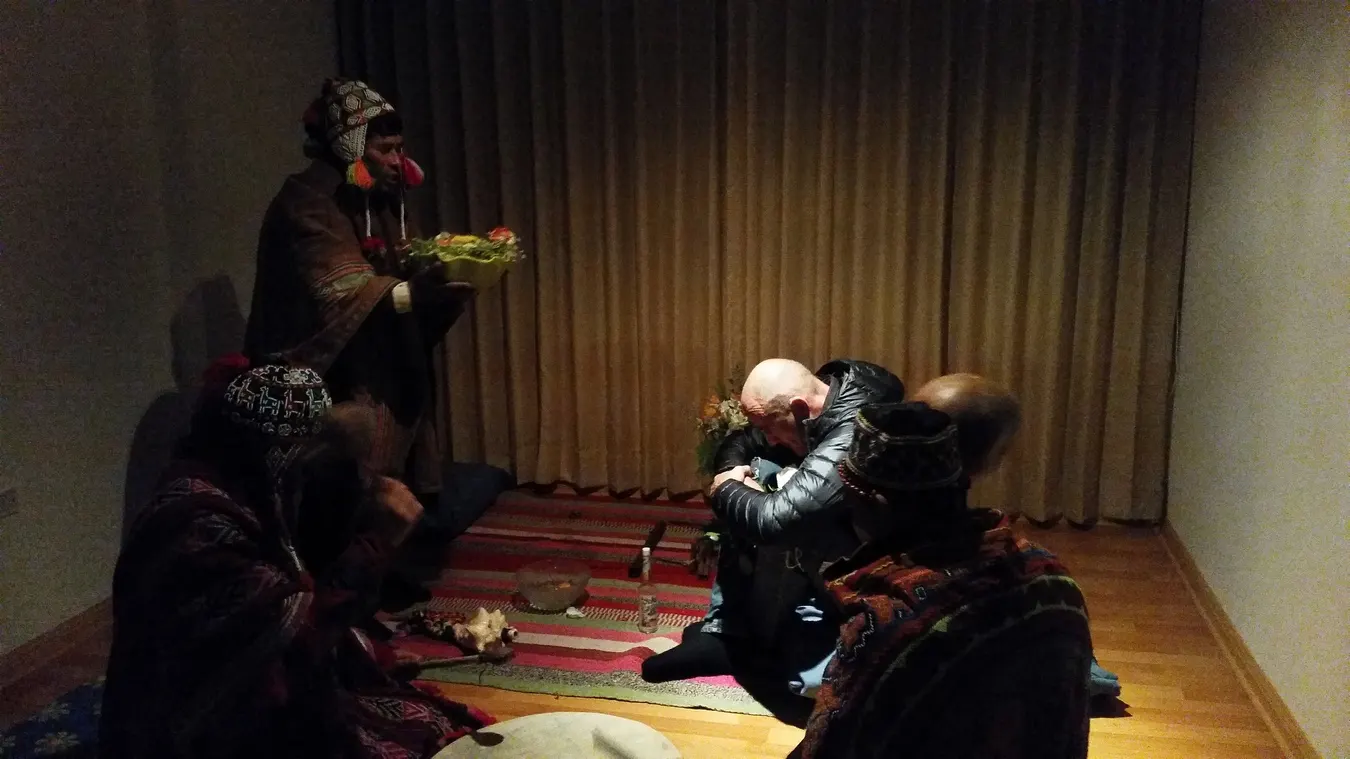
1 Day Ayahuasca Retreat Cusco
Designed for visitors with little time seeking a profound spiritual experience, the 1 Day Ayahuasca Retreat in Cusco, Peru is meant for them.
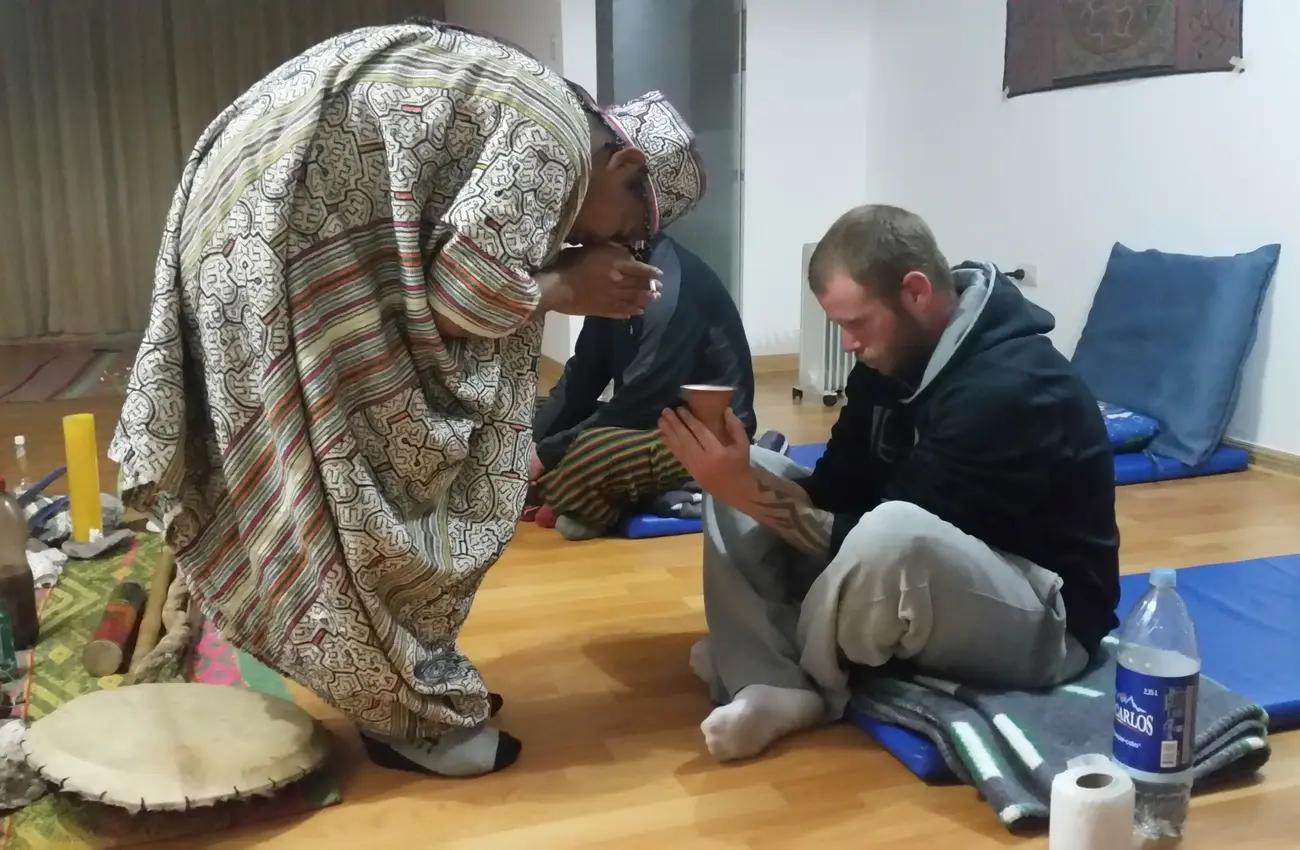
2 Day Ayahuasca Retreat Cusco
Our 2 Day Ayahuasca Retreat Cusco Peru offers a sacred space for those who seek profound healing and self-discovery in a short yet powerful journey.
The Heart-Opening Effect: What It Actually Means
The phrase “heart-opening medicine” is attached to San Pedro so frequently in plant medicine communities that it risks becoming meaningless through repetition. It deserves a more precise account.
The heart-opening that participants describe has several distinct components that are worth separating.
There is a physical warmth — a felt sensation in the chest that participants consistently report, often in the first two hours of the ceremony. This isn’t metaphor; it is a reported somatic experience that many participants describe as among the most surprising aspects of the medicine.
There is an expansion of the capacity for compassion — both for oneself and for others. The emotional defenses that normally make it difficult to feel genuine empathy for people who have caused harm, or genuine self-compassion for one’s own failures and limitations, tend to soften. This is not a forced positivity that glosses over real pain. It is more like an increase in the size of the container in which pain and love can coexist, without one canceling the other.
There is a restoration of contact with what actually matters. Under the pressure of daily life, the things that are genuinely important — relationships, beauty, meaning, the body’s experience of being alive — tend to recede behind the demands of what is urgent. The San Pedro experience consistently reconnects participants with what they care about most, often with a quality of urgency and gratitude that reshapes priorities in lasting ways.
In the Andean understanding, the heart (sonqo in Quechua) is not just the organ that pumps blood — it is the seat of intelligence, relationship, and connection to Pachamama. The heart-opening of Wachuma is understood as a restoration of this intelligence: a reestablishment of the participant’s right relationship with themselves, with other people, and with the living world.
San Pedro and Long-Term Mental Health: What Research Shows
The research on San Pedro Wachuma specifically is still developing, but the evidence around mescaline — the primary active compound — is more established and directly applicable.
A 2022 epidemiological study published in PMC examining patterns of mescaline use found that approximately 50% of the sample reported having a psychiatric condition (depression, anxiety, and similar diagnoses) at the time of their most memorable mescaline experience. Of this group, more than 67% reported improvements in those conditions following the experience. Crucially, the study found low potential for abuse — consistent with decades of prior research on mescaline’s pharmacological profile.
The 2022 Journal of Psychedelic Studies research on ceremonial San Pedro use specifically found complete mystical experiences in two thirds of participants, with strongly expressed spiritual dimensions and moderate ego dissolution. Research consistently shows that mystical experience quality is one of the strongest predictors of lasting positive mental health outcomes from psychedelic interventions — making this finding particularly relevant to the long-term benefit question.
The documented benefits across mescaline and San Pedro research include:
Reductions in depression symptoms persisting beyond the acute experience. Reductions in anxiety, particularly existential and generalized anxiety. Improvements in self-reported quality of life, sense of meaning, and emotional wellbeing. Increased openness as a personality trait — one of the most consistently replicated findings in psychedelic research, and one that tends to persist at six-month and one-year follow-up. Reductions in problematic alcohol and substance use in some populations.
The research context matters: these benefits are documented in ceremonial and intentional use settings, not in recreational contexts. The presence of a skilled healer, a well-held ceremonial container, and structured integration support are variables that consistently appear in the research as moderating the outcome. The medicine’s potential is not independent of the context in which it is experienced.
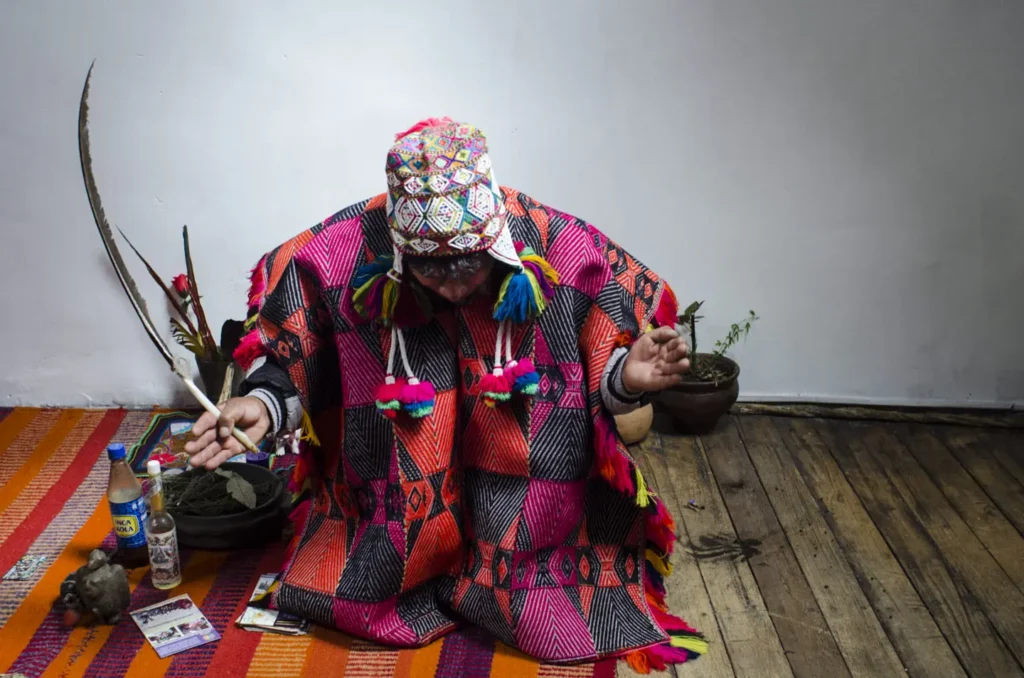
San Pedro (Wachuma) Ceremony in Cusco
Benefits Specific to the Cusco and Sacred Valley Setting
The benefits of San Pedro Wachuma are not the same in every setting. Where you do the ceremony — the physical environment, the cultural context, the geographic energy — contributes to what is available.
In Cusco and the Sacred Valley, several specific elements amplify the medicine’s characteristic benefits in ways worth naming directly.
The Apus — the sacred mountains that frame the Sacred Valley — are not passive geography in the Andean understanding. They are living presences, and in a daytime San Pedro ceremony where you can see them directly while the medicine heightens your perceptual sensitivity, the sense of being witnessed and held by something vast and ancient is available in a way that a ceremony indoors or in a different landscape cannot provide.
The altitude itself — 2,800-3,400 meters — creates a quality of sky and light that is specific to the high Andes. The sun is more immediate at altitude, the air thinner and cleaner, the starfield at night (if the ceremony extends into evening) incomparably dense. San Pedro’s characteristic enhancement of sensory perception meets this environment and produces something that participants consistently describe as unlike anything they have experienced elsewhere.
The continuity of tradition in this specific landscape adds a dimension that is difficult to quantify but consistently reported as meaningful. The ceremonies held in the Sacred Valley are not transplanted from another cultural context — they are practiced in the ancestral homeland of this medicine, by healers whose lineage has roots in this specific geography. That authenticity is felt, not just understood conceptually.
San Pedro as Integration Support After Ayahuasca
One dimension of San Pedro’s benefits that rarely appears in general guides but matters significantly to people who have done both medicines: San Pedro functions exceptionally well as integration support after ayahuasca ceremonies.
Ayahuasca tends to surface material — opens psychological territory, brings buried content to awareness, sometimes leaves participants in a state of significant emotional turbulence that requires time and support to settle. San Pedro’s character — its heart-opening, its warmth, its orientation toward connection and the outer world — creates a complementary movement: where ayahuasca descends, San Pedro expands; where ayahuasca excavates, San Pedro integrates.
Many participants who do a combined program — ayahuasca ceremonies followed after appropriate rest by a San Pedro ceremony — describe the Wachuma as the experience that brought the insights from the previous nights into coherence. The clarity, warmth, and sense of connection that San Pedro facilitates provides a container for making sense of what the ayahuasca opened.
This complementarity is one of the specific advantages of working in Cusco, where both medicines are authentically available and can be combined in a single program with appropriate integration time between ceremonies.
Who Benefits Most — and Who Should Wait
The benefits of San Pedro Wachuma are most accessible to people who arrive with:
A genuine intention — some sense of what they are hoping to explore, heal, or understand. Not a rigid expectation, but an honest orientation.
Sufficient stability to be present with what arises. San Pedro is generally more accessible than ayahuasca in this regard, but it still asks participants to remain present with emotional material that surfaces. People in acute psychological crisis are better served by stabilization first.
Openness to the natural world and to the daytime ceremonial setting. San Pedro works with the environment — the mountains, the light, the landscape. Participants who can receive that dimension tend to benefit more fully.
For people considering their first plant medicine experience, San Pedro is often the more appropriate starting point: less physically demanding, more cognitively clear, less disorienting, and with a longer but gentler duration than ayahuasca.
Those who should wait or seek individual assessment before participating include people taking lithium (a specific contraindication with all classic psychedelics), anyone with a personal or family history of psychotic disorders, and people with significant uncontrolled cardiovascular conditions. Unlike ayahuasca, San Pedro does not have the SSRI-MAOI interaction concern — but full medical disclosure to the retreat center remains important for any ceremony.
How Many Ceremonies to Experience the Benefits
A single San Pedro ceremony can produce significant and lasting benefits. This is documented in the research and consistent with traditional understanding. One ceremony is not a preliminary or a warmup — it is a complete ceremonial experience with its own arc and its own depth.
That said, participants who return for multiple ceremonies across a period of time consistently report that each ceremony opens something the previous one prepared. The benefits compound: the clarity from the first ceremony creates better conditions for the emotional work of the second; the emotional healing of the second creates space for the spiritual connection of the third.
For those with limited time in Cusco, a 1-day San Pedro ceremony provides a full ceremonial experience. For those who want to combine Wachuma with ayahuasca work, our multi-day programs integrate both medicines with appropriate time for integration between each ceremony.
Frequently Asked Questions
What are the main benefits of San Pedro Wachuma?
The most consistently reported benefits span four dimensions: emotional healing (release of grief, resentment, and emotional tension; increased self-compassion), mental clarity (resolution of long-standing confusion, insight into personal patterns, renewed sense of direction), spiritual connection (felt unity with nature and the world, deepened sense of meaning and purpose), and physical wellbeing (heightened embodied presence, sustained emotional lightness). Research on mescaline — the primary compound in San Pedro — documents improvements in depression and anxiety symptoms in over 67% of participants with prior psychiatric conditions.
How long do the benefits of San Pedro last?
Many participants report that the benefits of San Pedro Wachuma extend well beyond the ceremony itself. The emotional and psychological clarity that arises tends to persist in the weeks and months following, particularly when supported by integration practices such as journaling, time in nature, and therapeutic support. Research on mescaline shows that personality trait changes — specifically increased openness — persist at one-year follow-up, making San Pedro one of the plant medicines with the most documented lasting benefit profile.
Is San Pedro Wachuma good for depression or anxiety?
The research is encouraging. A 2022 epidemiological study found that more than 67% of mescaline users with prior depression or anxiety diagnoses reported improvements following their experience. A peer-reviewed ceremonial study found complete mystical experiences in two thirds of participants — and mystical experience quality is consistently identified in psychedelic research as one of the strongest predictors of lasting positive mental health outcomes. San Pedro should not be considered a substitute for professional psychiatric care, but the evidence for its potential complementary role is meaningful.
Is San Pedro better than ayahuasca for emotional healing?
They offer different pathways rather than different amounts. San Pedro tends to work through expansion and compassion — an opening of the heart that allows emotional material to surface gently. Ayahuasca tends to work through depth and confrontation — bringing what has been suppressed into direct awareness, sometimes with significant intensity. For emotional healing specifically, San Pedro is often more accessible, particularly for people who are earlier in their inner work or who find the intensity of ayahuasca difficult to navigate. For deep excavation of trauma or longstanding psychological patterns, ayahuasca may reach further. Many practitioners suggest San Pedro before ayahuasca for precisely this reason. See our complete guide on Ayahuasca vs San Pedro.
Can San Pedro help with addiction?
The evidence on mescaline and addiction is preliminary but directionally positive. Traditional Andean medicine has long included work with addiction as part of San Pedro’s therapeutic scope. Contemporary research suggests that the combination of increased openness, reduced self-referential rumination, enhanced emotional processing, and the renewed sense of purpose and meaning that San Pedro facilitates may all contribute to reduced addictive behavior. This is not a guaranteed outcome and should not substitute for established addiction treatment — but as a complement to ongoing support, the existing evidence is promising.
What does San Pedro feel like during the ceremony?
The experience unfolds over 8-12 hours. Colors and sounds become more vivid. A warmth often arises in the chest. Emotional material — grief, clarity, love, gratitude — surfaces with unusual ease. The natural environment becomes intensely present and beautiful. Time slows in a way that feels spacious rather than tedious. Many participants report spending portions of the ceremony in a state of profound quiet — not absence of experience, but a quality of full presence that ordinary life rarely produces. Unlike ayahuasca, most participants remain cognitively clear throughout, able to walk, speak, and engage with their surroundings.
If you feel drawn to the benefits of San Pedro Wachuma and want to experience them in the Sacred Valley’s sacred landscape, our 1-day San Pedro ceremony offers a complete ceremonial experience guided by experienced Andean healers. Contact us to discuss whether San Pedro, ayahuasca, or a combined program best fits your intentions.
Related reading: What Is San Pedro (Wachuma)? · San Pedro Diet Before Ceremony · Ayahuasca vs San Pedro · Benefits of Ayahuasca · Ayahuasca Retreat Sacred Valley Peru