Most comparison guides on this question end the same way: “it depends on your personal preference.” That answer is technically true and practically useless.
The ayahuasca Cusco vs Iquitos decision is not primarily a matter of taste. It is a practical question with specific answers that depend on concrete variables — how much time you have, your experience level, your budget, whether you are combining the retreat with cultural travel, whether you have health considerations, and what type of ceremonial container you are actually looking for. When those variables are clear, the choice usually becomes obvious.
This guide gives you the honest picture of both locations — including the things that most comparison articles leave out — and a direct answer for the most common participant profiles.
Table of Contents
The Fundamental Difference Between These Two Locations
Cusco and Iquitos are not variations on the same experience. They are genuinely different ceremonial contexts shaped by different geography, different cultural history, and different healing traditions — and understanding those differences clearly is what makes this decision manageable.
Cusco sits at 3,400 meters above sea level in the Andes. The Sacred Valley nearby sits at 2,800 meters. The healing traditions operating here draw from both Amazonian plant medicine (brought to Cusco by curanderos from the jungle over generations) and Andean cosmology (the Quechua ceremonial tradition native to this specific mountain geography). Both are genuinely present. Both shape how ceremony unfolds.
Iquitos sits at approximately 100 meters above sea level in the lowland Amazon basin of northeastern Peru. It is the largest city in the world not accessible by road — you arrive by air or by river. The healing tradition centered here is the Shipibo-Conibo lineage: one of the most documented and culturally established ayahuasca healing systems in the world, with centuries of continuous practice in the jungle ecosystem where the medicine grows wild.
Neither is the “authentic” version and the other a copy. They are two distinct traditions from two distinct ecosystems, both with genuine depth and both with genuine risks.
The Setting: Mountain vs. Jungle
The physical environment shapes the ceremony in ways that go beyond aesthetics. Where you are — the temperature, the sounds, the ecological system, the altitude — is part of the ceremonial container.
Cusco / Sacred Valley:
Ceremonies happen in highland Andean landscape at between 2,800 and 3,400 meters. Nights are cold — temperatures can drop to 5-8°C even in summer. The silence at this altitude has a specific quality: absent of the constant sound of jungle life, the Andean night is a different kind of darkness. The Apus — the sacred mountains — are visible from the valley during daylight hours and present as energetic anchors in the ceremonial framework.
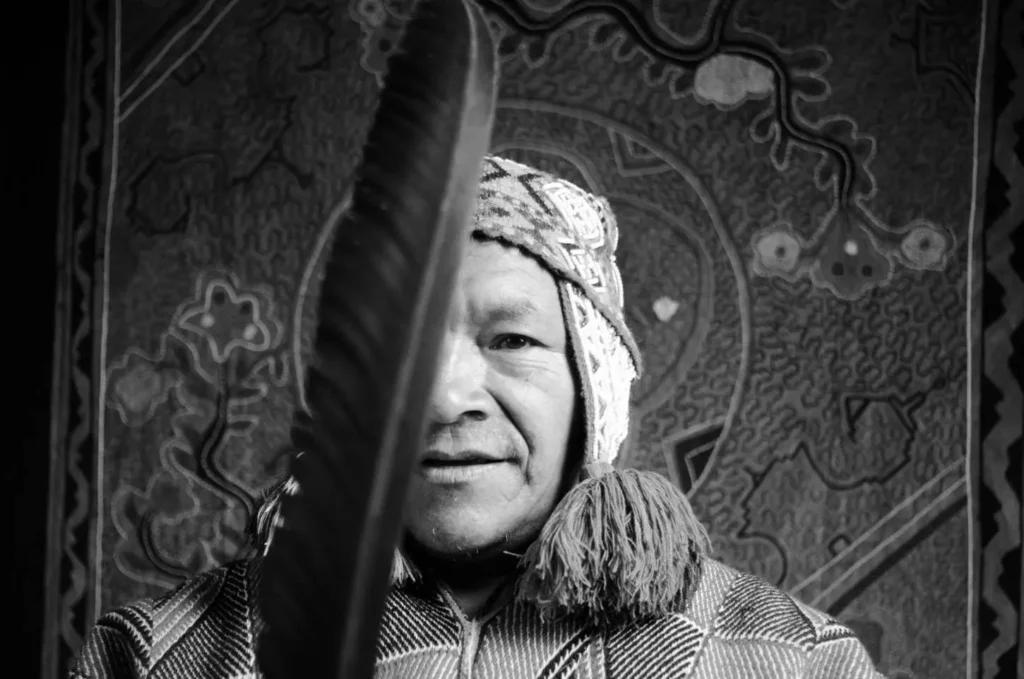
San Pedro ceremonies, which are daytime and outdoor, happen in direct relationship with this landscape: the Urubamba River audible below, the Andean sky visible above, the ancient terraces of the Inca world visible on the hillsides. The setting is not neutral. It is active.
Iquitos / Amazon:
Ceremonies happen in the jungle at near-sea level, typically in a maloca surrounded by primary or secondary rainforest. The temperature is hot and humid — 28-32°C during the day, dropping only slightly at night. The soundscape of the Amazon jungle at night is continuous, dense, and alive: frogs, insects, birds, the sounds of a fully inhabited ecosystem. For many participants, this becomes part of the ceremony itself — the jungle as sonic accompaniment to the inward journey.
The setting feels immersive in a way that is harder to achieve in a highland city. You are genuinely removed from ordinary life in a jungle retreat in a way that the Sacred Valley, for all its natural beauty, doesn’t quite replicate. The remoteness is both the feature and the consideration.
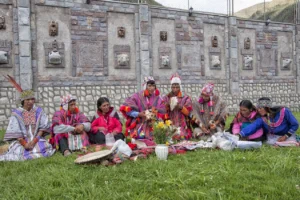
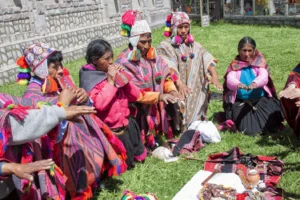
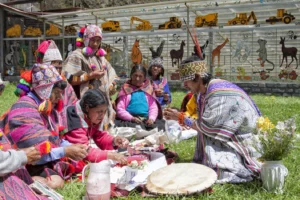
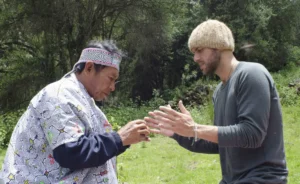
San Pedro ceremony: what to expect – Wachuma experience Sacred Valley Cusco Peru daytime
The Healing Tradition: What Each Location Actually Offers
Cusco and the Sacred Valley:
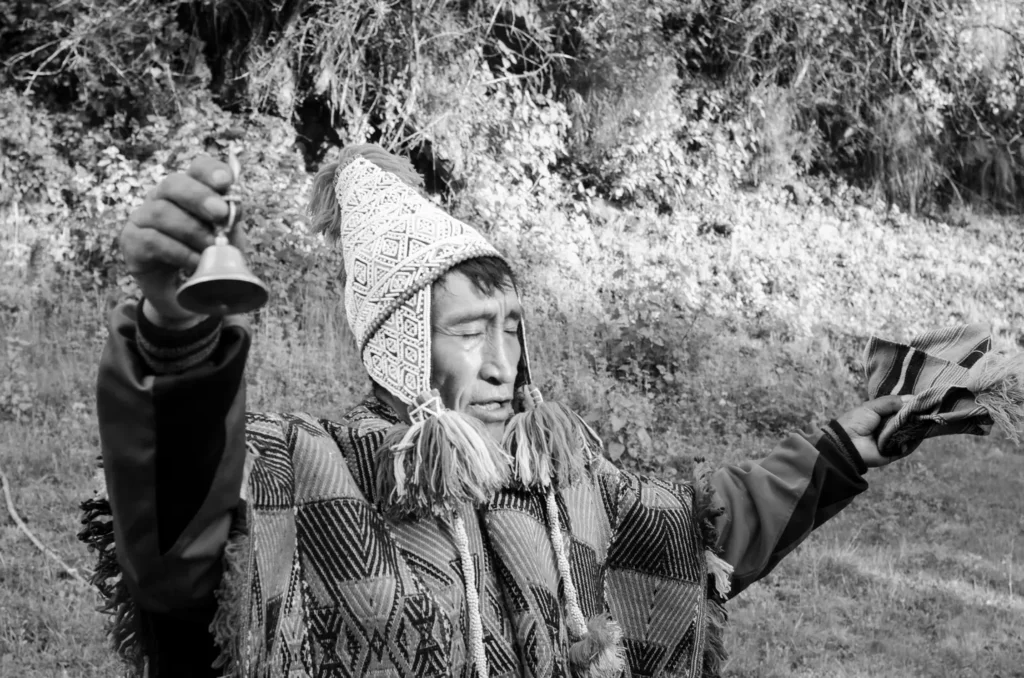
The ceremonies in this region draw from two lineages simultaneously. The Amazonian component — icaros from the Shipibo or mestizo tradition, ceremonial preparation of the brew, the healer’s role as navigator during the night — is carried by curanderos who brought their tradition from the jungle and have practiced it in Cusco for years or decades. The Andean component — invocations to the Apus by name, offerings to Pachamama, despacho ceremonies, coca leaf readings — comes from the Quechua tradition native to this specific geography.
This dual lineage is not a dilution of either tradition. It is what Cusco genuinely is: a place where the Amazonian and Andean healing worlds meet and have been meeting for a very long time. For participants drawn specifically to the intersection of these two frameworks — or to the Andean dimension specifically — this is not available anywhere else.
Iquitos:
Iquitos is the historical heartland of the Shipibo-Conibo healing tradition and the broader mestizo curanderismo of the Peruvian Amazon. The concentration of experienced healers in the Iquitos-Pucallpa corridor remains among the highest anywhere. Centers operating here typically work within a more purely Amazonian ceremonial framework — the icaros, the dieta protocols, the healer’s relationship with specific master plants developed over years of apprenticeship.
For participants seeking the Shipibo tradition specifically — its particular quality of healing songs, its specific relationship with the plant world, the cultural context of ceremony in the ecosystem where the vine grows — Iquitos is where this tradition is most concentrated and most deeply practiced.
What Iquitos does not offer is the Andean dimension. The Apus are not there. Pachamama in the Amazonian sense is a different presence than Pachamama in the Andean sense. San Pedro (Wachuma), which is a highland Andean medicine, is not part of the Iquitos ceremonial tradition in any authentic sense.
Logistics: Getting There and What That Costs
This is the practical variable that most participants underestimate — particularly regarding Iquitos.
Getting to Cusco:
- Daily flights from Lima: approximately 1 hour 15 minutes
- Cost: $60–$180 USD roundtrip, widely available
- From airport to city center: 20-minute taxi
- Retreat centers in the Sacred Valley: 30–60 minutes from Cusco city by road
- Medical facilities: full hospital infrastructure in Cusco city
Getting to Iquitos:
- Daily flights from Lima: approximately 2 hours
- Cost: $80–$200 USD roundtrip
- From airport to city center: 20-minute taxi
- From Iquitos city to most retreat centers: river transport ranging from 30 minutes to several hours depending on location
- In some cases, an additional night in Iquitos before transfer is required
- Medical facilities: available in Iquitos city but significantly more limited at remote jungle retreat centers
The river transport requirement for Iquitos is not a minor logistical footnote. It means that:
- Getting to and from the retreat requires coordination with the center
- Medical emergencies in remote jungle settings face longer response times
- Any changes to your travel schedule (flight delays, illness) ripple through the logistics in ways that are harder to manage
- The total cost of the trip includes river transport that doesn’t appear in the retreat fee
For participants with limited time in Peru, the Iquitos logistics often add one to two days to the effective trip duration that are not part of the retreat itself.
Medical Safety: What Changes With Geography
This dimension of the comparison is rarely discussed directly, and it deserves honest treatment.
In January 2025, the U.S. Embassy in Lima issued a health alert specifically mentioning incidents involving U.S. citizens at retreat centers in remote locations without access to medical facilities. The alert was directed at unregulated operations — but the underlying concern about medical accessibility in remote settings is valid regardless of the specific center.
Cusco:
Full hospital infrastructure is available in Cusco city. Most retreat centers in the Sacred Valley are 30-60 minutes from Cusco’s medical facilities by road. Emergency response, while never instantaneous, is meaningfully more accessible than in remote jungle settings.
Iquitos:
Iquitos city has hospitals. However, many of the most well-regarded retreat centers near Iquitos are located further from the city — accessible by river, not by road. The response time for a medical emergency at a remote jungle center is substantially longer than at a Sacred Valley center 40 minutes from Cusco.
This does not mean Iquitos retreats are inherently unsafe. Established centers with experienced medical personnel on-site reduce this risk significantly. It does mean that the question of emergency protocols and medical proximity matters more in the Iquitos context than in Cusco — and asking about it specifically before booking is more important.
Duration: How Long Each Location Requires
Cusco:
- Minimum realistic total trip: 7 days (acclimatization + ceremony + recovery)
- Comfortable combined trip with Machu Picchu: 10 days
- Full retreat with cultural travel: 12-14 days
- Programs available from 1 to 7 days
The flexibility of shorter programs makes Cusco viable for participants with limited time. A 1-day ceremony in the Sacred Valley is a complete and meaningful experience. A 3-day retreat fits within a standard one-week trip.
Iquitos:
- Minimum realistic total trip: 10-12 days (travel + minimum retreat + travel back)
- Most established centers recommend minimum 7-day programs
- Extended immersion (10-21 days): more common and more available here than in Cusco
- Shorter programs (1-3 days) are less standard and harder to find at quality centers
The Iquitos context naturally favors longer stays. If your available Peru time is 7 days total, the logistics make Cusco significantly more practical. If you have 14 days and the extended Amazon immersion is what you’re seeking, Iquitos becomes viable.
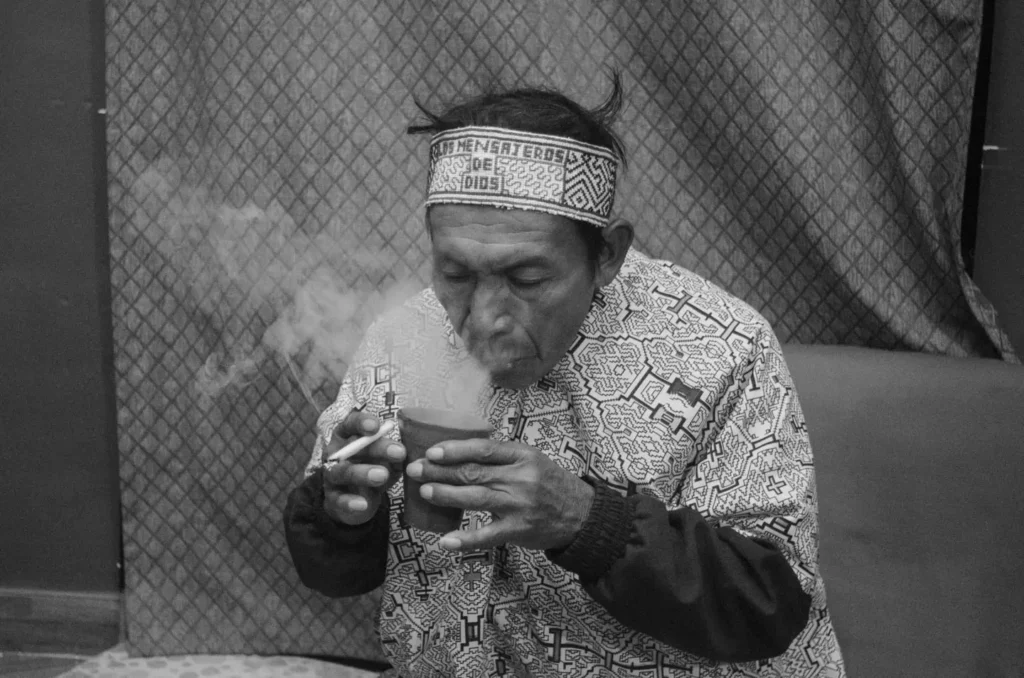
Shipibo shaman guiding ayahuasca retreat in Peru – Chamán shipibo ceremonia ayahuasca Perú
What Cusco Offers That Iquitos Cannot
San Pedro (Wachuma). The Andean cactus medicine is native to the highlands, not the Amazon. A genuine San Pedro ceremony held in its ancestral geographical context — with Andean healers, in the presence of the Apus, in the landscape where this tradition has been practiced for thousands of years — is only available in the Cusco region. Centers in Iquitos do not offer San Pedro within its authentic ceremonial tradition.
The dual lineage. The combination of Amazonian and Andean healing traditions in a single ceremonial framework is specific to Cusco. It reflects the actual cultural history of this city — a meeting point of traditions — and it creates ceremonial contexts that are not replicated anywhere else.
Combination with Machu Picchu and Inca heritage. Cusco’s geographic position makes it the natural starting point for cultural exploration of the Inca world. A retreat in the Sacred Valley, combined with visits to Pisac, Moray, Ollantaytambo, and Machu Picchu, creates a coherent journey through Andean sacred geography that an Iquitos retreat cannot offer.
Altitude as ceremonial dimension. At 2,800-3,400 meters, the Sacred Valley’s altitude, the quality of the Andean light, and the expansive sky above the mountains create a sensory environment that shapes the San Pedro experience specifically and the post-ceremony integration period generally.
Shorter program options. The range of 1 to 7-day programs makes Cusco accessible to participants with real-world time constraints. This practical flexibility is not a compromise — it is a genuine feature of what the region can offer.
What Iquitos Offers That Cusco Cannot
The Shipibo tradition at its deepest source. The concentration of experienced Shipibo healers, the cultural infrastructure of communities like San Francisco and Santa Clara, the specific quality of icaros that emerge from generations of practice in the jungle ecosystem — these things exist in their most concentrated form in the Iquitos region.
Full jungle immersion. The sensory experience of the Amazon — the heat, the humidity, the continuous life of the jungle at night, the river journeys, the removal from everything familiar — creates a depth of removal from ordinary life that the Sacred Valley, for all its beauty, does not replicate. For participants who specifically want that dissolution of the familiar, Iquitos provides it more completely.
Extended program options. Multi-week intensive retreats, extended dieta programs, deeper apprenticeship-style experiences — these exist in the Iquitos region in ways that the shorter-stay Cusco market doesn’t fully support. For participants ready for 14-21 day immersions, Iquitos has more options.
Proximity to the vine itself. The Banisteriopsis caapi vine grows in the Amazon, not the Andes. Ceremonies conducted in the ecosystem where the medicine originates have a specific quality that many participants describe as distinct — though this is experiential rather than pharmacological.
Cost Comparison: Total Trip, Not Just Retreat Fee
The most misleading comparison in this debate is retreat fee alone. The total trip cost is what matters.
| Cost Element | Cusco / Sacred Valley | Iquitos |
| International flight to Lima | Same for both | Same for both |
| Domestic flight | $60–$180 USD (Lima–Cusco) | $80–$200 USD (Lima–Iquitos) |
| River transport to retreat | Not needed | $20–$100+ USD each way |
| Retreat fee (7 days) | $800–$2,500 | $800–$5,000+ |
| Acclimatization accommodation | 2–3 nights required | Not needed |
| Machu Picchu / cultural visits | Natural addition | Separate trip required |
| Medical infrastructure accessibility | High | Lower at remote centers |
| Total realistic 10-day trip | $2,500–$4,000 | $3,000–$6,000+ |
The Iquitos premium reflects genuine additional costs: river transport, the higher operational costs of remote jungle retreats, and the longer minimum stay. A budget retreat in Iquitos is not necessarily cheaper than a quality retreat in Cusco once total trip costs are calculated.
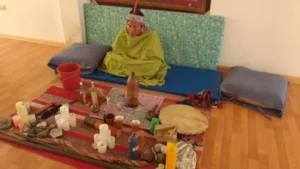
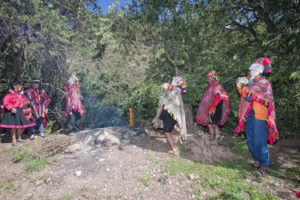
Healing center for Ayahuasca retreat in Cusco – Centro de sanación para retiro ayahuasca Cusco
The Right Choice By Participant Profile
Choose Cusco / Sacred Valley if:
You have 7-10 days in Peru and want to combine a retreat with Machu Picchu or cultural exploration of the Inca world. The logistics work naturally together; the experiences complement each other.
You are a first-time participant. The shorter program options, better medical infrastructure, maintained cognitive clarity (if combining with San Pedro), and the logistical simplicity of Cusco make it the more accessible first encounter with plant medicine.
You are specifically drawn to the Andean healing tradition, San Pedro (Wachuma), or the intersection of Amazonian and Andean ceremonial work. This combination is specific to Cusco and not available elsewhere.
You have health considerations that make proximity to medical facilities important. The 30–60 minute access to Cusco’s hospital infrastructure matters for participants with any cardiovascular, psychiatric, or medical history that warrants caution.
You want flexibility in program duration — from a single ceremony to a week-long immersion — without the minimum-stay constraints that the Iquitos logistics create.
Choose Iquitos if:
You have 12-21 days available and want a deep, extended Amazon immersion. The Iquitos context supports longer stays better than Cusco, and the extended program options are genuinely more developed there.
You are specifically seeking the Shipibo tradition in its most concentrated form — the specific quality of icaros, the cultural context of the Shipibo-Conibo communities, the medicine practiced in the jungle ecosystem where it originates.
You have prior experience with plant medicine and are ready for a more demanding physical and logistical context. The heat, the remoteness, the longer stay — these are more navigable for participants who have already sat with the medicine than for those approaching it for the first time.
The full jungle sensory experience — the sounds of the Amazon at night, the river transport, the radical removal from ordinary life — is itself part of what you are seeking. Some participants describe this aspect of an Iquitos retreat as irreplaceable.
Either location works if:
Your primary criterion is the depth and authenticity of the ceremonial container, and you are willing to spend the time doing the research to find a center with genuine screening, experienced healers, and real integration support. Both regions have excellent operations and significant variation in quality. The center matters more than the geography when the program quality is high in both locations.
Frequently Asked Questions
Is Cusco or Iquitos better for a first ayahuasca ceremony?
For most first-time participants, Cusco and the Sacred Valley offer meaningful practical advantages: shorter program options that don’t require a two-week commitment, better medical infrastructure accessibility, the ability to combine with cultural travel, and easier logistical management. Iquitos is excellent for a first ceremony at an established center — but the remote jungle logistics and minimum stay requirements add complexity that first-timers don’t necessarily need. The quality of the specific center matters more than the location, but when both are comparable, Cusco tends to be more manageable as a first experience.
Are the shamans in Cusco as experienced as those in Iquitos?
Experience and authenticity depend on the specific healer, not the city. Experienced, lineage-trained Amazonian curanderos have been practicing in Cusco for decades. The Sacred Valley also has healers rooted in the Andean Q’ero tradition with equally deep training. The question to ask is not “Cusco or Iquitos?” but “Who specifically leads the ceremony, what is their lineage, and how long have they been practicing?” — a question that applies equally to both locations.
Is ayahuasca in Cusco as authentic as in Iquitos?
This question contains an assumption worth examining: that “authentic” means “Amazonian only.” Cusco’s dual lineage — Amazonian and Andean — is not a diluted version of the jungle tradition. It is a genuinely different tradition that reflects the actual cultural history of this region. Authenticity in ceremony comes from the healer’s training, lineage, and relationship with the medicine — not exclusively from geographic proximity to the Amazon.
How much more does Iquitos cost in total?
When calculating total trip costs — flights, accommodation, river transport, retreat fee, and minimum stay — an Iquitos retreat typically costs $500-$2,000 more than a comparable quality retreat in Cusco. The retreat fee alone may appear similar, but the additional domestic flight, river transport logistics, and longer minimum stay all add to the total. For participants combining the retreat with Machu Picchu travel, the Cusco cost advantage is even more pronounced because the flights and accommodation are already part of the itinerary.
Can I do both Cusco and Iquitos in one trip?
Logistically, yes — but the two locations require separate flights via Lima, adding significant travel time and cost. Most participants who want to experience both locations do so on separate trips to Peru rather than within a single visit. The exception is if you have three or more weeks in Peru and the Iquitos experience is a deliberate continuation rather than an addition to a Cusco itinerary.
If you are considering an ayahuasca retreat in Cusco or the Sacred Valley, contact us for a personal consultation. We will give you an honest assessment of whether our programs fit your intentions, timeline, and health situation — including telling you honestly if we believe an Iquitos retreat would serve you better.
Our programs in the Sacred Valley: 1-Day Ceremony · 3-Day Retreat · 5-Day Retreat · 7-Day Retreat · San Pedro Ceremony
Related reading: Where to Do Ayahuasca Retreat in Peru · Ayahuasca Retreat Cost Peru · Ayahuasca Retreat Sacred Valley Peru · Ayahuasca for Beginners · How to Choose an Ayahuasca Retreat