Most ceremonial guidelines are delivered as rules without reasons. Don’t leave the maloca. Stay quiet during the peak. Don’t touch other participants. The guidance is given, the rationale is skipped, and participants follow the instructions without understanding why — which means they also don’t know what to do when edge cases arise that the list didn’t anticipate.
This guide covers ayahuasca ceremony etiquette differently. For each guideline, the reason it exists. Not to add bureaucratic weight to what is already a significant experience, but because understanding why a guideline matters makes it easier to follow with genuine intention rather than compliance — and easier to navigate when the situation is more complex than a bullet point can capture.
Table of Contents
Before the Ceremony Begins: The Etiquette of Arrival
The ceremony’s energetic container begins before the medicine is served — often before you enter the ceremonial space. How you arrive matters.
Arrive on time, or early. The opening of the ceremonial space is a formal act. Arriving late disrupts the container being constructed by the facilitating team and by the other participants. If something genuinely prevents you from arriving on time, communicate with the team in advance. Arriving quietly and settling in before the opening ritual is the appropriate preparation.
Arrive clean. Shower before ceremony and avoid heavy perfumes, colognes, or strongly scented body products. The olfactory sensitivity during altered states can be significantly elevated, and strong scents that are neutral in ordinary life can be overwhelming or disruptive during ceremony. This consideration extends to scented lotions and hair products.
Bring only what you need. The ceremonial space is not the place for bags of snacks, reading material, or excessive personal items. What you need: a blanket, comfortable clothing in layers (it gets cold in the Andean night), a small personal item of significance if you have one, your journal, and a pen that works in low light.
Settle into your space consciously. When you arrive at your designated mat, take a few minutes to settle in physically and mentally. Arrange your blanket, place your journal within reach, and begin moving your attention inward. The transition from the outside world to the ceremonial space is gradual, and conscious participation in that transition sets the tone for the night.
Your Relationship with the Ceremonial Space
The maloca or ceremonial space is not a room where a ceremony happens. It is the ceremony. Its boundaries — physical and energetic — are part of what makes the work possible.
Treat the space with respect from the moment you enter. No loud conversations, no casual phone use, no eating in the space before the ceremony begins.
Stay within the ceremonial boundaries. The area designated for the ceremony is held as a protected space throughout the night. Leaving it — even briefly, for reasons other than the bathroom — breaks the energetic boundary and can disrupt both your own experience and the shaman’s ability to hold the group container. If you feel a strong impulse to leave the space during the ceremony, signal a facilitator before doing anything else. In almost all cases, what feels like an urgent need to escape is itself part of the experience the medicine is presenting — and a facilitator can help you navigate it from within the space.
Your mat is your space. Stay on or near your designated area. Moving into other participants’ spaces — even to help or connect — is generally not appropriate.
Silence and Sound: What’s Appropriate and When
Silence is not a rule imposed for organizational convenience. It is a structural element of the ceremony. The medicine works inward, and silence protects the interior orientation of every person in the space.
During the peak of the ceremony, verbal conversation is generally not appropriate. If you need to communicate something to a facilitator, gesture or whisper is better than speaking at normal volume. The shaman’s icaros — the healing songs — are the ceremonial sound of the night. Competing noise, however well-intentioned, disrupts their function.
Sounds that are part of the ceremony are not only acceptable but part of the experience: purging, crying, moaning, breathing, the sounds of the medicine moving through other participants. These are ceremonial sounds, and treating them as disturbances misunderstands their nature. You will hear other people purging. You will hear crying. This is not something going wrong — it is the medicine working.
After the ceremony formally closes, quiet conversation is appropriate. The transition back to ordinary social interaction is gradual. Loud, excited conversation immediately following a ceremony is jarring for participants still in sensitive post-ceremony states.
Humming or toning quietly during personal moments of intense experience is generally acceptable — the sound can be a genuine part of processing. Loud vocalizations, however, should be managed with the support of a facilitator rather than expressed freely at full volume.
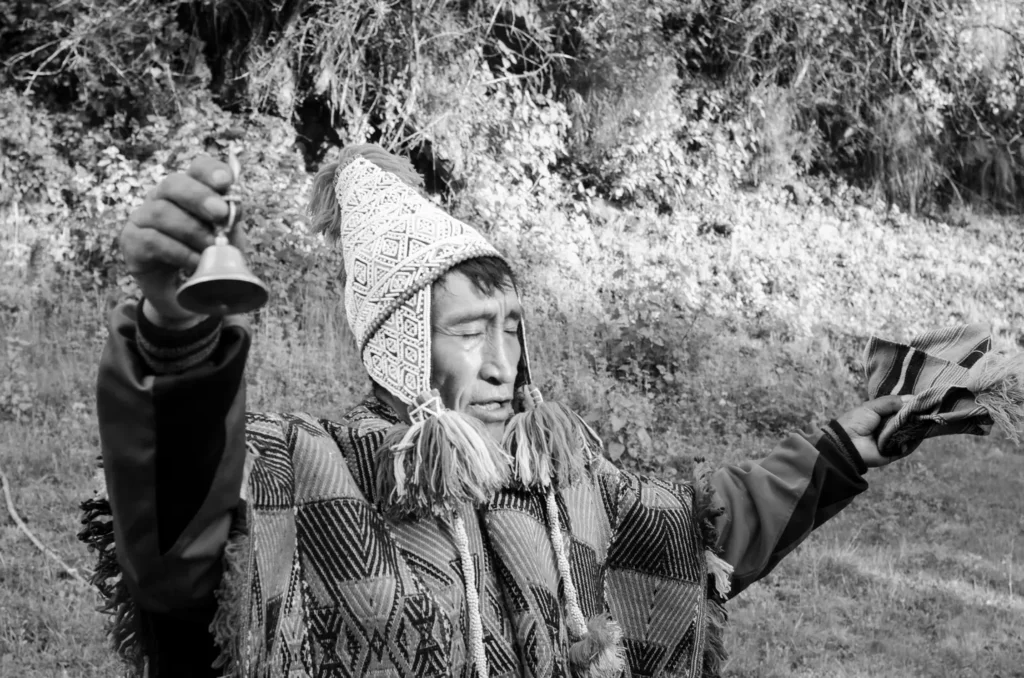
Shipibo shaman guiding ayahuasca retreat in Peru – Chamán shipibo ceremonia ayahuasca Perú
Movement During Ceremony
Stay lying down or seated for the majority of the experience, particularly during the peak. The medicine’s effects on balance and coordination make standing or walking without support potentially unsafe. Facilitators are present to help you with any movement you need.
Gentle movement is part of the ceremony’s work. Stretching, shifting position, adjusting your blanket — all of this is normal and natural. The ceremony does not require immobility.
If you need to move significantly — to reach the bathroom, to change position substantially — do so slowly and consciously. In altered states, the physical space can feel different than it is. Moving carefully protects both you and other participants whose mats are nearby.
The Bathroom Question
Everyone wonders about this and most people are embarrassed to ask.
Yes, you can use the bathroom during the ceremony. Holding physical needs until they become painful is not what ceremony etiquette requires, and trying to suppress the body’s signals adds unnecessary distraction.
How to do it: Signal to a facilitator rather than going independently. In an altered state, navigating an unfamiliar environment at night carries some risk — for orientation, balance, and spatial awareness. Facilitators are present specifically to support exactly this kind of practical need without it being an interruption. A gentle gesture in their direction is all that’s needed.
Return to your space as quietly as possible. The brief absence and return should be as minimally disruptive as possible.
Your Phone and Personal Electronics
The phone is the single most common source of ceremony disruption — not because people are thoughtless, but because the habitual pull of it is so deep that people reach for it without conscious decision.
Leave your phone off, or leave it at your accommodation. If you bring it for any reason — as a flashlight, for emergency access — put it in airplane mode and keep it face down and out of reach. A phone screen in a darkened ceremonial space is significantly more disruptive than it appears in ordinary light.
Do not photograph or record the ceremony. This applies to audio and video both. The ceremony is a sacred space; documenting it without explicit permission from the facilitating team and other participants is a violation of the shared trust of the space. Some retreat centers have specific policies on this — follow them explicitly.
Do not check your phone during the ceremony, even between active phases of the experience. The contrast between the interior space the medicine creates and the ordinary digital world is sharp, and the interruption is not only personal but energetically affects the space around you.
Relating to the Shaman and Facilitators
The shaman is working throughout the night. Their attention is distributed across the group, their songs are functional rather than decorative, and interrupting them to chat or ask questions during the ceremony is not appropriate. If you need to communicate something to a facilitator, they are available. The shaman’s attention will come to you when the ceremony calls for it.
When the shaman approaches you directly, receive their attention with openness. Whether they sing to you specifically, blow mapacho smoke across you, or engage in other healing work, the appropriate response is to remain still, keep your eyes closed, and be present with whatever arises. You do not need to direct, guide, or respond verbally.
Accept what is offered by facilitators — water, a hand, a reassuring presence — without resistance when you are struggling. The facilitators’ job is to support you, and allowing that support is part of participating well.
After the ceremony, the shaman and facilitating team should be treated with the same respect they received throughout the night. Brief, sincere expressions of gratitude are appropriate. Extended conversations about personal issues or requests for individual healing work outside the ceremony structure should be directed through the center’s established channels rather than sought informally.
Relating to Other Participants
Each person in the ceremonial space is in their own interior experience. Maintain awareness that your energy, sounds, and movement affect others — and that their sounds and movements are part of their experience, not demands on yours.
Do not touch other participants. Even with the best intentions — seeing someone cry and wanting to comfort them — physical contact with another participant during ceremony is not appropriate without their explicit consent and without understanding whether that contact is welcome or disruptive. What looks like distress to the outside observer may be exactly the release the medicine is facilitating; the intervention of touch can interrupt rather than support.
Do not attempt to facilitate or guide another participant’s experience. You are not the facilitator. Trying to help someone through a difficult moment — with words, touch, or energy — is not your role in this context, even if you have personal experience with ceremonial work. This is what the trained facilitation team is for.
What you can do: make eye contact if someone is searching for grounding and the facilitators are temporarily engaged elsewhere, or alert a facilitator quietly to a participant who seems to need support.
When Someone Near You Is Struggling
This specific situation is almost never addressed in ceremony etiquette guides, and it is one of the most common sources of anxiety in participants.
Someone near you may cry loudly, purge with intensity, shake, or make sounds of distress. This is the ceremony working. It is not an emergency requiring your intervention. The appropriate response is to return your attention to your own interior experience and trust the facilitation team — who are watching and will respond to anything that requires active support.
The natural impulse to help is a good impulse in the wrong context. In ceremony, the most helpful thing you can do for someone else who is struggling is to tend your own process and leave theirs in the capable hands of the experienced team.
If someone appears to be in genuine medical distress — not just in the intensity of the ceremonial experience, but something that looks medically concerning — alert a facilitator immediately and clearly.
Receiving Individual Healing Work from the Shaman
When the shaman sits with you specifically to do healing work — singing directly to you, blowing smoke, using other ceremonial tools — this is one of the most significant moments of the ceremony.
Stay still and open. Don’t try to interpret or intellectualize what is happening in real time. Don’t ask questions during the work. Don’t direct the shaman toward what you think you need. Be as receptive as possible.
Let the experience happen. Healing work from an experienced shaman can feel intense, unusual, or confusing in the moment. It often makes more sense afterward than during. The appropriate stance is trust and surrender, not evaluation.
Express gratitude afterward — a nod, a quiet word of thanks when the work is complete. Keep it brief; the shaman is continuing to hold the space for others.
The Second Cup: How to Decide
In many ceremonies, a second serving of the medicine is offered after the first has established itself — typically 45 to 90 minutes in.
This decision is yours, and it should not be made hastily. Take a moment to honestly assess where you are in the experience. A second cup deepens and extends what is already present. If the first cup has not yet fully manifested, wait — the onset is still in progress. If you feel the experience is complete and additional depth would be more than you can navigate, declining is entirely appropriate.
No legitimate ceremony involves pressure to take a second cup. If you feel pressured to drink more than you want to, that is worth noting and communicating to the facilitation team.
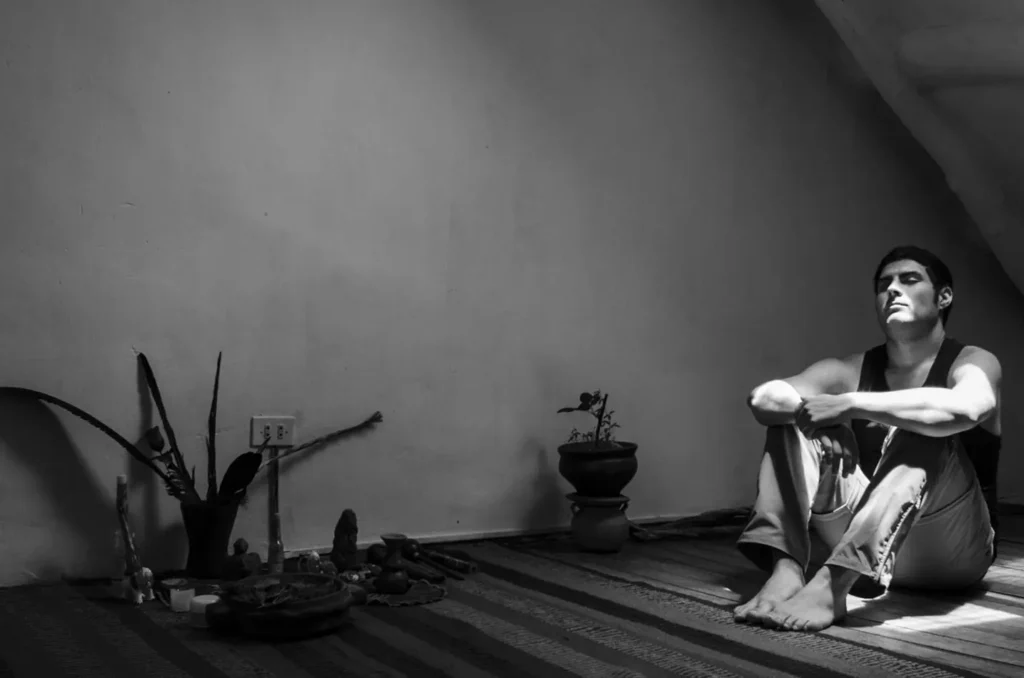
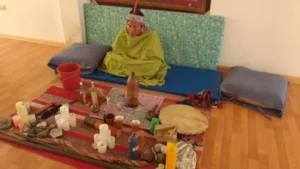
Healing center for Ayahuasca retreat in Cusco – Centro de sanación para retiro ayahuasca Cusco
After the Ceremony Closes
When the shaman formally closes the ceremony, the protection of the ceremonial space is complete. The night is over, but the experience often is not.
Move slowly and consciously. Even when the formal ceremony ends, physical coordination may still be affected. Take your time sitting up, standing, and moving around.
Quiet conversation is appropriate. Sharing fragments of what the night brought — with the facilitators, with other participants if the space feels right — is a natural beginning of integration. Loud, energetically chaotic conversation can feel jarring.
Eat something light if food is offered. The first food after a ceremony is its own kind of grounding — fruit, a light soup, something simple.
Journal before sleeping. The clarity of ceremony memories can fade surprisingly quickly. Even a few minutes of unstructured writing before sleep captures material that will be significantly less accessible by morning.
The Day After: Extended Etiquette
The day following the ceremony is part of the ceremonial process.
Continue the dietary protocol — no alcohol, no heavy food, no stimulants. Your system is still in a sensitive state.
Protect your space. The morning after a ceremony is not the time for intense social obligations, professional demands, or stimulating media. Allow the morning integration circle — if your retreat includes one — to be a genuine priority.
Treat your fellow participants with the respect of shared experience. You have been through something significant together. The confidentiality of what others shared, experienced, or expressed during the ceremony stays in the ceremony.
Etiquette Specific to Cusco and the Sacred Valley
Ceremonies in Cusco and the Sacred Valley draw from both Amazonian and Andean ceremonial traditions, which creates some elements of etiquette specific to this context.
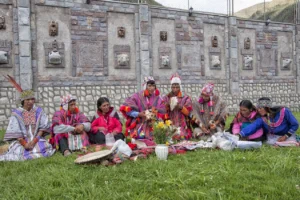
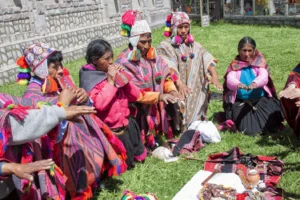
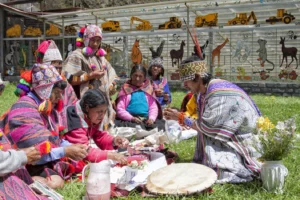
Respect the Andean ceremonial elements. The invocations to the Apus, the offerings to Pachamama, the coca leaf reading at the opening — these are not decorative preludes to the “real” ceremony. They are part of the ceremony. Receiving them with the same openness as any other part of the night honors the dual tradition being practiced.
The altitude context. If you need to step outside the ceremonial space briefly — for a moment of cool air, which can be grounding — communicate with a facilitator. The cold Andean night at altitude can be disorienting in an altered state if you’re not prepared for the temperature shift.
The morning after in the landscape. If your integration includes time in the Sacred Valley landscape — a morning walk, time by the Urubamba River, a quiet visit to a nearby site — treat those spaces with the same respect you brought to the ceremony. In the Andean understanding, the mountains, the river, and the ancient sites are living presences, not scenery. Moving through them with awareness is an extension of the ceremonial work.
Frequently Asked Questions
What should I do if I feel like leaving the ceremony?
Signal a facilitator before doing anything. The impulse to leave during a ceremony — particularly during intense or difficult moments — is extremely common and is usually the medicine presenting material that needs attention rather than escape. A facilitator can sit with you, help ground you, and support you in staying with what is arising. Leaving the ceremonial space unaccompanied in an altered state is unsafe. If after speaking with a facilitator you both agree that leaving is appropriate, you will be supported in doing so safely.
Is it disrespectful to fall asleep during ceremony?
Sleep during ceremony — particularly in the descent phase, hours after the peak — is common and not considered disrespectful. The medicine sometimes works through dream states, and sleep in those later hours can be a meaningful part of the experience. Falling asleep before the medicine has taken effect or during the peak is less common and generally indicates fatigue that was better addressed before the ceremony.
What if I need to purge loudly and I’m embarrassed?
The purge is a recognized and expected part of many participants’ ayahuasca ceremonies. No one in the ceremonial space is judging the sounds of someone releasing what needs to be released. Embarrassment is natural, but suppressing the purge to avoid noise is counterproductive and adds unnecessary suffering. Your bucket is there for this reason, and the facilitating team is experienced with every variation of what the ceremony produces.
Can I talk to other participants during the ceremony?
During the active phases of the ceremony — particularly the peak hours — quiet is the appropriate mode. After the ceremony formally closes, quiet conversation is natural and often a meaningful part of early integration. In the descent phase, when the experience is softening, whispering with a facilitator is appropriate; sustained conversation with a participant is generally better left until the close.
What if the shaman’s smoke bothers me physically?
If you have a genuine respiratory sensitivity or allergy to smoke that was not disclosed before the ceremony, inform a facilitator discreetly. Most experienced facilitating teams can work around individual physical sensitivities without disrupting the ceremonial container. This is something ideally communicated in advance during the pre-ceremony health intake.
If you have questions about what to expect during an ayahuasca ceremony in the Sacred Valley — before booking or before arrival — contact us. We provide preparation guidance to all participants as part of every program.
Related reading: What to Expect at an Ayahuasca Ceremony · How to Prepare for an Ayahuasca Retreat · Ayahuasca Diet · Ayahuasca Integration · Ayahuasca for Beginners