Something significant is happening at the intersection of ayahuasca and mental health research. What a decade ago was discussed almost exclusively in ethnobotanical and anthropological circles is now the subject of clinical trials, peer-reviewed meta-analyses, and regulatory attention from health authorities in multiple countries. The vocabulary has shifted from “indigenous healing tradition” to “neuroplasticity mechanisms” and “default mode network modulation” — not because the tradition has changed, but because the scientific framework for understanding it has caught up.
This guide synthesizes what the research actually shows across specific mental health conditions — depression, anxiety, PTSD, trauma, grief, addiction, and others — with appropriate honesty about what the evidence establishes, what it suggests, and what it does not yet prove. It also addresses the critical question that most clinical articles sidestep: what does this mean for someone trying to decide whether ayahuasca might help with their specific situation?
This content is educational and does not constitute medical advice. Anyone considering ayahuasca for mental health purposes should consult qualified healthcare providers and ensure appropriate medical screening before any ceremonial participation.
Table of Contents
How Ayahuasca Affects the Brain: The Mechanisms Behind the Mental Health Effects
Before exploring specific conditions, understanding why ayahuasca affects mental health at all helps make sense of the evidence across each condition.
Ayahuasca works through two primary pharmacological mechanisms. DMT from Psychotria viridis activates serotonin 5-HT2A receptors throughout the brain, while the beta-carboline alkaloids from Banisteriopsis caapi inhibit monoamine oxidase A (MAO-A), allowing the DMT to become orally active and extending its duration. The beta-carbolines also have independent effects — harmine inhibits serotonin reuptake, and tetrahydroharmine increases serotonin availability in the synaptic cleft.
The neurological consequences of these mechanisms have been increasingly well-mapped through neuroimaging studies. Three consistent findings emerge from the research:
Default mode network (DMN) suppression. The DMN is the brain network associated with self-referential thinking, rumination, autobiographical memory, and the maintenance of ego identity. Overactivity of the DMN is implicated in depression, anxiety, PTSD, and addiction — all conditions characterized by repetitive, self-referential thought patterns that resist conscious interruption. A 2023 systematic review by Kowalczuk et al. synthesizing 28 fMRI studies confirmed that ayahuasca produces acute, significant decreases in DMN connectivity. This suppression is understood as one of the primary mechanisms through which the medicine creates access to material that is normally defended against.
Increased neural flexibility and entropy. Neuroimaging studies show that ayahuasca increases brain entropy — a measure of the complexity and unpredictability of neural activity. Higher brain entropy reflects a more flexible, less rigid neural state. In clinical depression, brain entropy is characteristically reduced — the brain is stuck in limited, repetitive patterns. The acute increase in entropy under ayahuasca may create a window of neurological flexibility during which new patterns can form and old rigid ones can dissolve.
Enhanced neuroplasticity. Preclinical and clinical research has identified that ayahuasca increases brain-derived neurotrophic factor (BDNF), a protein essential for neuronal survival, growth, and the formation of new synaptic connections. BDNF is reduced in depression and PTSD. The harmine alkaloid in ayahuasca has been specifically studied for its neuroplasticity-promoting effects, independent of the DMT component.
A 2026 review in Current Addiction Reports (Springer) summarizing preclinical and clinical evidence concluded that ayahuasca “appears to target core psychological and neurobiological processes across disorders” through these combined mechanisms — including enhanced neuroplasticity, reduced inflammation, modulated oxidative stress, and decreased DMN activity.
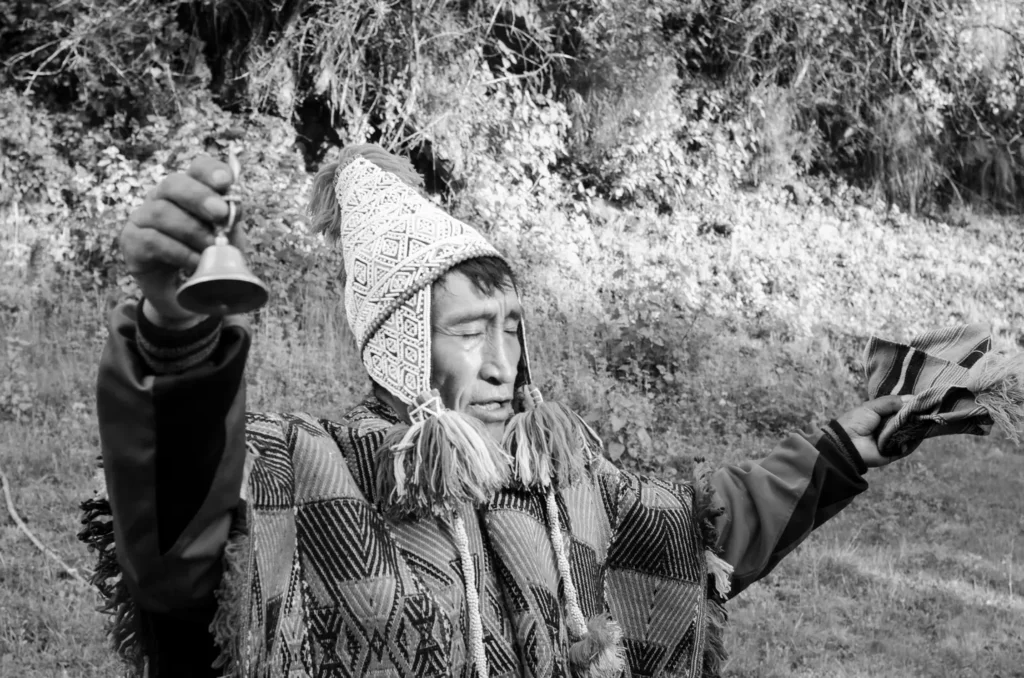
Shipibo shaman guiding ayahuasca retreat in Peru – Chamán shipibo ceremonia ayahuasca Perú
Ayahuasca and Depression: The Strongest Evidence
Depression is the mental health condition for which the evidence on ayahuasca is most developed and most consistent.
The key studies:
A landmark 2019 randomized placebo-controlled trial by Palhano-Fontes and colleagues, published in Psychological Medicine, found significant and rapid antidepressant effects of ayahuasca in patients with treatment-resistant depression. Effects were measurable within one day of the ceremony. The antidepressant signal remained at one week follow-up, significantly outperforming placebo.
A 2023 observational study from the University of São Paulo (published in Scientific Reports) found that among first-time ayahuasca users who met diagnostic criteria for psychiatric disorders at baseline, over 80% showed measurable clinical improvement at six-month follow-up. Long-term users showed lower depression scores and higher quality-of-life ratings than comparison groups.
The most recent major publication — a 2026 longitudinal observational study in Frontiers in Psychiatry following 280 adults with depressive disorders, anxiety, and substance use conditions — found significant reductions in depressive symptom burden associated with ritualistic ayahuasca use, with improvements maintained at the 180-day follow-up mark. The study’s critical finding is not just that symptoms improved, but that they remained improved at six months — distinguishing a lasting effect from a transient mood elevation.
A 2023 systematic review in European Neuropsychopharmacology concluded that evidence for ayahuasca’s antidepressant effects is “currently the most consistent” across psychedelic substances studied.
The proposed mechanisms specific to depression:
Depression involves reduced neuroplasticity, chronically elevated corticosteroid stress responses, and rigid negative cognitive patterns associated with DMN overactivity. Ayahuasca’s combination of BDNF induction (neuroplasticity), acute DMN suppression (breaking rigid patterns), and serotonergic modulation addresses multiple dimensions of the depressive neurobiology simultaneously — which may explain why its antidepressant effects emerge within hours rather than the weeks required for conventional antidepressants.
The critical caveats:
The evidence for ayahuasca in depression is meaningful and growing. It is also primarily observational rather than randomized controlled, meaning that selection effects (people who seek out ayahuasca may differ from the general population in ways that affect outcomes) and context effects (the ceremonial setting itself, independent of pharmacology) cannot be fully controlled for. The 2019 Palhano-Fontes trial is the most methodologically rigorous study in this space, and its findings are encouraging — but larger and longer trials are needed before ayahuasca can be considered a validated treatment.
What this means practically: For people with depression — particularly treatment-resistant depression — the evidence supports considering ayahuasca as a potentially meaningful intervention. It does not support replacing conventional treatment with ayahuasca or discontinuing professional psychiatric care.
Ayahuasca and Anxiety: What Research Shows
Anxiety is consistently identified as a condition responsive to ayahuasca, though the evidence base is less developed than for depression.
The 2026 Frontiers in Psychiatry study specifically included generalized anxiety disorder in its patient population and found significant reductions in depressive burden — which in clinical populations is closely correlated with anxiety symptoms — at 180-day follow-up.
The Global Ayahuasca Survey (Bouso et al., PLOS Global Public Health, 2022), the largest epidemiological study of ayahuasca users to date with 10,836 participants, found that users reported significant reductions in anxiety across multiple timepoints. The effect was more pronounced at six months than immediately after the ceremony — suggesting that integration and continued life engagement with the ceremonial insights contribute more to anxiety reduction than the acute experience alone.
The neurological mechanism is compelling: generalized anxiety is characterized by hyperactivity of the amygdala (the fear processing center) and overactive default mode network activity associated with anticipatory worry. Ayahuasca’s DMN suppression and the serenic quality of the beta-carboline compounds directly address these mechanisms.
A crucial distinction for participants with anxiety: the ceremony itself can be acutely anxiety-provoking. The onset of the medicine’s effects, particularly in first-time participants, is frequently accompanied by fear and uncertainty. This acute anxiety during ceremony is not a contraindication to the medicine’s anti-anxiety effects — it is often the mechanism through which those effects are produced. Facing fear rather than avoiding it is part of how the medicine works. This means that participants with significant anxiety may benefit most from well-facilitated ceremonial contexts with experienced support during the acute experience.
Ayahuasca and PTSD: Promising but Complex
PTSD is one of the most frequently cited motivations for seeking out ayahuasca, and the evidence — while less developed than for depression — points in a consistent direction.
The mechanism: PTSD involves dysregulated fear processing — traumatic memories that are not properly consolidated in the brain’s normal memory system and instead intrude into waking life with inappropriate emotional intensity. Research has shown that ayahuasca can interfere with the reconsolidation of fear memories — essentially reducing the emotional charge of traumatic memories without erasing their content. A 2024 study published in the British Journal of Pharmacology (Werle et al.) demonstrated ayahuasca-enhanced extinction of fear behavior in animal models through 5-HT2A and 5-HT1A receptor mechanisms in the infralimbic cortex.
In human studies, qualitative research consistently documents participants with PTSD histories describing significant relief of intrusion symptoms, reduced emotional reactivity to traumatic memories, and improved daily functioning following ceremonial ayahuasca use.
A 2025 Springer systematic review of psychedelics for PTSD found that while MDMA currently has the most developed clinical evidence, “data for ayahuasca, DMT, LSD, ibogaine, and psilocybin were preliminary but suggested potential benefits.” The ayahuasca-specific evidence is observational rather than from controlled trials, but the direction of effect is consistent.
The complexity: PTSD is also one of the conditions where the quality of facilitation most significantly determines the outcome. The mechanism of the medicine for PTSD — surfacing traumatic material and reducing its emotional charge — requires a ceremonial container sophisticated enough to hold that process safely. The same dynamic that can produce healing (facing traumatic material directly) can produce retraumatization if the ceremonial space is inadequate, the facilitation inexperienced, or the participant without sufficient psychological preparation.
For people with PTSD, ayahuasca is a relative rather than absolute contraindication — it is accessible to participants who are psychologically stable, in a genuine state of readiness, and working with a retreat center that has specific experience with trauma. See our detailed discussion in the ayahuasca contraindications guide.
Ayahuasca and Trauma: The Somatic Dimension
Trauma, understood more broadly than the clinical diagnosis of PTSD, is perhaps the domain where the traditional understanding and the scientific explanation of ayahuasca’s effects align most clearly.
Modern trauma research — particularly the somatic approaches of Peter Levine (Somatic Experiencing) and Bessel van der Kolk (The Body Keeps the Score) — recognizes that traumatic experience is stored not only as cognitive memory but as physiological patterning in the nervous system and the body’s tissues. Trauma lives in the body, not just in the narrative.
Ayahuasca engages with this somatic dimension directly. The purge (la purga) — vomiting, trembling, crying, sweating — is understood in the Amazonian tradition not as an unfortunate side effect but as a form of physical release of what has been held in the body. The somatic quality of the ceremony — the intensity of physical sensation, the release of controlled breathing patterns, the visceral quality of the altered state — creates conditions in which the body can discharge patterns that the mind alone cannot reach.
Participants consistently describe moments of releasing grief, rage, or fear that they describe as physical rather than cognitive — a felt sense of something leaving the body rather than a thought being processed. This description aligns with somatic trauma theory’s understanding of how traumatic material is held and how it can be released.
The neurological mechanism supports this: ayahuasca’s effects on the amygdala (the brain’s fear center), on interoception (the sense of bodily state), and on the regulation of the autonomic nervous system all create conditions in which the body’s trauma patterns can be accessed and potentially reorganized.
Ayahuasca and Grief: Emerging and Specific Evidence
Grief is a specific mental health condition that has received increasing research attention in the context of ayahuasca — and the evidence here is more specific and recent than most people realize.
A 2025 clinical trial (Soto-Angona, Andión, Sabucedo et al., Scientific Reports) examined ayahuasca-assisted meaning reconstruction therapy (A-MR) as an early resource for bereavement in a three-arm sequentially allocated open-label study. The study found significant reductions in grief severity. The authors explicitly positioned this as preliminary evidence that “ayahuasca may alleviate severe grief symptoms” while calling for larger controlled studies.
An earlier prospective observational study from Temple of the Way of Light and ICEERS — the first to prospectively assess long-term effects of ayahuasca in participants grieving the death of a loved one — found significant reductions in grief severity maintained at one-year follow-up.
The mechanism proposed for grief is similar to that for depression: ayahuasca appears to provide access to emotional states that grief has blocked or frozen, allowing the mourning process to continue through barriers that the ordinary mind cannot cross. Participants in grief studies frequently describe the ceremony as providing an experience of connection with the person who died — whatever the metaphysical interpretation of that experience — that allows the grief process to unstick and move.
A 2025 protocol published in Frontiers in Psychiatry (Sabucedo et al.) formalized an ayahuasca-assisted meaning reconstruction therapy protocol specifically for bereavement, reflecting the growing methodological maturity of this specific application.
Healing center for Ayahuasca retreat in Cusco – Centro de sanación para retiro ayahuasca Cusco
Ayahuasca and Addiction: Traditional Knowledge Meeting Clinical Research
Traditional Amazonian healers have worked with addiction — tobacco, alcohol, and other compulsive behaviors — as part of their healing practice for centuries, long before Western addiction medicine existed.
The 2026 Current Addiction Reports review (Springer) identified ayahuasca as showing therapeutic potential specifically across substance use disorders in addition to depression and anxiety. The evidence base for addiction is primarily observational, with studies examining real-world use patterns showing consistent reductions in problematic alcohol, tobacco, cocaine, and opioid use following ceremonial ayahuasca.
The mechanisms proposed for addiction are multiple:
Prospective agency — a renewed sense of future possibility and personal efficacy that reduces the psychological pull of addictive behavior. Multiple studies document this sense of “I have a future worth caring for” emerging from ceremonial ayahuasca experiences.
Emotional root access — ayahuasca consistently surfaces the emotional material that underlies addictive behavior. The grief, trauma, or emotional dysregulation that the substance was originally managing becomes visible and accessible in a way that allows it to be addressed rather than medicated away.
Neuroplasticity — the BDNF induction and increased neural flexibility documented under ayahuasca may reduce the rigidity of addictive neural circuits, creating a window in which behavioral change is more possible than in ordinary states.
The most recent observational data is consistent: across alcohol, tobacco, cocaine, and opioid use, ceremonial ayahuasca participants show reductions in use and in compulsive drive toward the substance. The effect is not universal and not permanent without ongoing work — but the signal is consistent enough that researchers in addiction medicine have identified it as warranting formal clinical trial investigation.
Ayahuasca and Other Conditions: Eating Disorders, Personality, and Cognition
The 2026 Current Addiction Reports review specifically included eating disorders and personality disorders in its scope — an expansion of the ayahuasca mental health literature that reflects the broadening of the research field.
Eating disorders: Observational and qualitative research suggests that ayahuasca may address the body dysmorphia, emotional dysregulation, and shame-based self-perception that underlie many eating disorders. The somatic dimension of the ceremony — a direct, non-evaluative engagement with the body’s experience — may be particularly relevant for conditions characterized by alienation from the physical self. Research is very preliminary here and specific to small observational samples.
Personality disorders: The literature on personality disorders and ayahuasca is limited but includes case reports and observational data suggesting that the increase in psychological flexibility and perspective-taking facilitated by ayahuasca may be relevant for specific personality disorders, particularly those characterized by rigidity and limited emotional regulation. This requires significant caution and qualified facilitation; borderline personality disorder in acute crisis is treated as a contraindication at most responsible centers.
Cognition and neuroplasticity: A 2025 cross-sectional study in European Archives of Psychiatry and Clinical Neuroscience found that long-term ayahuasca users showed preserved global cognitive function and improved memory compared to matched controls — a finding that challenges the assumption that regular psychedelic use impairs cognition and suggests the opposite pattern. A 2025 neuroimaging study found that ayahuasca significantly enhanced connectivity in brain networks associated with social cognition and perspective-taking at one-week follow-up.
What the Research Does Not Yet Prove
Intellectual honesty requires stating clearly what the current evidence does not establish — particularly given that much of the public-facing discourse on ayahuasca and mental health tends toward uncritical enthusiasm.
Ayahuasca is not a validated medical treatment for any condition. The evidence base, while consistent in direction, is primarily observational, involves non-randomized designs, and has not been through the regulatory evaluation required for medical validation. The 2019 Palhano-Fontes trial for treatment-resistant depression is an exception — a rigorous randomized placebo-controlled trial — but it involved a small sample and represents a single study, not the replication required for medical consensus.
The absence of replication in large samples means that effect sizes and specificity of effects remain uncertain. Observational studies consistently show positive effects, but observational data cannot control for who chooses ayahuasca (people actively seeking healing, possibly more motivated for change) or for the ceremonial context effects (the music, the shaman’s support, the group container may contribute independently of pharmacology).
Long-term effects beyond 12 months are insufficiently studied. The most encouraging finding — improvements maintained at 180 days — comes from the 2026 Frontiers study. Studies with longer follow-up periods are needed to understand whether effects persist, whether booster sessions are needed, and what factors predict durability.
The generalizability question: Most studies involve participants who sought out ayahuasca voluntarily, in ceremonial contexts, without the full range of psychiatric diversity found in general treatment populations. How the medicine performs with people who have comorbid conditions, who are involuntary or hesitant, or who are not embedded in integration-supporting communities is less well-studied.
Ayahuasca as Complement, Not Substitute
The most responsible framing of ayahuasca’s relationship to conventional mental health care is complementary rather than alternative.
The evidence consistently shows that ayahuasca can produce meaningful improvements in depression, anxiety, trauma, and addiction symptoms. It does not show that these improvements are best sustained without ongoing professional support. The research on integration — the period after the ceremony when insights are processed and translated into behavioral change — consistently identifies it as the mechanism through which lasting improvement occurs. Integration is itself a process that benefits from professional support.
For people currently in psychiatric treatment, ayahuasca is not a reason to stop. For people on medications that are contraindicated (particularly SSRIs and MAOIs), the medication question must be resolved with their prescribing physician before any ceremonial participation is appropriate — never by the participant deciding independently to stop. For people whose mental health situation is complex or unstable, the quality of the retreat center and the integration support it provides matters enormously.
The most effective approach — based on the available evidence and the experience of retreat practitioners — is ayahuasca as a catalyst within an ongoing healing process: not the entirety of the process, but a meaningful and sometimes dramatically effective part of it.
Who Should Not Pursue Ayahuasca for Mental Health Reasons
Certain mental health conditions and medications make ayahuasca contraindicated — and the seriousness of a mental health condition is not itself a reason to proceed. In some cases, it is a reason to pause.
Absolute psychiatric contraindications: Schizophrenia, schizoaffective disorder, bipolar disorder with manic or psychotic features, active psychosis, and active suicidal ideation. These are conditions in which the mechanism that makes ayahuasca therapeutically promising — amplification of internal experience, confrontation with suppressed material, reduced ego defenses — creates genuine risk of harm rather than healing.
Medication contraindications: SSRIs, SNRIs, MAOIs, tricyclic antidepressants, lithium, and tramadol all interact with ayahuasca’s MAOI component in ways that range from significantly dangerous to potentially life-threatening. Anyone on these medications cannot safely participate without a supervised tapering process that takes weeks to months.
Borderline situations requiring assessment: Well-managed anxiety and depression without psychotic features are not automatic contraindications. PTSD requires careful individual assessment of stability and readiness. The determining question is not the diagnosis but the current state — stability, medication situation, psychological readiness, and the quality of the ceremonial container available.
For the complete clinical guide to contraindications, see our ayahuasca contraindications article and our guide on is ayahuasca safe.
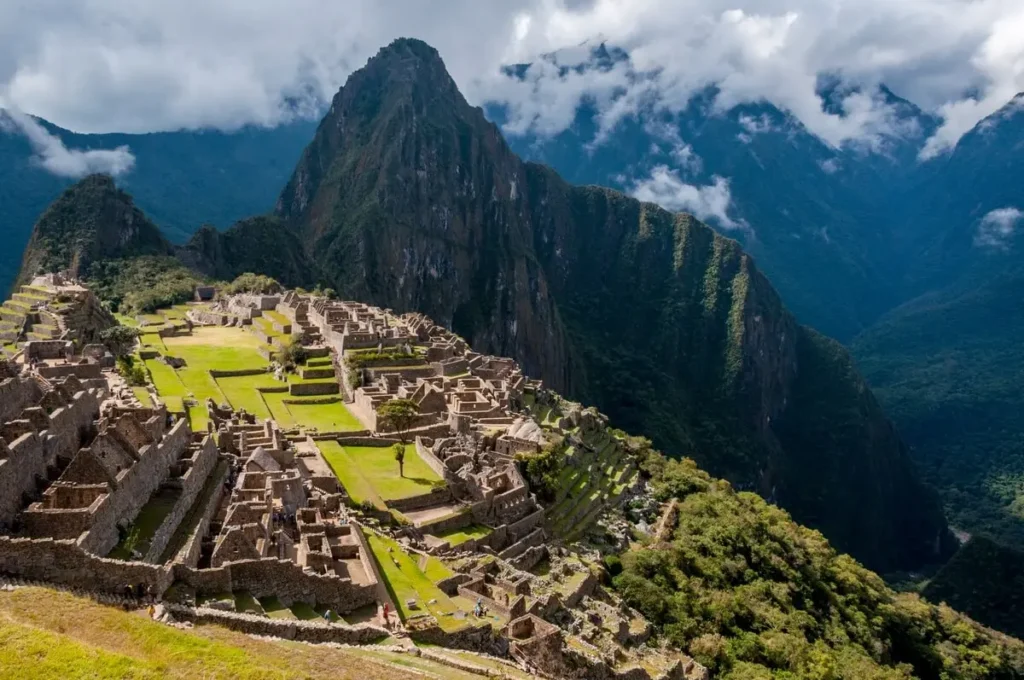
Ayahuasca Machu Picchu trip planning
The Role of the Ceremonial Context in Mental Health Outcomes
The research consistently shows that outcomes from ayahuasca ceremonies are not solely a function of pharmacology. The ceremonial context — the healer’s experience, the quality of facilitation, the setting, the preparation and integration support — is a meaningful variable in mental health outcomes.
Mystical experience quality — the depth of the felt sense of connection, meaning, and ego dissolution during ceremony — is one of the strongest predictors of positive mental health outcomes in the psychedelic literature. This finding applies across substances and reinforces the importance of a ceremonial container that supports depth rather than merely safety.
The implications for someone pursuing ayahuasca for mental health reasons: the choice of retreat center is not peripheral to the therapeutic outcome. A center with experienced, lineage-trained shamans, adequate facilitation ratios, genuine medical screening, and structured integration support produces a different outcome probability than one that prioritizes volume over care.
At Ayahuasca Cusco, every participant completes a detailed health intake before any booking is confirmed. We individually assess each person’s mental health history, medications, and readiness. We do not accept all applicants — and when we have concerns about whether a program is appropriate for someone’s specific situation, we say so honestly before any commitment is made. Our programs include preparation guidance, ceremony facilitation, morning integration circles, and follow-up contact after participants return home. Contact us to discuss your specific situation before booking.
Frequently Asked Questions
Can ayahuasca cure depression?
The research does not support describing ayahuasca as a cure for depression, and that framing should be treated with skepticism wherever you encounter it. What the evidence shows — consistently, across multiple studies and across observational and controlled designs — is that ayahuasca produces significant reductions in depressive symptoms that are maintained at follow-up periods of six months or more. The 2019 randomized controlled trial by Palhano-Fontes et al. found effects measurable within one day of ceremony. These are meaningful findings. They are not evidence of a permanent cure, and they do not eliminate the need for ongoing professional support, particularly for people with severe or treatment-resistant depression.
Is ayahuasca safe for people with anxiety?
For physically and psychiatrically healthy individuals without contraindicated medications, ayahuasca in a well-facilitated ceremonial context is generally accessible for people with anxiety. The research shows significant anxiety reductions as a documented outcome. The important caveats: the ceremony itself can be acutely anxiety-provoking at onset, which requires a well-held ceremonial container with experienced facilitation. People whose anxiety is connected to unresolved trauma require the specific considerations outlined in the PTSD section. People on anxiety medications — particularly benzodiazepines and SSRIs — need medical consultation about safe tapering before participation.
Can ayahuasca help with PTSD?
The preliminary evidence is positive, and the proposed mechanisms are well-grounded — fear memory reconsolidation interference, DMN suppression, somatic release, and reduced emotional reactivity to traumatic memories. The evidence is not yet at the level required for PTSD to be a validated indication for ayahuasca. For people with PTSD whose condition is stable, who have done preparatory work, and who are working with a retreat center experienced with trauma, the evidence supports cautious optimism. For people in active PTSD crisis, with severe dissociation, or with insufficient psychological stability, a ceremony is not appropriate until that stability is established.
How many ceremonies are needed to see mental health benefits?
The clinical evidence largely comes from single-ceremony interventions, and the 2019 randomized controlled trial found measurable effects after one dose. This means a single well-facilitated ceremony can produce meaningful mental health improvements. That said, the research consistently shows that benefits deepen with integration over time and may deepen with subsequent ceremonial work. Most practitioners recommend multiple ceremonies within a structured program (3–7 days) for participants approaching ayahuasca specifically for mental health purposes, followed by sustained integration support.
Can I stop my antidepressants to try ayahuasca?
No — not independently and not abruptly. The interaction between ayahuasca’s MAOI component and SSRIs, SNRIs, and other serotonergic antidepressants can cause serotonin syndrome, a potentially life-threatening condition. If you are currently taking antidepressants and are considering ayahuasca, the pathway is: discuss this openly with your prescribing psychiatrist; ask specifically about the interaction with MAO inhibitors; if your physician agrees tapering is appropriate, follow a supervised tapering protocol with regular monitoring; complete the washout period appropriate to your specific medication (fluoxetine requires 5-6 weeks minimum); only then consider participating in a ceremony after confirming with the retreat center that the washout period is complete.
Does ayahuasca work better for some mental health conditions than others?
The current evidence suggests the strongest and most consistent signal for depression, followed by anxiety and addiction. The evidence for PTSD and trauma is positive but more complex and context-dependent. Grief has specific and emerging evidence from recent studies. Eating disorders and personality disorders have very preliminary evidence that warrants interest but requires significant further investigation. Across all conditions, the quality of the ceremonial context and the depth of integration support significantly moderates outcomes — which means the same substance can show very different results in different settings.
If you are considering ayahuasca for mental health reasons and want to discuss your specific situation before making any decisions, contact us. We review each participant’s health history individually and will give you an honest assessment — including whether we believe another approach or timeline is more appropriate for your situation.
Our programs: 1-Day Ceremony · 3-Day Retreat · 5-Day Retreat · 7-Day Retreat
Related reading: Benefits of Ayahuasca · Is Ayahuasca Safe? · Ayahuasca Contraindications · Ayahuasca Integration · How to Prepare for an Ayahuasca Retreat
MEDICAL DISCLAIMER
This article is for educational purposes only and does not constitute medical advice. Ayahuasca interacts with certain medications and is contraindicated in specific medical and psychiatric conditions. Always consult a qualified healthcare provider before making any decisions about participation in plant medicine ceremonies or changes to any prescription medication.