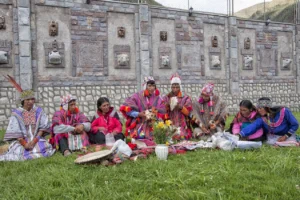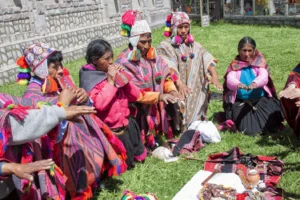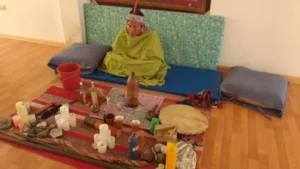
Cusco is the only city in the world where you can walk out of a colonial church, turn a corner, and find someone reading coca leaves on the street. Not for tourists — though tourists are welcome — but because this has been how the Andean world interprets itself for thousands of years. The ceremonies that draw spiritual travelers to Cusco are not reconstructions or performances. They are living practices, passed within families and communities, still functioning as the tools through which Quechua people navigate their relationship with the earth, the mountains, and the forces that govern life.
What surprises many visitors is how many distinct ceremonies exist — and how different they are from each other. A coca leaf reading is nothing like a Pachamama offering. A negative energy cleansing is the opposite of a flowering bath. Each serves a specific purpose, each suits a different moment, and the order in which you experience them is not arbitrary. Andean tradition is specific about this.
This guide gives you the guide to Andean ceremonies in Cusco: what each ceremony is, who it’s for, when in your journey each one belongs, and how to combine them meaningfully during your time in Cusco and the Sacred Valley.
Table of Contents
The Thread That Connects All Andean Ceremonies: Ayni
Every ceremony described in this guide — from the simplest coca leaf reading to the most complex Pachamama offering — operates within the same cosmological framework. Understanding it changes how the ceremonies feel.
Ayni is the Quechua word for sacred reciprocity. Not mutual aid in the casual sense, but a fundamental principle of the universe: everything given requires something returned. The rain that falls on the fields, the crops that grow, the health of the body, the clarity of the mind — all of this comes from somewhere, and right relationship requires acknowledging that and giving something back.
The Andean ceremonial tradition is, at its core, a system for practicing Ayni. The despacho is a physical expression of gratitude for what has been received. The coca leaf reading is a request for guidance, always preceded by an offering of breath and intention through the leaves. The cleansing removes what has accumulated and returns it to the earth. The flowering bath invites in what you’re asking for while acknowledging that the invitation itself is an act of relationship.
This isn’t background information — it’s the reason the ceremonies work the way they do. Coming to them as an act of relationship rather than a service to be received changes what’s available in each one.
The Three Types of Andean Ceremony
Before describing each ceremony individually, a structural distinction helps:
Opening ceremonies create clarity and direction. They are performed at the beginning of a retreat, a trip, or a significant life moment — to understand the current situation, identify what needs attention, and set the intention for what follows. The coca leaf reading belongs here.
Clearing ceremonies remove what is in the way. They work on what has accumulated — old energy, stagnant patterns, grief, stress, or anything else that is creating density in the energy field. The negative energy cleansing belongs here.
Closing ceremonies seal the work and welcome what’s new. They are traditionally performed after the clearing and the deep work have already happened — not before, because flowering in uncleared ground is considered poor planting. The Pachamama offering and the flowering bath both belong here, in that order.
This sequence — open, clear, do the deep work, offer gratitude, and welcome renewal — is the arc that Andean tradition has followed for centuries, and it’s the framework that the best retreat programs in Cusco still use today.
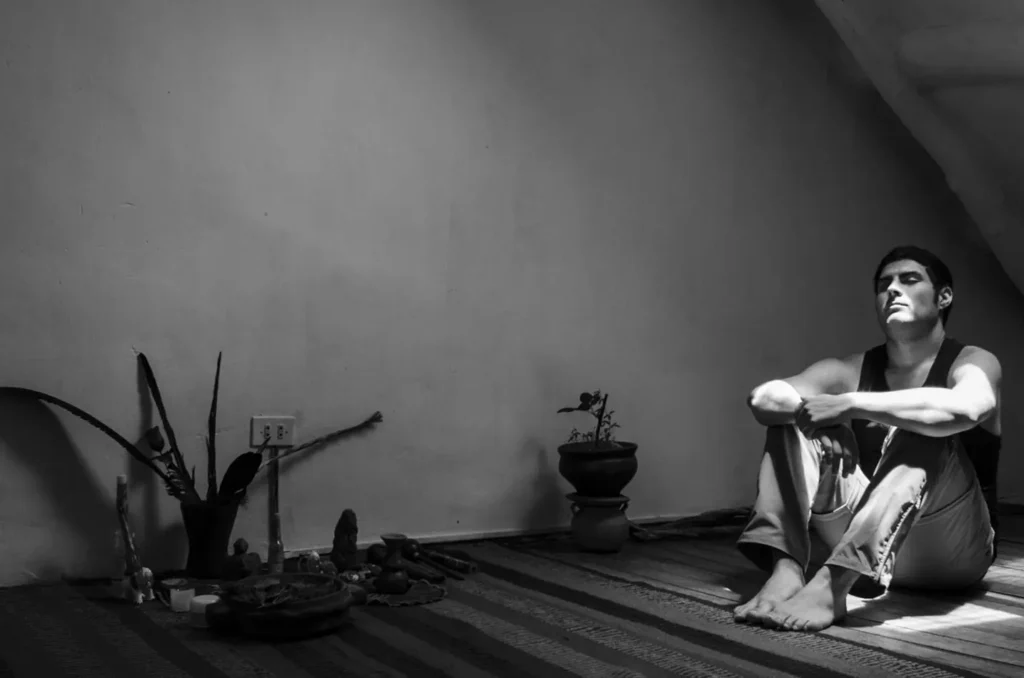
Healing center for Ayahuasca retreat in Cusco – Centro de sanación para retiro ayahuasca Cusco
Coca Leaf Reading: The Opening Oracle
The coca leaf reading is the oldest continuously practiced form of divination in the Andes, with evidence of coca use in ceremonial contexts dating back over three thousand years. Long before the Inca formalized their empire, communities throughout the Andean region were already consulting the leaf.
A paqo — an Andean healer-priest — invokes Pachamama, the Apus (sacred mountain spirits), and the spirit of Mama Coca before casting a handful of leaves onto a cloth. What the paqo reads is not fixed symbolism but pattern: the position of the leaves relative to each other, whether they land face up or curled, how they scatter, and which leaves are whole versus broken. The reading moves through five traditional life areas — health, family, work, love, and spiritual direction.
What the ceremony accomplishes practically is a form of diagnostic orientation. Before doing any deeper work, you understand where things stand energetically. This is why retreat programs typically schedule the coca leaf reading on the first day — it allows the healer to understand the specific person in front of them before the more intensive work begins.
The ceremony takes 45 to 90 minutes, requires no preparation or dietary restriction, and is accessible to everyone regardless of prior spiritual experience. It is also consistently described as one of the most surprisingly precise ceremonies available in Cusco.
Complete information and booking: Coca Leaf Reading Cusco →
Negative Energy Cleansing (Limpia): Clearing the Ground
The limpia — Andean energy cleansing — is built on a specific understanding of how human beings accumulate what doesn’t belong to them. The Quechua concept of hucha refers to heavy or dense energy: the residue of stress, grief, difficult relationships, trauma, or simply the accumulated friction of daily life. The limpia is the practice developed specifically to remove it.
The healer — typically a paqo from Q’ero lineage — works around the participant’s body using a combination of tools: bundles of herbs (rue, rosemary, broom, and others), sacred tobacco smoke, sometimes a condor feather or a raw egg. Each tool has a specific function. Herbs are understood to draw and absorb; smoke carries intention and penetrates in ways physical tools cannot; feathers sweep the energy field. What is collected is then deliberately disposed of — burned, buried, or left at a specific site — in accordance with the same principle of Ayni that governs all Andean ceremony.
The practical experience is hard to predict — reactions vary from a sense of immediate lightness to something more subtle that becomes apparent only in the hours afterward. What the majority of participants report is some version of the same thing: less weight. Whether interpreted through an energetic framework or a psychological one, this consistent response points at something real about what the ceremony does.
The limpia traditionally precedes intensive ceremonial work — particularly ayahuasca — because clearing accumulated energy before going into altered states tends to make the medicine’s work more direct and less obstructed.
Duration: 45 minutes to 2 hours. No dietary preparation required.
Complete information and booking: Negative Energy Cleansing Ceremony Cusco →
Pachamama Offering (Despacho): The Act of Reciprocity
The despacho is the most visually elaborate of the Andean ceremonies, and the one that most directly embodies the principle of Ayni. It is an offering — a physical, deliberate act of returning something to Pachamama and the Apus after they have given something to you.
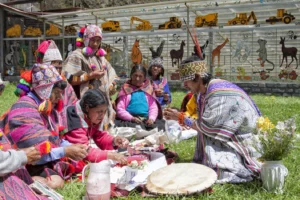
The paqo lays out a woven cloth (unkuña) and begins assembling the offering by hand: coca leaves placed in specific patterns, colored wool threads representing the ties between people and place, seeds and grains for abundance, dried flowers and incense, small sugar figures shaped like coins, animals, or suns, and occasionally wine or chicha. Each element carries a specific intention. Participants are invited to breathe their personal intentions into coca leaves before placing them — a direct act of participation rather than passive witnessing.
When the despacho is complete, the paqo wraps it carefully and returns it to the earth — typically through fire in the Sacred Valley, or through burial in high mountain communities. The moment of offering is considered final and sacred: once given, it is given.
In retreat programs, the Pachamama offering appears in two positions. At the start, it is a request — permission asked from the earth and the mountains before the deeper work begins. At the close, it is an act of gratitude — returning something after the medicine, the cleansing, and the ceremonies have given so much. Both uses are legitimate; the purpose and prayers differ.
Duration: 90 minutes to 3 hours. Low physical demand. No dietary restriction required.
Complete information and booking: Pachamama Offering Ceremony Cusco →
Flowering Bath (Baño de Florecimiento): Renewal and Opening
The baño de florecimiento — flowering bath or blossoming bath — is the closing ceremony of the Andean arc, and Andean tradition is specific about why it comes last.
The premise is agricultural in origin: flowers planted in uncleared ground don’t take root properly. The flowering bath is designed for someone who has already been cleared — through the limpia, through plant medicine, through the deep work of the retreat — and who is now ready to receive rather than release. The ceremony invites in what was cleared out, replacing dense energy with specific qualities the participant wants to welcome: love, clarity, abundance, renewed direction, health.
The paqo prepares a combination of flowers selected by color and energetic property — white for purity, red for love, yellow for joy and luck — combined with aromatic herbs, sacred waters, and specific Andean plants known for their energetic opening qualities. The flower-infused water is poured over the participant’s head and shoulders while the paqo prays, sometimes in Quechua, setting the intention into the water before it is received.
The ceremony lasts 30 to 60 minutes and is consistently described as the most immediately pleasant of the Andean ceremonies — gentle, aromatic, and leaving participants with a quality of openness that contrasts with the release quality of the cleansing.
The practical instruction is simple: avoid alcohol the day before, skip perfumes and lotions on the day of, and come with a clear sense of what you want to welcome in. The ceremony works with the intention you bring.
Complete information and booking: Flowering Bath Ceremony Cusco →
Plant Medicine Ceremonies: Ayahuasca and San Pedro
The Andean ceremonies described above are not plant medicine — they involve no psychoactive substances, no dietary preparation beyond basic common sense, and no medical contraindications. They are accessible to almost everyone regardless of health status or prior experience.
Plant medicine ceremonies — ayahuasca and San Pedro (Wachuma) — are a different category entirely. They involve profound alterations of consciousness, significant preparation, medical screening, and experienced facilitation. They are the most powerful experiences available in Cusco, and they are the context in which the Andean ceremonies above most often appear — as elements of the ceremonial arc that surrounds the medicine work.
Ayahuasca is the nighttime Amazonian plant medicine, brewed from Banisteriopsis caapi vine and chacruna leaves. Its ceremony lasts 4 to 6 hours in darkness, guided by a shaman’s healing songs. It is the most demanding of the plant medicine ceremonies, requiring thorough preparation, appropriate medical screening, and a well-held ceremonial container. In Cusco, ayahuasca ceremonies include the full Andean ceremonial arc: coca leaf reading and energy cleansing before, Pachamama offering and flowering bath after.
Programs range from a 1-day ayahuasca retreat to a 7-day immersion with multiple ceremonies and structured integration.
San Pedro (Wachuma) is the daytime Andean cactus medicine, practiced for thousands of years in the highlands. It is generally more accessible than ayahuasca — gentler physically, daytime, with maintained cognitive clarity — and is deeply connected to the Andean ceremonial tradition of working with Pachamama and the Apus in direct relationship with the landscape. It is the plant medicine most naturally embedded in the Andean ceremonial world.
The 1-day San Pedro ceremony is the most accessible entry point into plant medicine work in the Sacred Valley.
For a detailed comparison: Ayahuasca vs San Pedro (Wachuma) →
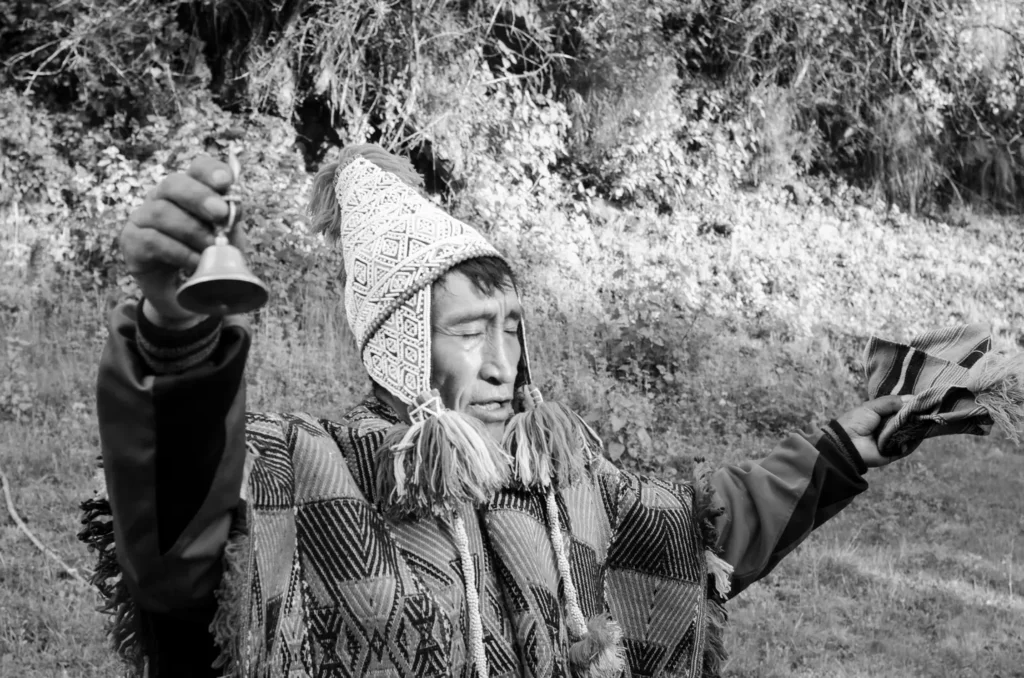
Shipibo shaman guiding ayahuasca retreat in Peru – Chamán shipibo ceremonia ayahuasca Perú
Who Performs These Ceremonies
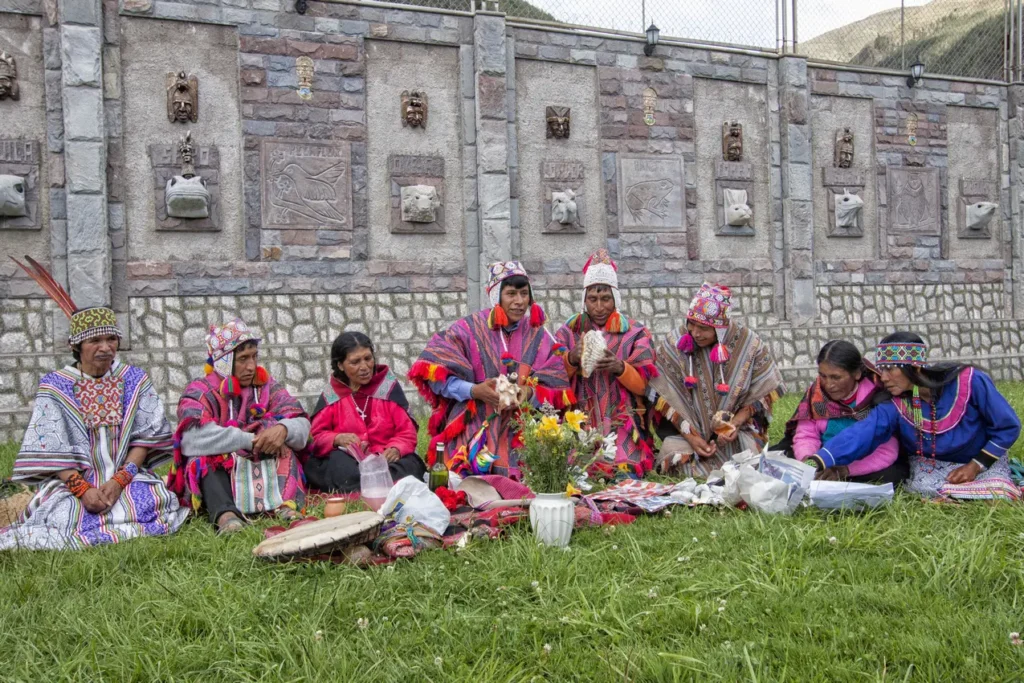
All four Andean ceremonies are led by a paqo — the Andean term for a healer-priest trained in the ceremonial knowledge of the Quechua tradition. The word encompasses several levels of training:
A pampa mesayoq works primarily with Pachamama and the immediate earth energies — leading despacho ceremonies, cleansings, and flowering baths. An alto mesayoq has a more direct relationship with the Apus themselves, often described as receiving direct communication from the mountain spirits. The coca leaf reading requires a specific gift considered as much innate as learned — not every paqo who leads a despacho is considered qualified to read leaves.
The most respected paqo lineages in Cusco come from the Q’ero communities — high Andean villages at over 4,000 meters, considered the most direct descendants of the Inca priest class and the keepers of the most intact Andean ceremonial knowledge. The Q’ero tradition was largely unknown outside Peru until anthropologists reached these communities in the 1950s, and their ceremonial knowledge remained essentially unchanged through centuries of colonial pressure.
When evaluating any center’s Andean ceremonies, the relevant question is not how many years of training the paqo claims but whether their background is traceable and whether the center can describe their lineage specifically. Andean ceremony leadership is not something that can be acquired in a weekend workshop.
How to Combine Them: Sequencing Guide
The Andean ceremonies form a natural arc that most well-designed retreat programs already follow. Understanding the logic behind the sequence helps you plan your time in Cusco regardless of whether you’re doing a formal retreat or building your own itinerary.
The complete ceremonial arc:
DAY 1-2: Coca Leaf Reading
→ Understand the current situation
→ Set intention for what follows
DAY 2-3: Negative Energy Cleansing (Limpia)
→ Clear what is in the way
→ Prepare the ground for deeper work
DAY 3-5: Deep work — Ayahuasca or San Pedro
→ The medicine works in cleared ground
→ Integration time between ceremonies
FINAL: Pachamama Offering
→ Express gratitude for what was received
→ Close the relationship with reciprocity
FINAL: Flowering Bath
→ Welcome in what is new
→ Seal the transformation with opening
What this looks like in practice:
For a 1-day retreat: All five elements are included within the program — coca leaf reading and limpia in the morning, ayahuasca ceremony in the evening, Pachamama offering and flowering bath the following morning.
For a standalone Andean ceremony day: Coca leaf reading in the morning, negative energy cleansing at midday, Pachamama offering in the afternoon, flowering bath to close. This is a complete ceremonial arc without plant medicine.
For visitors combining ceremonies with cultural travel: The Andean ceremonies can be scheduled around Machu Picchu, Sacred Valley visits, and other activities without difficulty. None require recovery time the way plant medicine work does. The only logistical note: schedule the flowering bath last, after any cleansing work.
What to Expect Practically
Duration: A single ceremony ranges from 30 minutes (flowering bath) to 3 hours (Pachamama offering). If combining multiple ceremonies in a single day, allow 4 to 6 hours for the full arc.
Location: Ceremonies take place at our retreat center in the Huayllapampa area of the Sacred Valley, at quiet outdoor sites near Cusco, or — for the coca leaf reading — at your hotel if preferred.
Language: The paqo typically leads ceremonies in Quechua or Spanish. English translation is provided throughout all ceremonies.
Physical demand: All four Andean ceremonies are low-demand — mostly seated or standing. They are accessible to participants of all ages and fitness levels, with no altitude acclimatization required beyond what is standard for Cusco.
Preparation: None of the four ceremonies requires the dietary preparation that ayahuasca demands. Avoiding alcohol the day before any ceremony is the most important common-sense guideline. For the flowering bath specifically, avoid perfumes and lotions on the day of the ceremony.
Cost: Ceremonies are offered standalone or as part of retreat programs. Standalone pricing starts at $70-$80 for a coca leaf reading and $120-$180 for the cleansing, Pachamama offering, and flowering bath. All four ceremonies are included in the comprehensive ayahuasca retreat programs.
Frequently Asked Questions
Do I need prior experience with spirituality or ceremony to participate in these rituals?
No. The Andean ceremonies are accessible to everyone regardless of background, belief system, or prior experience. They are living cultural practices, not performances — and the paqos who lead them are experienced at working with visitors from entirely different cultural frameworks. Coming with genuine curiosity and basic respect is sufficient.
Can I experience Andean ceremonies without doing ayahuasca?
Yes, and many visitors do exactly this. The coca leaf reading, negative energy cleansing, Pachamama offering, and flowering bath are all available as standalone experiences completely independent of plant medicine. They represent a complete ceremonial system in their own right and offer meaningful spiritual encounter without any altered states.
Is there a recommended order for the ceremonies?
Yes. The traditional sequence is: coca leaf reading first (orientation and diagnosis), then negative energy cleansing (clearing), then any intensive work including plant medicine, then Pachamama offering (gratitude and reciprocity), and finally the flowering bath (renewal). This order is not bureaucratic — it reflects the Andean understanding of how transformation works.
How do these ceremonies relate to ayahuasca and San Pedro retreats?
All four Andean ceremonies are included as standard elements in our ayahuasca retreat programs. The coca leaf reading and limpia open the program; the Pachamama offering and flowering bath close it. They form the Andean ceremonial container within which the Amazonian plant medicine work takes place — reflecting Cusco’s unique position as the meeting point of both healing traditions.
How long should I spend in Cusco to experience a meaningful combination of ceremonies?
For the four Andean ceremonies alone — without plant medicine — a single full day is sufficient, though two days is more relaxed. For a complete ceremonial experience including ayahuasca or San Pedro, three to seven days is the realistic range depending on the retreat program. For planning guidance, see our spiritual retreat planning guide.
Ready to experience Andean ceremonies in the Sacred Valley? Contact us to discuss which ceremonies — or which combination — fits your time and intentions. We can help you design a meaningful itinerary whether you’re spending three days or three weeks in Cusco.
Our ceremonies: Coca Leaf Reading · Negative Energy Cleansing · Pachamama Offering · Flowering Bath · 1-Day Ayahuasca Retreat · San Pedro Ceremony
Related reading: Spiritual Retreat Cusco Peru · Ayahuasca and the Apus · What Is San Pedro Wachuma? · Ayahuasca for Beginners · Ayahuasca Machu Picchu Planning