Cusco is not simply a departure point for Machu Picchu. It never was. Long before the Spanish renamed it and long before international tourism discovered its ruins, Cusco was the Qosqo — the navel of the world, the spiritual and political center of the most sophisticated civilization the Americas produced. The mountains surrounding it were understood as living presences. The rivers were sacred. The city itself was built as a ceremonial act, its streets forming the shape of a puma, its temples aligned with solstices.
That heritage didn’t disappear. It went underground during the colonial period and gradually reemerged as the twentieth century softened the pressure of religious suppression. Today, Cusco and the Sacred Valley host one of the most concentrated and diverse ecosystems of spiritual experience available anywhere on earth — not as a tourist industry overlay, but as a living continuation of traditions practiced in this geography for thousands of years.
This guide covers what a spiritual retreat in Cusco Peru actually involves: the ceremonies available, the traditions behind them, how they differ, who each one suits, and how to plan a meaningful combination within any amount of time in the region.
Table of Contents
Why Cusco Is One of the World’s Most Significant Spiritual Destinations
The spiritual significance of Cusco is not manufactured for visitors. It is structural — embedded in the geography, the history, and the living cultural traditions of the region.
At 3,400 meters above sea level, Cusco sits at the intersection of three powerful geographic systems: the Andean highlands with their towering Apus (sacred mountains), the headwaters of the Amazon basin beginning in the cloud forests below the eastern Andes, and the agricultural heartland of the Sacred Valley sustaining the Inca Empire for centuries. The Inca understood Cusco as the center from which four roads radiated to the four quarters of the empire — Tawantinsuyu, the “four parts together.” This was not administrative metaphor. It was cosmological structure: the city as axis mundi, the point where the earthly and celestial worlds intersected.
The Apus surrounding the valley — Ausangate, Salkantay, Verónica, Pitusiray — are not dormant geological features. They are understood in the Andean tradition as living spiritual entities with whom human communities have been in reciprocal relationship for millennia. The Urubamba River flowing through the Sacred Valley is the terrestrial equivalent of the Milky Way. The ancient sites at Pisac, Moray, and Ollantaytambo are not ruins — they are places of continuing ceremonial significance.
This is the setting in which a spiritual retreat in Cusco takes place. Not a resort with spiritual programming added on, but a landscape held as sacred and worked with ceremonially for longer than most civilizations have existed.
The Two Healing Traditions of Cusco
Understanding what makes a spiritual retreat in Cusco uniquely valuable requires grasping that two distinct healing traditions are authentically present here — and that their combination is specific to this geography.
The Amazonian tradition — centered on plant medicines, particularly ayahuasca, and the shamanic healing practice of the jungle peoples — was brought to Cusco by curanderos from the Amazon over generations. The vine of Banisteriopsis caapi doesn’t grow in the Andes, but the knowledge of how to work with it has been practiced in Cusco for decades by healers who bridge the jungle and the mountains. The icaros, the ceremonial songs, the relationship with the plant spirits — these are Amazonian in their roots.
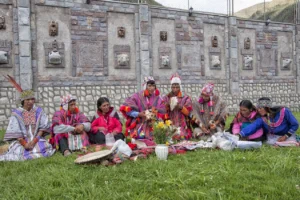
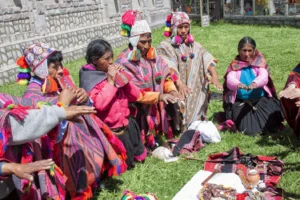
The Andean tradition — centered on the Quechua and Q’ero cosmological framework of Pachamama, the Apus, Ayni (sacred reciprocity), and the ceremonies that maintain right relationship between human beings and the natural world — is native to this specific geography. The coca leaf reading, the Pachamama offering, the energy cleansing rituals, the flower bath, the invocation of the Apus by name — these practices belong to the Andes the way that icaros belong to the Amazon.
What makes Cusco singular is that a ceremony here can authentically draw from both frameworks simultaneously. The healer who leads an ayahuasca ceremony weaves Amazonian icaros with Andean invocations to the Apus. The Pachamama offering precedes the ayahuasca night as part of a single ceremonial arc. The coca leaf reading opens a San Pedro ceremony that then moves through the Sacred Valley landscape in direct relationship with the mountains.
This dual heritage is not available anywhere else in the world in the same authentic way.
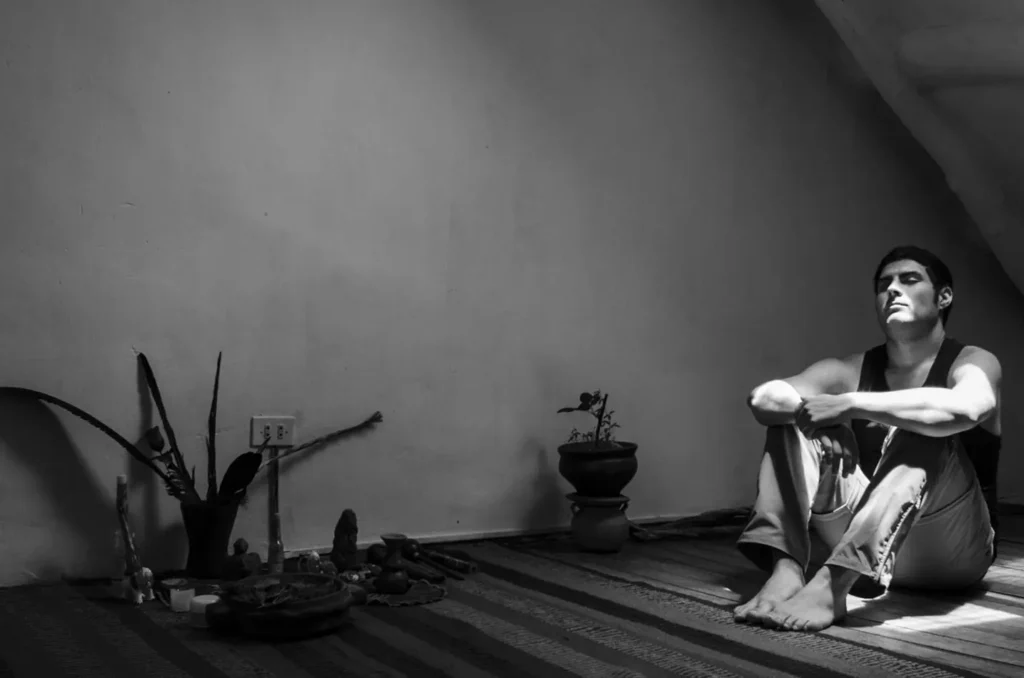
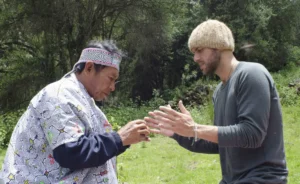
Healing center for Ayahuasca retreat in Cusco – Centro de sanación para retiro ayahuasca Cusco
Ayahuasca: The Night Ceremony
Ayahuasca is the Amazonian plant medicine brewed from the Banisteriopsis caapi vine and the Psychotria viridis chacruna leaf. Its ceremony takes place at night, in darkness, guided by a shaman whose healing songs (icaros) navigate the experience for each participant.
It is the most powerful and demanding of the ceremonial experiences available in Cusco — and the one that requires the most thorough preparation and the most careful selection of context. A typical ayahuasca ceremony lasts 4 to 6 hours and can produce profound emotional, psychological, and spiritual shifts. Participants regularly describe it as equivalent to years of therapy compressed into a single night — not because it is painless, but because of the depth it reaches.
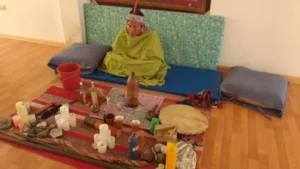
Every ayahuasca program at Ayahuasca Cusco includes the full arc of the ceremonial container: coca leaf reading as opening, energy cleansing before the ceremony, the ayahuasca ceremony itself guided by experienced shamans with traditional icaros, and a Pachamama offering and flower bath as closing rituals of gratitude and integration.
Best for: People seeking deep inner work — healing from depression, trauma, addiction, or existential uncertainty. Those ready to engage with intensity and committed to preparation and integration. Participants without contraindicated medications and with sufficient psychological stability to navigate challenging material.
Not appropriate for: People taking SSRIs, SNRIs, or other serotonergic medications without completing a supervised medical tapering process. People with a history of schizophrenia, bipolar disorder with psychotic features, or active psychosis.
Our programs:
- 1-Day Ayahuasca Retreat — 1 ceremony, complete ceremonial arc including coca leaf reading, limpia, Pachamama offering, and flower bath
- 2-Day Ayahuasca Retreat — 2 ceremonies with integration between
- 3-Day Ayahuasca Retreat — 2 ceremonies, full integration support, Pachamama offering
- 5-Day Ayahuasca Retreat — 3 ceremonies, daily Andean practices, closing flower bath and Pachamama ceremony
- 7-Day Ayahuasca Retreat — 3–4 ceremonies, coca leaf ceremony, flower cleansing, Andean philosophy sessions, optional Machu Picchu visit
For a complete guide: What Is Ayahuasca? · Benefits of Ayahuasca · What to Expect at an Ayahuasca Ceremony · How to Prepare for an Ayahuasca Retreat
San Pedro (Wachuma): The Daytime Medicine
San Pedro (Echinopsis pachanoi) is the sacred Andean cactus containing mescaline — a phenethylamine that produces an expansive, heart-opening altered state over 8 to 12 hours. Unlike ayahuasca’s nighttime interiority, San Pedro ceremonies take place during the day, outdoors, in direct relationship with the Sacred Valley landscape.
Known as Abuelo (Grandfather) in ceremonial tradition, San Pedro works through gentleness rather than confrontation. The mountains become more present. Colors intensify. A quality of warmth opens in the chest. The medicine is understood as the quintessentially Andean plant medicine — born in the highlands, connected to the Apus and Pachamama by geography and by thousands of years of ceremonial use.
San Pedro ceremonies at Ayahuasca Cusco include the complete ceremonial protocol: a coca leaf reading to open, energy cleansing before the medicine, the full daytime ceremony with experienced Andean shamans, and a Pachamama offering and flower bath as closing. The ceremony takes place in natural Andean settings near Cusco that promote connection with the mountains and the earth.
Best for: First-time plant medicine participants — San Pedro is more physically accessible than ayahuasca with a gentler purge profile and maintained cognitive clarity throughout. Those seeking emotional opening, connection with nature, and heart-centered experience. People drawn to the specifically Andean dimension of plant medicine tradition.
Not appropriate for: People taking lithium (specific and serious contraindication). Those with severe uncontrolled cardiovascular conditions. Anyone with a history of psychotic disorders.
Our programs:
- San Pedro 1-Day Ceremony — complete full-day Wachuma ceremony in the Sacred Valley
- San Pedro Wachuma Ceremony Cusco — full program information and all ceremony formats
For a complete guide: What Is San Pedro (Wachuma)? · Benefits of San Pedro Wachuma · San Pedro Ceremony: What to Expect · Ayahuasca vs San Pedro
Coca Leaf Reading: Ancient Andean Divination
The coca leaf reading (lectura de coca or coca phuquy) is one of the oldest and most widely practiced ceremonial traditions in the Andes. Long before the Inca Empire, communities throughout the Andean region used the sacred coca plant as a bridge between the human world and the spirit world — for healing, for decision-making, for guidance, and for communication with the Apus and ancestors.
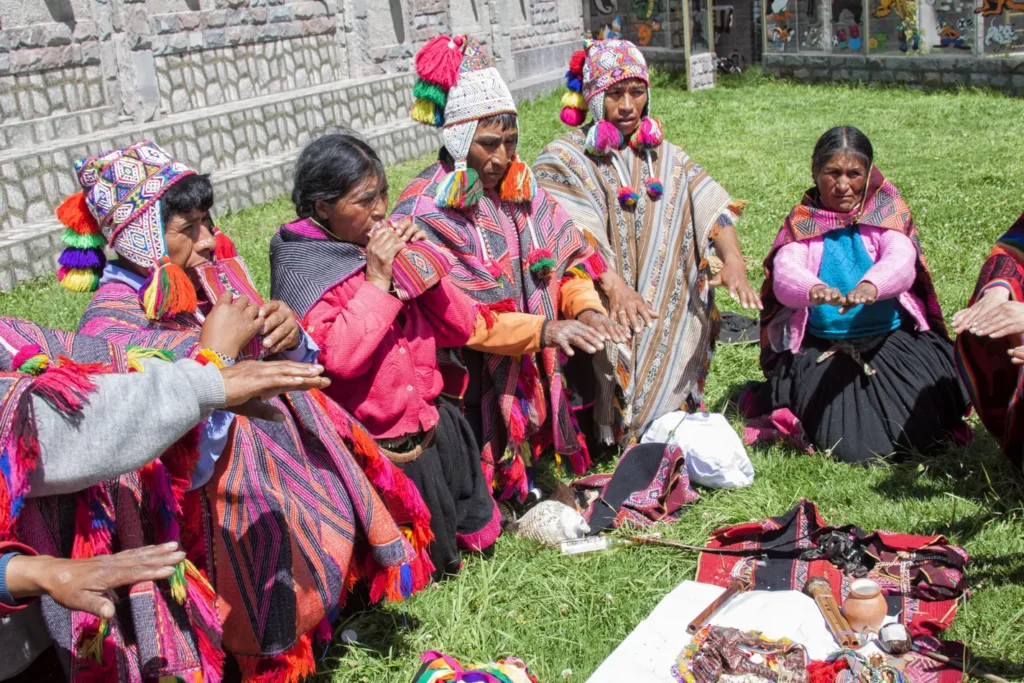
In a coca leaf reading, a paqo (Andean healer-priest) invokes Pachamama, the Apus, and the spirit of Mama Coca before reading the patterns formed by coca leaves to reveal information about the participant’s life situation, energetic condition, health, relationships, and spiritual path. The participant blows their intentions into a bundle of three leaves (kintu) — an act of samay (breath of life) that transfers their consciousness and intention into the offering before the reading begins.
At Ayahuasca Cusco, the coca leaf reading is the standard opening ceremony for all our retreats — including the 1-Day Ayahuasca Retreat and the 5-Day Retreat. It allows the healer to identify each participant’s specific energetic condition and focus the subsequent ceremonies accordingly. Many participants describe it as one of the most unexpectedly precise and meaningful experiences of their entire retreat.
The reading requires no preparation, no dietary restriction, and no prior experience. It is also consistently described as one of the most accessible and immediately meaningful ceremonies for participants arriving completely new to Andean tradition.
Best for: Anyone seeking clarity or guidance. Those opening a retreat program. Those wanting to experience Andean tradition in an intimate and accessible way. Those who want spiritual insight without plant medicine involvement.
Complete information and booking: Coca Leaf Reading Cusco →
Negative Energy Cleansing (Limpia): Releasing What Accumulates
The limpia — energetic cleansing — is a fundamental healing practice across both Andean and Amazonian traditions. Its premise is straightforward: human beings accumulate hucha (heavy or dense energy) through stress, trauma, difficult relationships, negative environments, and the friction of daily life. This accumulated energy creates physical, emotional, and spiritual heaviness. The limpia removes it.
A limpia is performed by the healer using a combination of tools: sacred plants and herbs passed across the body, the breath and prayers of the healer, mapacho (sacred tobacco) smoke directed at specific areas, agua florida (floral water) sprinkled or blown, and sometimes physical touch with eggs, stones, or other ceremonial objects. The healer perceives each participant’s energy field and works directly with areas of congestion or blockage.
At Ayahuasca Cusco, the negative energy cleansing ritual is included as a standard element of every ayahuasca retreat program — preceding the ceremony itself to ensure participants arrive at the medicine in the clearest possible state. The 1-Day Ayahuasca Retreat describes it as “a ceremony designed to purify the body, mind, and spirit by releasing negative energies, emotional blockages, or accumulated stress.” The 5-Day Retreat includes it on the first day, specifically before the first ceremony, as part of the systematic preparation.
Most participants describe feeling noticeably lighter immediately after — a sense of clarity that arrives with a specificity that is difficult to attribute to suggestion alone.
Best for: Anyone carrying chronic stress, emotional heaviness, or a sense of being blocked. Those preparing for a plant medicine ceremony. Those wanting a practical, non-psychoactive healing experience with immediate felt effect.
Complete information and booking: Negative Energy Cleansing Ceremony Cusco →
Pachamama Offering (Despacho): Sacred Reciprocity
The Pachamama offering ceremony — known as despacho or haywarikuy in Quechua — is the central ceremonial expression of Ayni, the Andean principle of sacred reciprocity. Its premise is foundational to the entire Andean cosmological framework: every receiving must be balanced by a giving.
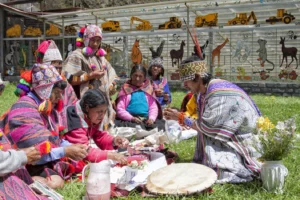
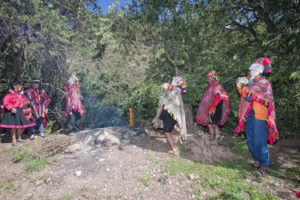
The ceremony involves the careful assembly of a bundle of sacred offerings — coca leaves, flower petals, seeds, grains, sugar figures, incense, and other elements specific to the ceremony’s purpose — arranged by the healer while prayers are spoken and participants’ intentions are woven into the offering. The completed bundle is burned in a ceremonial fire, the smoke carrying the offering to the Apus and Pachamama.
At Ayahuasca Cusco, the Pachamama offering is included as the standard closing element of our retreat programs. The 1-Day Ayahuasca Retreat includes it as “a ritual of gratitude and spiritual connection with nature… we give thanks for life, food, and all the blessings received, while offering prayers and requests for personal and collective well-being.” The 3-Day Retreat closes with “a ceremony of gratitude and offering to Pachamama.” The 7-Day Retreat includes specific sessions on “Andean philosophy: Kausay Pacha, Wiracocha, and Pachamama — reflections on offerings to Mother Earth.”
Best for: Those seeking to express gratitude and close a ceremonial process with right relationship. Those wanting to participate in authentic Andean ceremony. Those integrating a previous plant medicine experience. Those marking a significant life transition.
Complete information and booking: Pachamama Offering Ceremony Cusco →
Flower Bath (Baño de Florecimiento): The Ceremony of Renewal
The baño de florecimiento — flower bath or “blossoming bath” as our programs call it — is one of the most visually beautiful ceremonies in the Andean tradition. Where the limpia focuses on removing dense energy, the baño de florecimiento focuses on what should be welcomed: abundance, love, renewal, and the opening of previously blocked paths.
The ceremony involves the preparation of a ritual bath using specific flowers, plants, and sacred herbs selected for their energetic properties — yellow flowers (retama and kantu), white flowers for purity, colored flowers for abundance, combined with aromatic herbs, sacred waters, and the healer’s intentions and prayers. The participant receives the flower-infused water poured over the head and body while the healer sings or prays.
At Ayahuasca Cusco, the flowering bath is included as a closing ceremony in our retreat programs. The 1-Day Ayahuasca Retreat describes it as “a ritual of protection and spiritual harmonization that strengthens the connection with the energies of the universe and sacred plants… helps attract positive energies, renew the spirit, and strengthen energetic protection.” The 5-Day Retreat closes specifically with the “Flowering Bath Ceremony for Love, a ritual designed to harmonize the spirit, attract positive energies, and strengthen the connection with universal forces.”
Best for: People seeking new beginnings or opening to abundance and renewal. Those integrating any plant medicine ceremony. Those wanting a beautiful, culturally authentic ceremony without plant medicine involvement. Those completing a retreat and wanting to seal the experience with a ceremony of opening rather than closing.
Complete information and booking: Flowering Bath Ceremony Cusco →
Sacred Sites and Energetic Landscape
A spiritual retreat in Cusco Peru is not limited to ceremony space. The landscape itself is a resource — one that has been understood as sacred and worked with ceremonially for millennia.
Sacsayhuamán — the massive Inca fortress above Cusco city, aligned with the solstices and understood as a major energy vortex in the Andean tradition.
Qenqo — a sacred Inca site 3km from Cusco, carved from a single limestone outcrop, used for astronomical and ritual purposes. Less visited than Sacsayhuamán and more profoundly quiet.
Moray — the circular agricultural terraces in the Sacred Valley whose concentric descending circles create distinct microclimates at each level. Participants consistently describe the site’s geometry as meditative and energetically distinctive.
Pisac — the hilltop Inca site above the town of the same name, with a solar observatory considered among the most sophisticated in the Inca world. The surrounding market is one of the most authentic artisan markets in the region.
Ollantaytambo — the massive temple-fortress at the northwestern end of the Sacred Valley, with a Temple of the Sun aligned with the summer solstice. The 7-Day Retreat includes a transfer to Ollantaytambo on the final day, where participants can visit the sacred temples before boarding the train to Machu Picchu.
Visiting these sites during the integration period of a spiritual retreat — not as a tourist checking boxes, but with the quality of attention that a ceremony opens — is consistently described by participants as one of the most meaningful aspects of the entire experience.
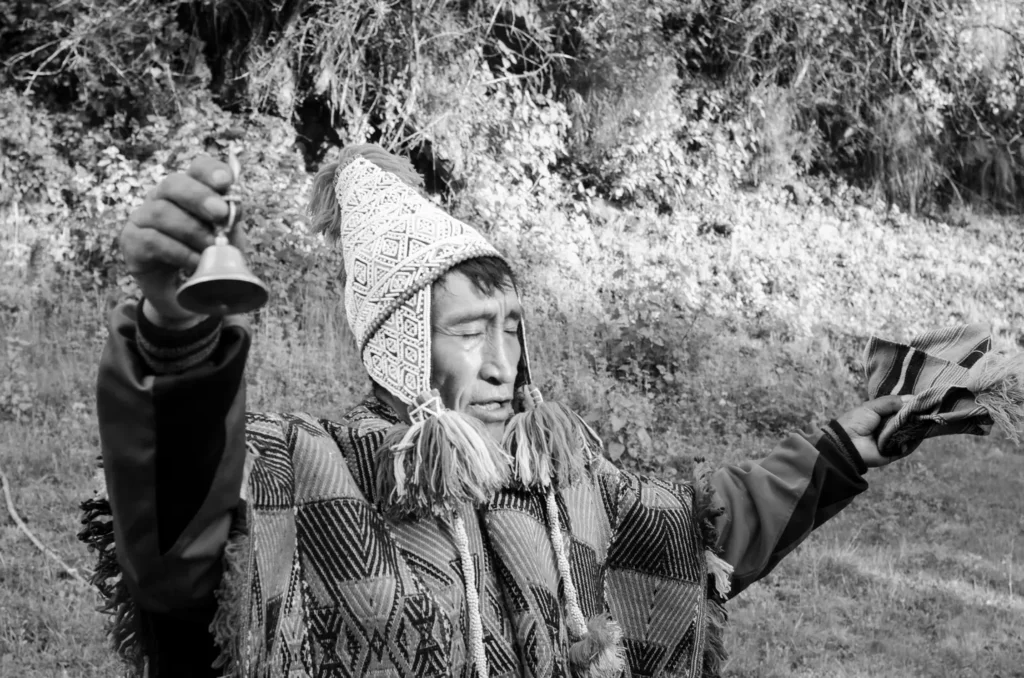
Shipibo shaman guiding ayahuasca retreat in Peru – Chamán shipibo ceremonia ayahuasca Perú
How to Plan a Spiritual Retreat in Cusco
The most common planning error is compressing too many experiences into too few days. Here is a realistic framework.
For a 3–4 day trip:
- Days 1–2: Arrive, acclimatize in Cusco, gentle exploration
- Day 3: 1-Day Ayahuasca Retreat — includes coca leaf reading, limpia, ayahuasca ceremony, Pachamama offering, flower bath
- Day 4: Integration, return
For a 5–7 day trip:
- Days 1–2: Arrive, acclimatize, gentle Sacred Valley exploration (Pisac)
- Day 3: San Pedro 1-Day Ceremony
- Day 4: Rest and integration
- Day 5: 1-Day Ayahuasca Retreat or 3-Day Retreat
- Days 6–7: Integration, Machu Picchu or return
For a 10-day trip:
- Days 1–3: Arrive, acclimatize, Cusco cultural exploration, Machu Picchu
- Days 4–8: 5-Day Ayahuasca Retreat — 3 ceremonies, coca leaf readings, limpia, Pachamama offerings, flower bath
- Days 9–10: Integration, Sacred Valley sites, return
For a 14-day trip:
- Days 1–3: Arrive, acclimatize, cultural exploration
- Day 4: Machu Picchu
- Day 5: Rest and preparation
- Days 6–12: 7-Day Ayahuasca Retreat — 3–4 ceremonies, full Andean ceremonial program, optional Machu Picchu on final day
- Days 13–14: Integration, Sacred Valley exploration, return
Key planning principles:
Allow 2–3 days of acclimatization before any ceremony. Place Machu Picchu before ceremonies, not after. Allow at least 1–2 integration days after each major ceremony. Do not schedule professional or family obligations in the first week after returning home. Contact us to help design the right sequence for your specific dates.
Combining Spiritual Experiences with Cultural Travel
Cusco’s geographic position as the gateway to Machu Picchu and the Sacred Valley makes it uniquely suited to combining spiritual retreat work with cultural exploration. The coherence between these dimensions — the Inca heritage and the living ceremonial tradition — is something participants consistently describe as one of the most powerful aspects of a trip here.
The cultural sites are not background to the spiritual work. They are part of it. Pisac’s solar observatory, Moray’s geometric terraces, Ollantaytambo’s ceremonial architecture — these are the physical legacy of a civilization that understood the cosmos as a living, ordered system and built its cities to reflect that understanding. A participant who has sat in an ayahuasca ceremony and then stands in the Temple of the Sun at Ollantaytambo brings a quality of perception to that visit that a purely cultural tourist does not have access to.
For practical guidance on combining a retreat with a Machu Picchu visit, see our complete guide: Ayahuasca and Machu Picchu: A Practical Planning Guide.
What to Look for in a Retreat Center
The quality of spiritual experiences in Cusco varies enormously. The following questions distinguish centers with genuine integrity from those that have adopted the language of spiritual tradition without its depth.
Are the healers identified by name and lineage? A genuine paqo or curandero has a traceable background — teachers they trained under, years of practice. Vague references to “experienced shamans” without names are a meaningful signal.
Is health screening in place for plant medicine ceremonies? Any responsible center offering ayahuasca or San Pedro conducts individual health screening before accepting participants. This is a safety measure, not bureaucracy. See our guides on Is Ayahuasca Safe? and Ayahuasca Contraindications for the full picture.
Do the ceremonial programs include the complete arc? A quality retreat integrates multiple ceremonial elements — not just the plant medicine ceremony, but the Andean ceremonies (coca leaf reading, limpia, Pachamama offering, flower bath) that complete the ceremonial container before and after. Our programs include all of these as standard elements, not optional add-ons.
Is there integration support? The days following plant medicine ceremonies require support. Centers that end their involvement at the close of the ceremony are providing an incomplete experience. See our complete guide on Ayahuasca Integration.
Do independent reviews reflect consistent quality? Google, TripAdvisor, and AyaAdvisors reviews from real participants over time tell a more reliable story than testimonials selected by the center itself. For guidance on what to look for specifically, see How to Choose an Ayahuasca Retreat.
At Ayahuasca Cusco, every program includes health screening, the full ceremonial arc of Andean and plant medicine ceremonies, experienced shamans, and preparation and integration support. Contact us to discuss which combination of experiences fits your intentions, time, and background.
Frequently Asked Questions
What is the best spiritual experience to start with in Cusco if I’ve never done anything like this before?
For participants with no prior experience, the San Pedro 1-Day Ceremony is the most accessible starting point for plant medicine work — gentler physical profile, daytime setting, maintained cognitive clarity. Alternatively, the 1-Day Ayahuasca Retreat provides a complete ceremonial experience including all Andean ceremonies (coca leaf reading, limpia, Pachamama offering, flower bath) alongside the ayahuasca ceremony itself. For those who want a completely non-psychoactive starting point, the coca leaf reading included in all our retreat programs can be experienced as a standalone entry into the Andean tradition.
How many days do I need for a meaningful spiritual retreat in Cusco?
The 1-Day Ayahuasca Retreat delivers a complete ceremonial experience in a single day, making it viable for visitors with minimal time — though we recommend arriving 2 days early for acclimatization and staying 1 day after for recovery. The 3-Day Retreat allows for 2 ceremonies with integration between. The 5-Day and 7-Day programs allow for the deepest work. Total Peru trip: 7 days minimum for a 1-day ceremony with acclimatization, 10-12 days for a 5-day retreat, 14+ days for the full 7-day program with cultural travel.
Do I need to have spiritual beliefs to benefit from these ceremonies?
No. The ceremonies in the Andean tradition work through relationship and intention, not through prior belief. Many participants who describe themselves as agnostic or skeptical have profound experiences in both Andean and plant medicine ceremonies. Openness is more relevant than belief — the willingness to receive what the ceremony has to offer without deciding in advance what it should be.
Can I combine multiple ceremonies during one trip?
Yes — and our programs are designed to do exactly that. Every ayahuasca and San Pedro program already integrates multiple Andean ceremonies (coca leaf reading, limpia, Pachamama offering, flower bath) as part of the complete ceremonial arc. Participants who want to combine both plant medicines in a single visit can discuss sequencing directly with us — San Pedro before ayahuasca is the most commonly recommended order.
Is it safe to do spiritual ceremonies in Cusco?
Andean ceremonies without plant medicine involvement carry minimal physical risk and are appropriate for most participants. Plant medicine ceremonies (ayahuasca, San Pedro) have specific medical contraindications and require qualified facilitation and health screening. For detailed information see Is Ayahuasca Safe? and Ayahuasca Contraindications.
Planning a spiritual retreat in Cusco or the Sacred Valley? Contact us to discuss which ceremonies — and which combination — fits your time, intentions, and experience level. We offer personal consultations before any booking and help with itinerary planning as part of our standard intake process.
Our complete programs: 1-Day Ayahuasca Retreat · 2-Day Ayahuasca Retreat · 3-Day Ayahuasca Retreat · 5-Day Ayahuasca Retreat · 7-Day Ayahuasca Retreat · San Pedro 1-Day Ceremony · San Pedro Wachuma Programs